


The role of osteocytes-specific molecular mechanism in regulation of mechanotransduction - A systematic review
- PMID: 34036041
- PMCID: PMC8138679
- DOI: 10.1016/j.jot.2021.04.005
The role of osteocytes-specific molecular mechanism in regulation of mechanotransduction - A systematic review
Abstract
Background: Osteocytes, composing over 90% of bone cells, are well known for their mechanosensing abilities. Aged osteocytes with impaired morphology and function are less efficient in mechanotransduction which will disrupt bone turnover leading to osteoporosis. The aim of this systematic review is to delineate the mechanotransduction mechanism at different stages in order to explore potential target for therapeutic drugs.
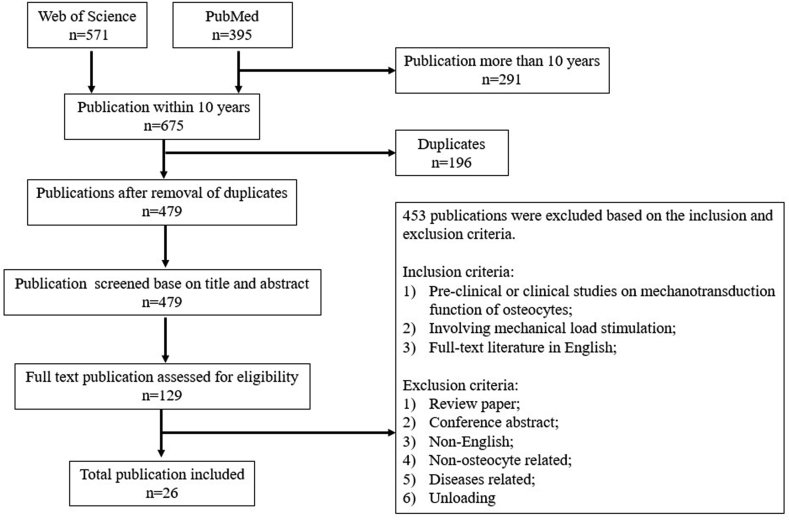
Methods: A systematic literature search was performed in PubMed and Web of Science. Original animal, cell and clinical studies with available English full-text were included. Information was extracted from the included studies for review.
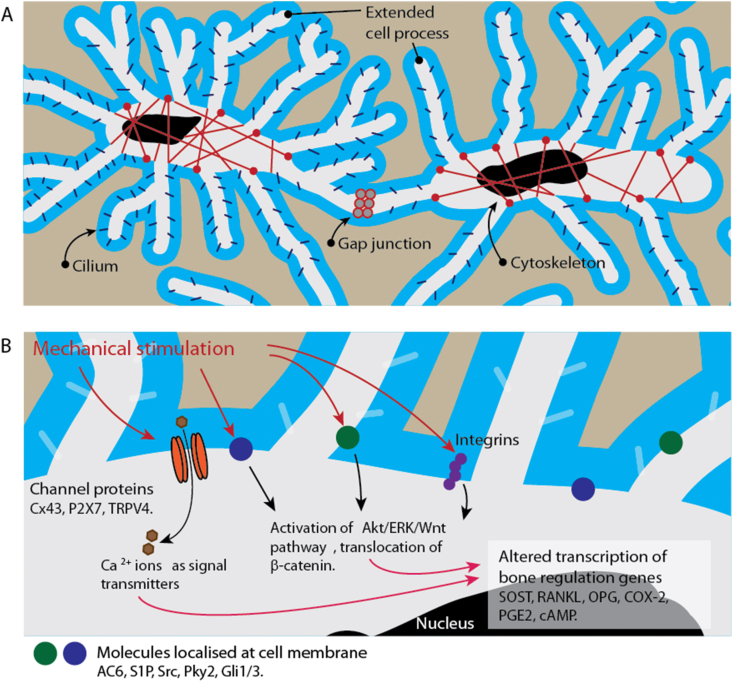
Results: The 26 studies included in this review provided evidence that mechanical loading are sensed by osteocytes via various sensing proteins and transduced to different signaling molecules which later initiate various biochemical responses. Studies have shown that osteocyte plasma membrane and cytoskeletons are emerging key players in initiating mechanotransduction. Bone regulating genes expressions are altered in response to load sensed by osteocytes, but the genes involved different signaling pathways and the spatiotemporal expression pattern had made mechanotransduction mechanism complicated. Most of the included studies described the important role of osteocytes in pathways that regulate mechanosensing and bone remodeling.
Conclusions: This systematic review provides an up-to-date insight to different steps of mechanotransduction. A better understanding of the mechanotransduction mechanism is beneficial in search of new potential treatment for osteoporotic patients. By delineating the unique morphology of osteocytes and their interconnected signaling network new targets can be discovered for drug development.
Translational potential of this article: This systematic review provides an up-to-date sequential overview and highlights the different osteocyte-related pathways and signaling molecules during mechanotransduction. This allows a better understanding of mechanotransduction for future development of new therapeutic interventions to treat patients with impaired mechanosensitivity.
Keywords: Mechanotransduction; Osteocyte; Osteoporosis; Systematic review.
© 2021 The Authors.
Conflict of interest statement
The authors have no conflict of interest relevant to this review.
Figures
References
-
- Turner C.H. Three rules for bone adaptation to mechanical stimuli. Bone. 1998;23(5):399–407. - PubMed
-
- Spyropoulou A., Karamesinis K., Basdra E.K. Mechanotransduction pathways in bone pathobiology. Biochim Biophys Acta. 2015;1852(9):1700–1708. - PubMed
-
- Joiner D.M., Tayim R.J., Kadado A., Goldstein S.A. Bone marrow stromal cells from aged male rats have delayed mineralization and reduced response to mechanical stimulation through nitric oxide and ERK1/2 signaling during osteogenic differentiation. Biogerontology. 2012;13(5):467–478. - PubMed
-
- Aguirre J.I., Plotkin L.I., Gortazar A.R., Millan M.M., O'Brien C.A., Manolagas S.C. A novel ligand-independent function of the estrogen receptor is essential for osteocyte and osteoblast mechanotransduction. J Biol Chem. 2007;282(35):25501–25508. - PubMed
Publication types
LinkOut - more resources
Full Text Sources
Other Literature Sources
Research Materials
