


Evaluation of anxiety, depression and sleep quality in full-time teleworkers
- PMID: 34036369
- PMCID: PMC8202819
- DOI: 10.1093/pubmed/fdab164
Evaluation of anxiety, depression and sleep quality in full-time teleworkers
Abstract
Background: Mental health-related positive and negative aspects of telework are understudied. This study aimed to evaluate anxiety, depression and sleep quality in full-time teleworkers during lockdown imposed by the coronavirus disease 2019 (COVID-19) pandemic and explore potential relationships between these variables, sociodemographic characteristics, quality of life and perceived productivity.
Methods: A cross-sectional study was conducted on 143 full-time teleworkers. Participants were assessed for anxiety, depression and sleep quality using validated clinical instruments.
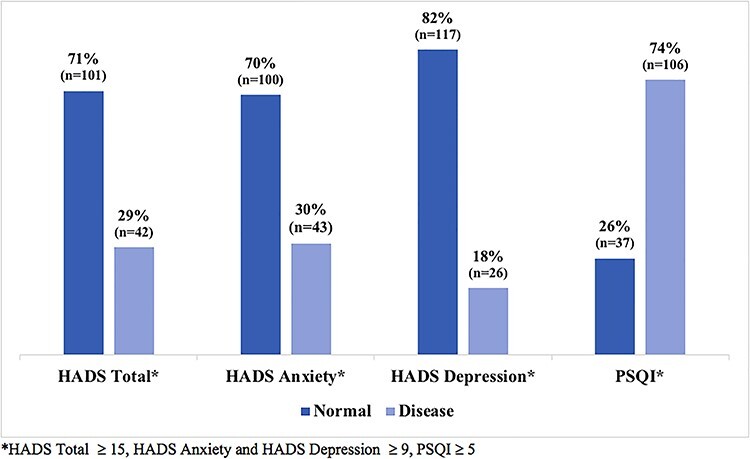
Results: This study found a high prevalence of poor sleep quality (74%, N = 106). Participants reported anxiety/depressive symptoms with the predominance of anxiety and very high levels of sleep impairment. Better sleep quality was associated with longer sleep duration and better job satisfaction, whereas the use of hypnotic medication and higher depression/anxiety scores seem to point a correlation with sleep impairment. Anxiety/depression positively correlated with worse sleep quality and negatively associated with quality of life. Male sex was negatively associated with perceived productivity.
Conclusions: A higher prevalence of poor sleep quality was found in comparison with other studies performed during the COVID-19 pandemic as well as high levels of anxiety and depression. These results highlight the relevance of considering the potential negative impact of telework on mental health.
Keywords: COVID-19; mental health; occupational health; psychiatry; sleep.
© The Author(s) 2021. Published by Oxford University Press on behalf of Faculty of Public Health. All rights reserved. For permissions, please e-mail: journals.permissions@oup.com.
Figures
References
-
- Allen TD, Golden TD, Shockley KM. How effective is telecommuting? Assessing the status of our scientific findings. Psychol Sci Public Interest 2015;16(2):40–68. - PubMed
-
- European Foundation for the Improvement of Living and Working Conditions ., International Labour Office. Working anytime, anywhere: the effects on the world of work. LU: Publications Office; 2017. 10.2806/425484 (30 October 2020, date last accessed) - DOI
-
- Gajendran RS, Harrison DA. The good, the bad, and the unknown about telecommuting: meta-analysis of psychological mediators and individual consequences. J Appl Psychol 2007;92(6):1524–41. - PubMed
-
- Bailey DE, Kurland NB. A review of telework research: findings, new directions, and lessons for the study of modern work. J Organ Behav 2002;23(4):383–400.
-
- Nilles JM. Traffic reduction by telecommuting: a status review and selected bibliography. Transportation Research Part A: General 1988;22(4):301–17.
Publication types
MeSH terms
LinkOut - more resources
Full Text Sources
Other Literature Sources
Medical
