Prevalence of Hidradenitis Suppurativa: A Systematic Review and Meta-regression Analysis
- PMID: 34037678
- PMCID: PMC8156162
- DOI: 10.1001/jamadermatol.2021.1677
Prevalence of Hidradenitis Suppurativa: A Systematic Review and Meta-regression Analysis
Abstract
Importance: Hidradenitis suppurativa/acne inversa (HS) is a chronic inflammatory skin disease characterized by occlusion of hair follicles as a primary pathogenic factor. There are scarce data regarding the prevalence of HS.
Objective: To estimate overall HS prevalence.
Data sources: This review and meta-regression analysis was conducted using the Meta-analysis of Observational Studies in Epidemiology (MOOSE) reporting guideline. The academic search included PubMed, Cochrane registry, ClinicalTrials.gov, and evidence by NHS UK and Trip databases from inception through May 2020. To analyze HS prevalence, only cross-sectional studies or baseline assessments of longitudinal cohorts using census-based surveys or probabilistic and nonprobabilistic epidemiologic methods were considered. The search terms were (prevalence OR incidence OR epidemiology) AND (hidradenitis suppurativa OR acne inversa OR Verneuil's disease). No language restriction was applied.
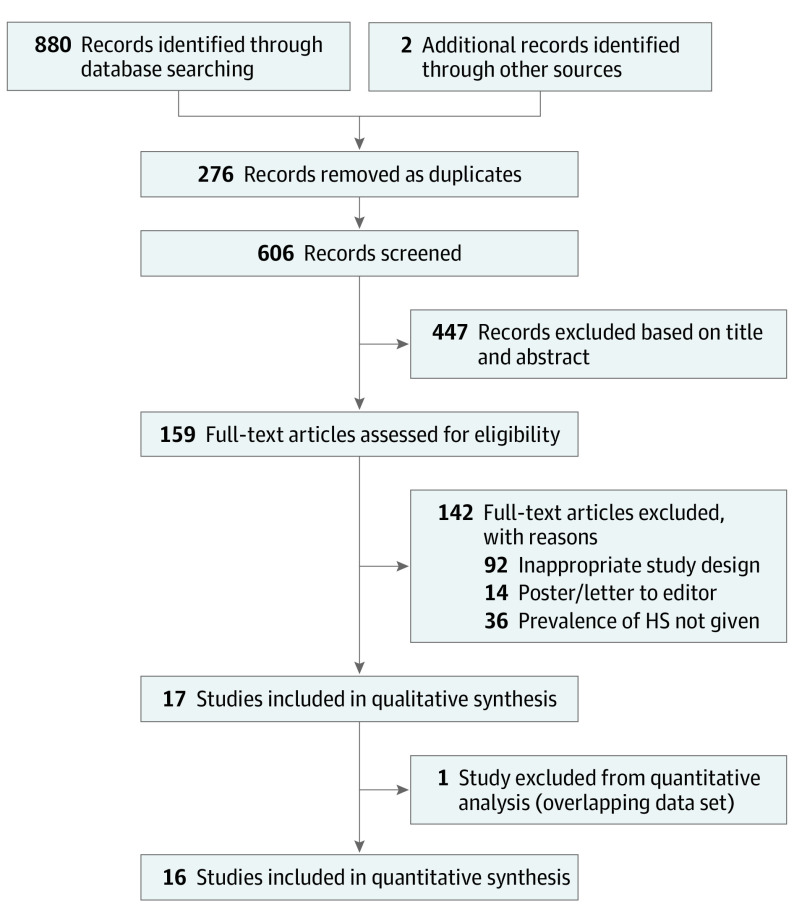
Study selection: Original investigations that reported HS prevalence were included. After exclusion criteria were applied, 17 studies qualified for qualitative analysis, but only 16 studies were quantitatively assessed.
Data extraction and measures: Two reviewers extracted data by age, diagnostic criteria, presence of any comorbidity, sample sizes, continent/location, sex, and other characteristics. Assessment of bias risk used the Joanna Briggs Institute Critical Appraisal Instrument for Studies Reporting Prevalence Data using random-effects models to synthesize available evidence.
Main outcomes and measures: Hidradenitis suppurativa prevalence (with 95% CI) among the overall population and among subgroups. Between-study heterogeneity was assessed (Cochran Q statistic) and quantified (I2 statistic).
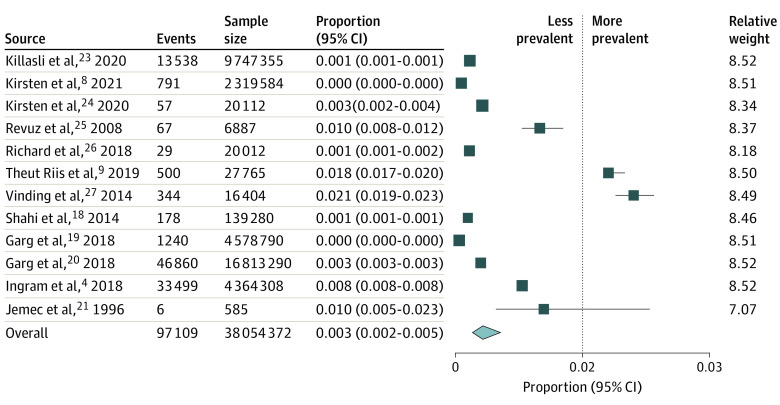
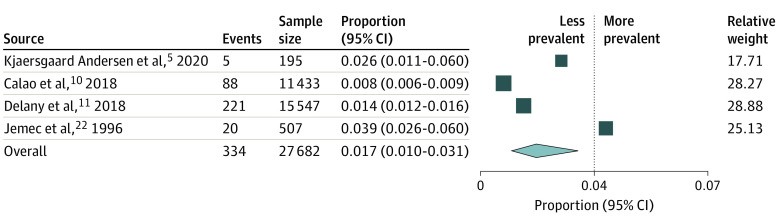
Results: In 16 quantitatively assessed studies included, prevalence estimates were reported only from Western European and Scandinavian countries, the US, and Australia. Meta-analysis with random effects, after adjusting for publication bias in the prevalence estimates, revealed a 0.40% prevalence (95% CI, 0.26%-0.63%) for HS. Studies based on clinical samples revealed a higher pooled prevalence of HS (1.7%) than population-based studies (0.3%).
Conclusions and relevance: The findings of this systematic review and meta-regression analysis may help facilitate policy formulation, channeling funding and guiding principles for better disease diagnosis using universal valid tools and management.
Conflict of interest statement
Figures
References
Publication types
MeSH terms
LinkOut - more resources
Full Text Sources
Other Literature Sources
Medical