


Association between Troponin I Levels during Sepsis and Postsepsis Cardiovascular Complications
- PMID: 34038701
- PMCID: PMC8491250
- DOI: 10.1164/rccm.202103-0613OC
Association between Troponin I Levels during Sepsis and Postsepsis Cardiovascular Complications
Abstract
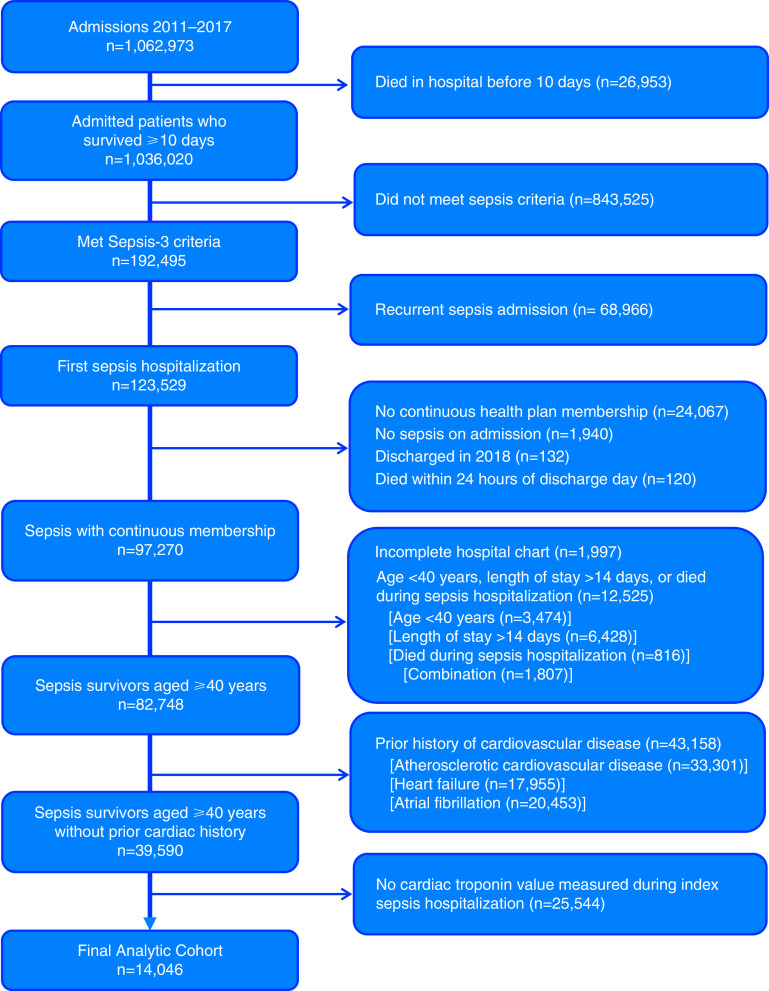
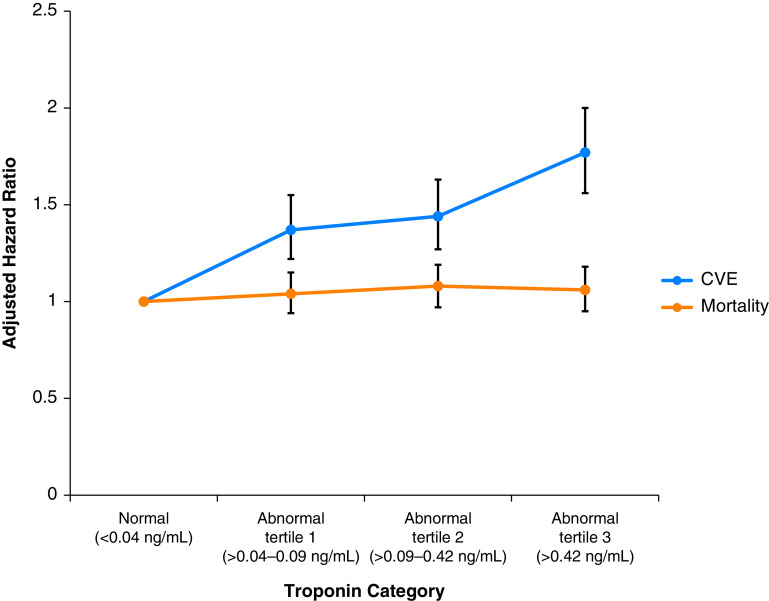
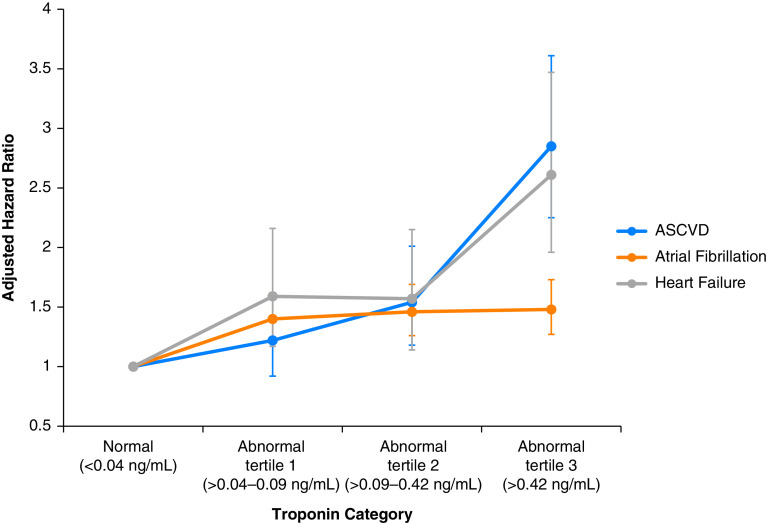
Rationale: Sepsis commonly results in elevated serum troponin levels and increased risk for postsepsis cardiovascular complications; however, the association between troponin levels during sepsis and cardiovascular complications after sepsis is unclear.Objectives: To evaluate the association between serum troponin levels during sepsis and 1 year after sepsis cardiovascular events.Methods: We analyzed adults aged ⩾40 years without preexisting cardiovascular disease within 5 years, admitted with sepsis across 21 hospitals from 2011 to 2017. Peak serum troponin I levels during sepsis were grouped as normal (⩽0.04 ng/ml) or tertiles of abnormal (>0.04 to ⩽0.09 ng/ml, >0.09 to ⩽0.42 ng/ml, or >0.42 ng/ml). Multivariable adjusted cause-specific Cox proportional hazards models with death as a competing risk were used to assess associations between peak troponin I levels and a composite cardiovascular outcome (atherosclerotic cardiovascular disease, atrial fibrillation, and heart failure) in the year following sepsis. Models were adjusted for presepsis and intrasepsis factors considered potential confounders.Measurements and Main Results: Among 14,046 eligible adults with troponin I measured, 2,012 (14.3%) experienced the composite cardiovascular outcome, including 832 (10.9%) patients with normal troponin levels, as compared with 370 (17.3%), 376 (17.6%), and 434 (20.3%) patients within each sequential abnormal troponin tertile, respectively (P < 0.001). Patients within the elevated troponin tertiles had increased risks of adverse cardiovascular events (adjusted hazard ratio [aHR]troponin0.04-0.09 = 1.37; 95% confidence interval [CI], 1.20-1.55; aHRtroponin0.09-0.42 = 1.44; 95% CI, 1.27-1.63; and aHRtroponin>0.42 = 1.77; 95% CI, 1.56-2.00).Conclusions: Among patients without preexisting cardiovascular disease, troponin elevation during sepsis identified patients at increased risk for postsepsis cardiovascular complications. Strategies to mitigate cardiovascular complications among this high-risk subset of patients are warranted.
Keywords: cardiovascular risk; infection; mortality; sepsis; troponin.
Figures
Comment in
-
Identifying Survivors of Sepsis at Risk for Adverse Cardiovascular Outcomes.Am J Respir Crit Care Med. 2021 Sep 1;204(5):500-501. doi: 10.1164/rccm.202105-1322ED. Am J Respir Crit Care Med. 2021. PMID: 34139144 Free PMC article. No abstract available.
References
-
- Ou SM, Chu H, Chao PW, Lee YJ, Kuo SC, Chen TJ, et al. Long-term mortality and major adverse cardiovascular events in sepsis survivors. A nationwide population-based study. Am J Respir Crit Care Med. 2016;194:209–217. - PubMed
Publication types
MeSH terms
Substances
Grants and funding
LinkOut - more resources
Full Text Sources
Other Literature Sources
Medical
