


Risk of stress/depression and functional impairment in Denmark immediately following a COVID-19 shutdown
- PMID: 34039323
- PMCID: PMC8149922
- DOI: 10.1186/s12889-021-11020-3
Risk of stress/depression and functional impairment in Denmark immediately following a COVID-19 shutdown
Erratum in
-
Correction to: Risk of stress/depression and functional impairment in Denmark immediately following a COVID-19 shutdown.BMC Public Health. 2021 Jun 16;21(1):1155. doi: 10.1186/s12889-021-11204-x. BMC Public Health. 2021. PMID: 34134702 Free PMC article. No abstract available.
Abstract
Background: Existing estimates of the impact of the COVID-19 burden on mental wellbeing come from countries with high mortality rates. This study therefore aimed to investigate the impact of the first COVID-19 lockdown (March-April 2020) on risk for stress/depression and functional impairment in a representative sample of adult individuals in Denmark, which had lower infection rates, and whether the impact of lockdown was heterogeneous across living situation.
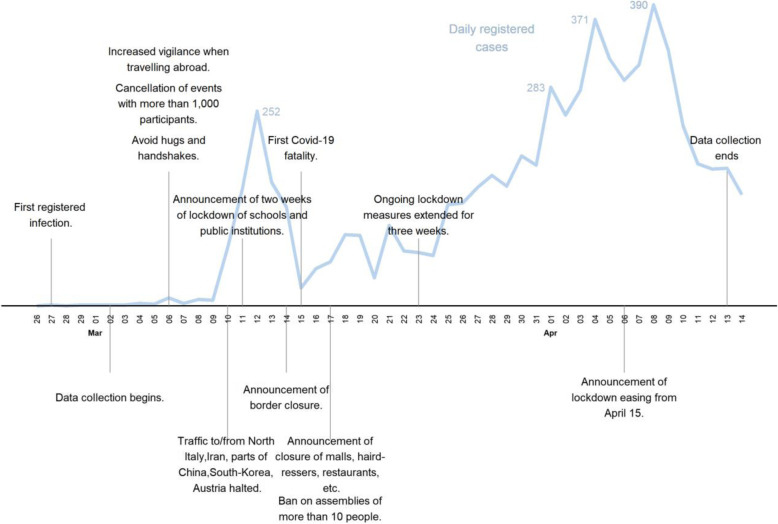
Methods: Using a representative, randomly drawn sample from the complete Danish adult population interviewed in March 2 to April 13, 2020 (n = 2836) and again in July 2020 (n = 1526, 54% retention rate), we study how the imposed lockdown announced March 11 following the onset of the first Danish wave of COVID-19 infections affected mental wellbeing. We use the World Health Organization Five Well-being Index (WHO-5) and the Work and Social Adjustment Scale (WSAS) to capture risk for stress/depression (WHO-5 < 50) and functional impairment (WSAS > 10). Using covariate adjusted ordinary least squares linear probability models and exploiting variation in the timing of responses occurring just before and just after the introduction of lockdown, we compare respondents before lockdown to respondents that answered during lockdown, as well as to answers in re-interviews in July.
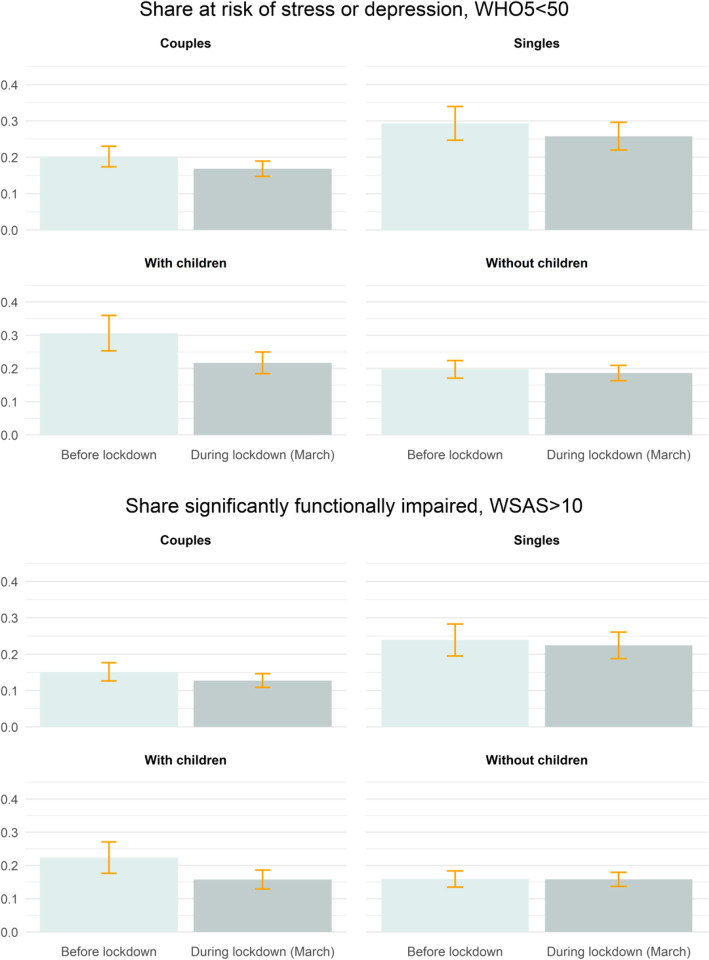
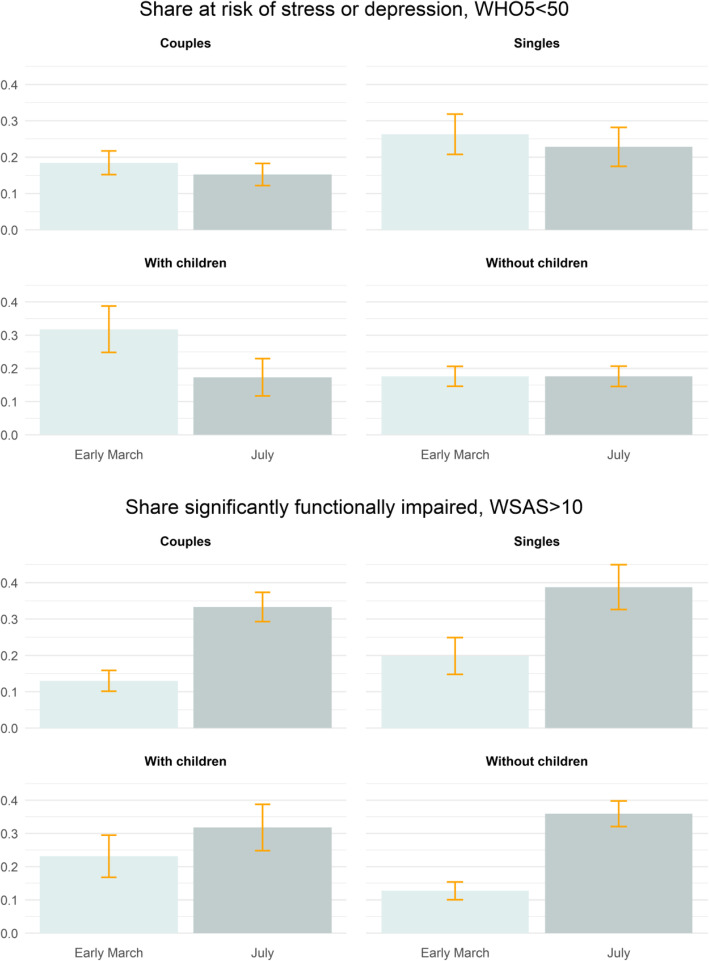
Results: In our fully controlled models, we find reduced depressive symptoms among adults immediately after the shutdown, concentrated in adults with children living at home (-.089, p < .01 (from pre lockdown baseline .273)). Measures of functional impairment also declined immediately after the March shutdown among adults with children living at home (-.066, p < .05 (from pre lockdown baseline .150)). Impairment intensified for the entire sample between March and July (+.199, p < .001 (from pre lockdown baseline .248)), but depressive symptoms remained at lower rate in July (-.033, p < .05 (from pre lockdown baseline .332).
Conclusions: Findings in Denmark indicate that living with children at home may have, in the short term, buffered the potential mental health sequelae of the COVID-19 shutdown.
Conflict of interest statement
Non declared.
Figures
References
-
- Roser M, Ritchie H, Ortiz-Ospina E, Hasell J. Our World in Data. 2021. Coronavirus (COVID-19) cases - statistics and research - our world in data.
-
- Holt-Lunstad J. The potential public health relevance of social isolation and loneliness: prevalence, epidemiology, and risk factors. Public Policy Aging Rep. 2017;27(4):127–130. doi: 10.1093/ppar/prx030. - DOI
Publication types
MeSH terms
LinkOut - more resources
Full Text Sources
Other Literature Sources
Medical
Miscellaneous
