


The efficacy and safety of Favipiravir in treatment of COVID-19: a systematic review and meta-analysis of clinical trials
- PMID: 34040117
- PMCID: PMC8155021
- DOI: 10.1038/s41598-021-90551-6
The efficacy and safety of Favipiravir in treatment of COVID-19: a systematic review and meta-analysis of clinical trials
Erratum in
-
Addendum: The efficacy and safety of Favipiravir in treatment of COVID-19: a systematic review and meta-analysis of clinical trials.Sci Rep. 2022 Feb 1;12(1):1996. doi: 10.1038/s41598-022-05835-2. Sci Rep. 2022. PMID: 35105913 Free PMC article. No abstract available.
Abstract
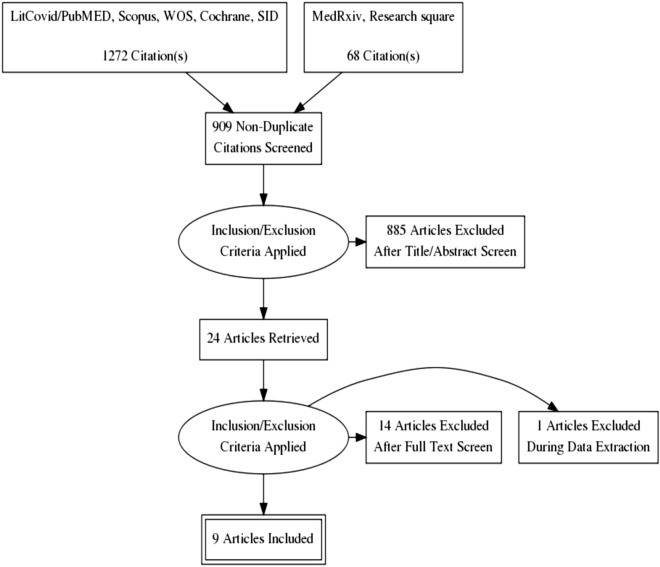
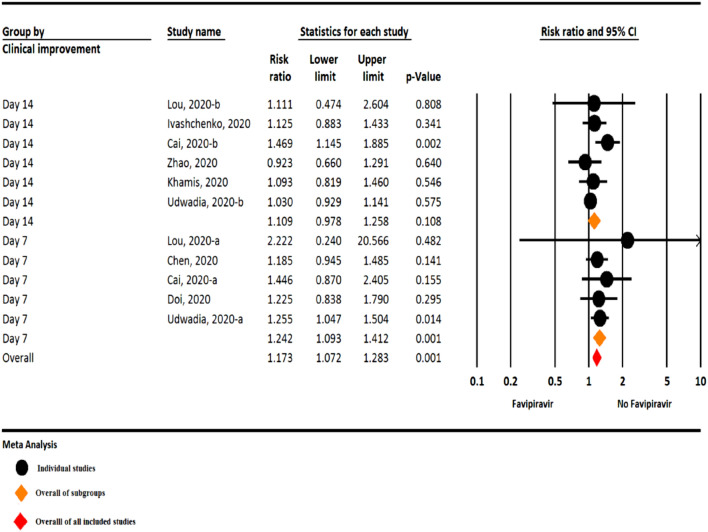
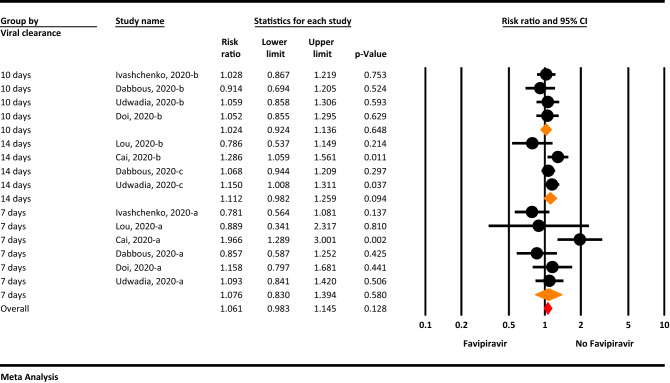
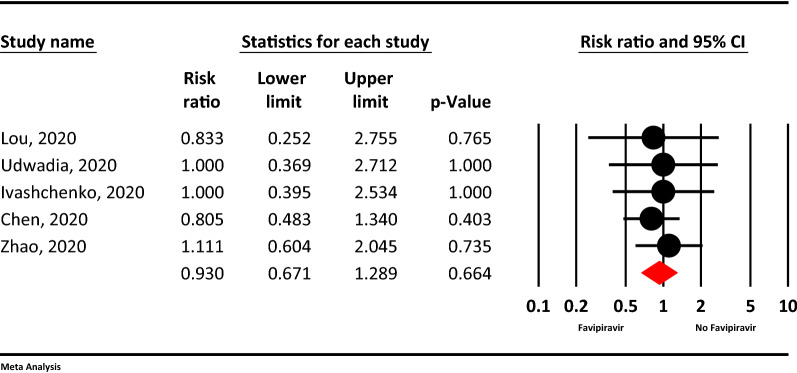
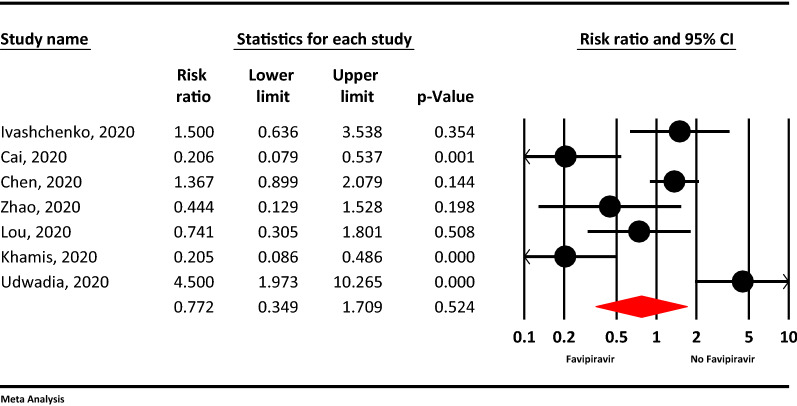
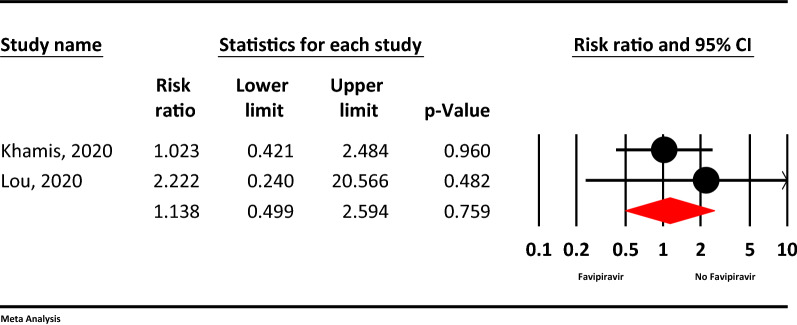
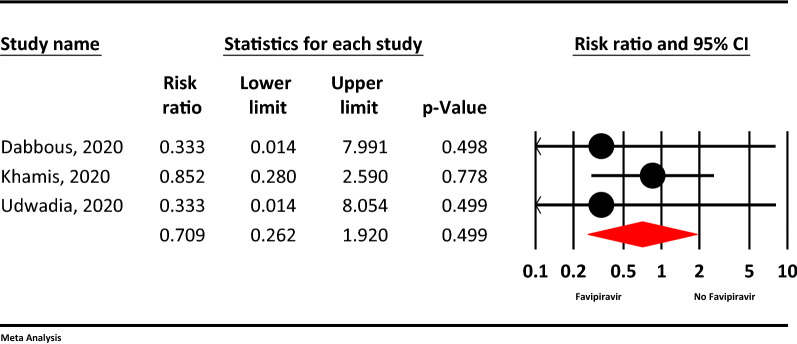
The novel coronavirus outbreak began in late December 2019 and rapidly spread worldwide, critically impacting public health systems. A number of already approved and marketed drugs are being tested for repurposing, including Favipiravir. We aim to investigate the efficacy and safety of Favipiravir in treatment of COVID-19 patients through a systematic review and meta-analysis. This systematic review and meta-analysis were reported in accordance with the PRISMA statement. We registered the protocol in the PROSPERO (CRD42020180032). All clinical trials which addressed the safety and efficacy of Favipiravir in comparison to other control groups for treatment of patients with confirmed infection with SARS-CoV2 were included. We searched electronic databases including LitCovid/PubMed, Scopus, Web of Sciences, Cochrane, and Scientific Information Database up to 31 December 2020. We assessed the risk of bias of the included studies using Cochrane Collaboration criteria. All analyses were performed using the Comprehensive Meta-Analysis software version 2, and the risk ratio index was calculated. Egger and Begg test was used for assessing publication bias. Nine studies were included in our meta-analysis. The results of the meta-analysis revealed a significant clinical improvement in the Favipiravir group versus the control group during seven days after hospitalization (RR = 1.24, 95% CI: 1.09-1.41; P = 0.001). Viral clearance was more in 14 days after hospitalization in Favipiravir group than control group, but this finding marginally not significant (RR = 1.11, 95% CI: 0.98-1.25; P = 0.094). Requiring supplemental oxygen therapy in the Favipiravir group was 7% less than the control group, (RR = 0.93, 95% CI: 0.67-1.28; P = 0.664). Transferred to ICU and adverse events were not statistically different between two groups. The mortality rate in the Favipiravir group was approximately 30% less than the control group, but this finding not statistically significant. Favipiravir possibly exerted no significant beneficial effect in the term of mortality in the general group of patients with mild to moderate COVID-19. We should consider that perhaps the use of antiviral once the patient has symptoms is too late and this would explain their low efficacy in the clinical setting.
Conflict of interest statement
The authors declare no competing interests.
Figures
References
-
- Fact Sheet for "the Biopharmaceutical Industry Leading the Way in Developing New Vaccines and Treatments for COVID-19" Available at: https://phrma.org/Coronavirus (2021).
-
- Food, U. & Administration, D. Fact Sheet for Health Care Providers Emergency Use Authorization (EUA) of Veklury®(remdesivir). (2020).
Publication types
MeSH terms
Substances
LinkOut - more resources
Full Text Sources
Other Literature Sources
Miscellaneous
