


Aerobic Exercise Alleviates Inflammation, Oxidative Stress, and Apoptosis in Mice with Chronic Obstructive Pulmonary Disease
- PMID: 34040365
- PMCID: PMC8139730
- DOI: 10.2147/COPD.S309041
Aerobic Exercise Alleviates Inflammation, Oxidative Stress, and Apoptosis in Mice with Chronic Obstructive Pulmonary Disease
Erratum in
-
Erratum: Aerobic Exercise Alleviates Inflammation, Oxidative Stress, and Apoptosis in Mice with Chronic Obstructive Pulmonary Disease [Corrigendum].Int J Chron Obstruct Pulmon Dis. 2021 Nov 24;16:3201-3202. doi: 10.2147/COPD.S350264. eCollection 2021. Int J Chron Obstruct Pulmon Dis. 2021. PMID: 34858020 Free PMC article.
Abstract
Background: Chronic inflammation, oxidative stress, and apoptosis play critical roles in chronic obstructive pulmonary disease (COPD) pathogenesis. Here, we attempted to determine whether aerobic exercise (AE) could improve COPD by counteracting the COPD-associated inflammatory response, oxidative stress, and apoptosis in mice.
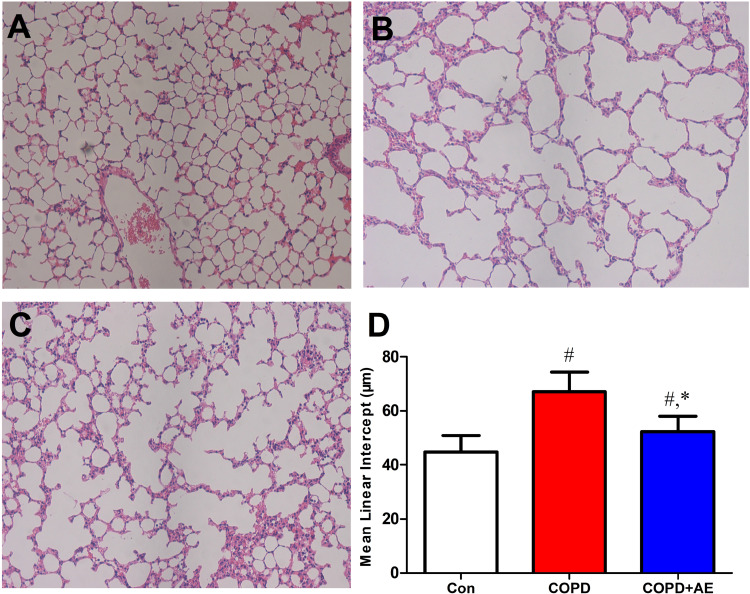
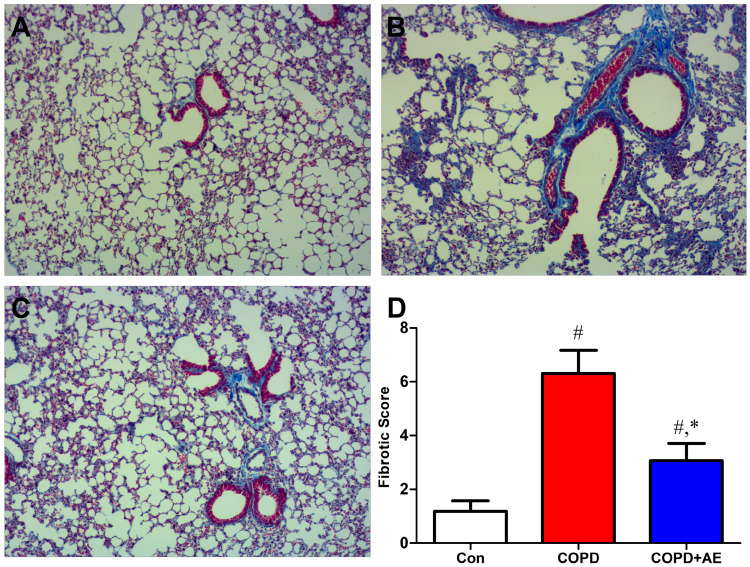
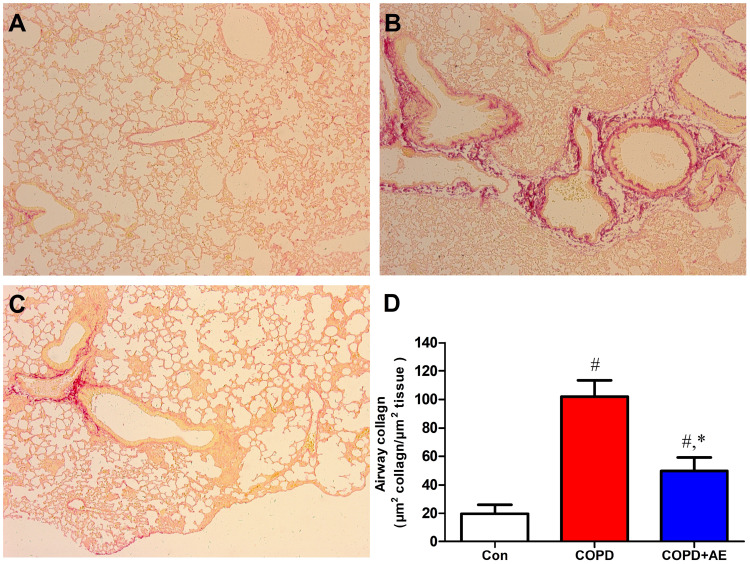
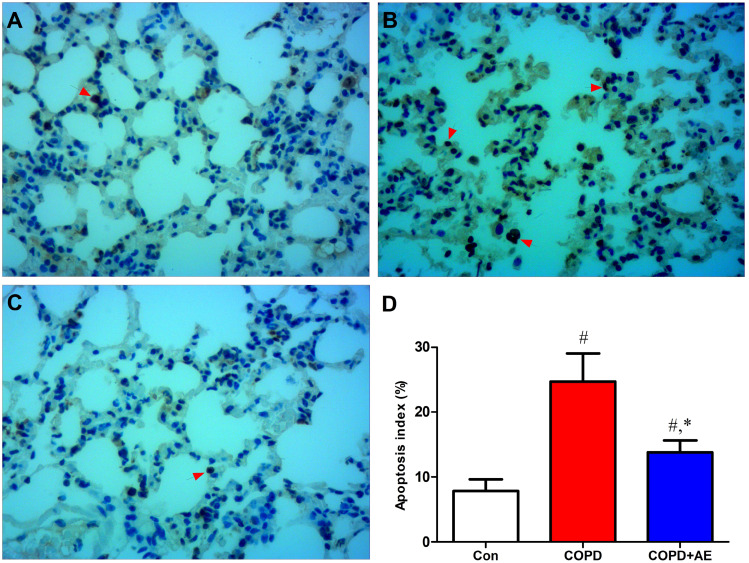
Methods: Thirty male ICR mice were assigned into one of three groups: control (Con), COPD, and COPD + AE. COPD was simulated by intratracheal injection of lipopolysaccharide (LPS) for 4 weeks. Low-intensity AE was performed for 4 weeks. Bronchoalveolar lavage fluid (BALF) cell counts and the levels of inflammatory cytokine in BALF and serum were detected. Hematoxylin and eosin (HE), Masson trichrome, and Sirius Red staining as well as terminal deoxynucleotidyl transferase dUTP nick end labeling were performed to identify the degree of pulmonary emphysema, bronchial mucus cell hyperplasia, pulmonary fibrosis, and cell apoptosis. Oxidative stress parameters were measured. Furthermore, gene expression levels for the CXCL1, IL-1β, IL-10, IL-17, matrix metalloproteinase (MMP)9, TGF-β, TNF-α, and silent information regulator (sirt)1 were detected in mice lung tissues.
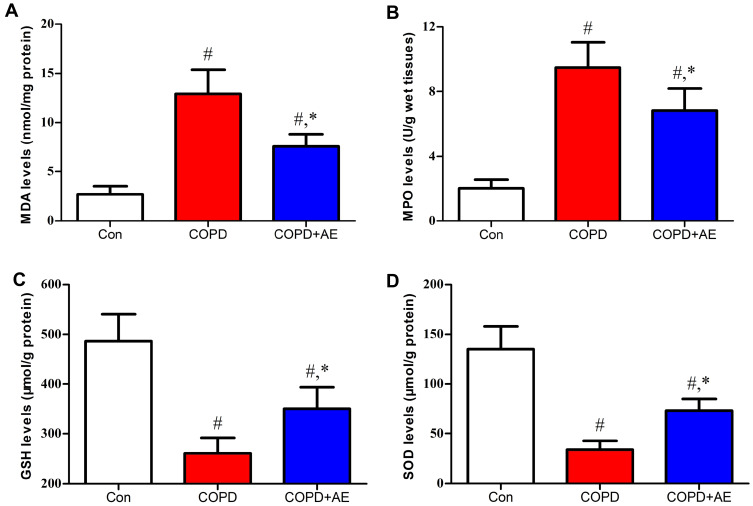
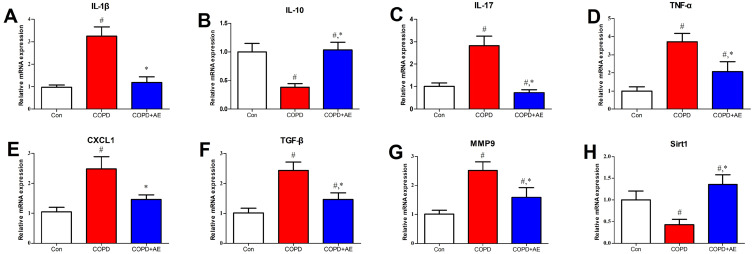
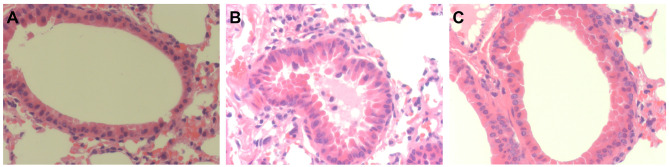
Results: AE improved LPS-induced emphysema, pulmonary fibrosis, bronchial mucus cell hyperplasia, bronchoconstriction, and cell apoptosis. AE prevented an LPS-induced increase in the total cell, neutrophil, and macrophage counts. AE decreased malondialdehyde (MDA) and myeloperoxidase (MPO) levels but increased glutathione (GSH) and superoxide dismutase (SOD) levels. AE decreased BALF levels of IL-1β, TNF-α, and TGF-β but increased BALF IL-10 levels. AE suppressed the gene expression levels of pro-inflammatory factors CXCL1, IL-1β, IL-17, and TNF-α and profibrotic factors MMP-9 and TGF-β but activated those of anti-inflammatory factor IL-10 and lung-protective factor sirt1.
Conclusion: AE is a potential therapeutic approach for COPD. AE improved emphysema, bronchial mucus cell hyperplasia, and pulmonary fibrosis in mice with COPD by alleviating the inflammatory response, oxidative stress injury, and cell apoptosis as well as activating sirt1.
Keywords: COPD; emphysema; exercise; oxidative stress injury; pulmonary fibrosis; pulmonary inflammation.
© 2021 Wang et al.
Conflict of interest statement
The authors report no conflicts of interest in this work, and the manuscript has been approved by all authors for publication.
Figures
References
MeSH terms
LinkOut - more resources
Full Text Sources
Other Literature Sources
Medical
Research Materials
Miscellaneous
