


Adenocarcinoma of High-Grade Patterns Associated with Distinct Outcome of First-Line Chemotherapy or EGFR-TKIs in Patients of Relapsed Lung Cancer
- PMID: 34040439
- PMCID: PMC8139732
- DOI: 10.2147/CMAR.S302545
Adenocarcinoma of High-Grade Patterns Associated with Distinct Outcome of First-Line Chemotherapy or EGFR-TKIs in Patients of Relapsed Lung Cancer
Abstract
Purpose: High-grade patterns (micropapillary/solid/complex gland) are associated with a higher recurrence rate and shorter disease-free survival. Thus far, it remains unclear whether the efficacy of first-line anticancer therapy is different from that of the other adenocarcinoma subgroups for patients with high-grade patterns. The study aimed to investigate the association between an adenocarcinoma with high-grade patterns with the outcomes of first-line treatment in patients with lung cancer.
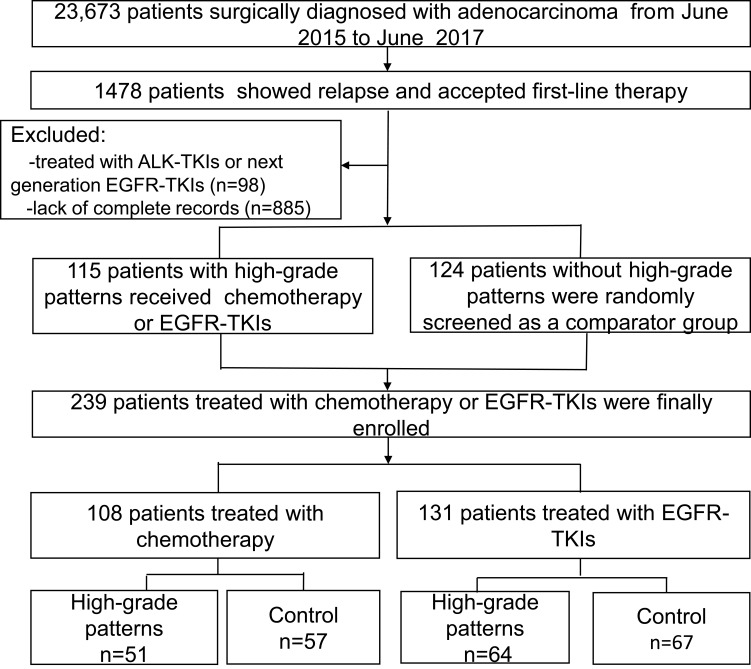
Patients and methods: Patients with a high-grade pattern adenocarcinoma (more than 20% of micropapillary/solid components/complex glandular patterns) were retrospectively analyzed between June 2015 and June 2017. Patients' clinical characteristics and treatment outcomes were compared with those of the remaining control adenocarcinoma subgroups.
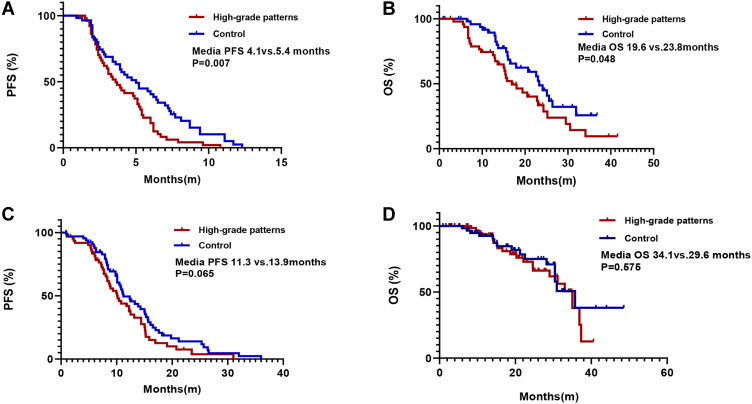
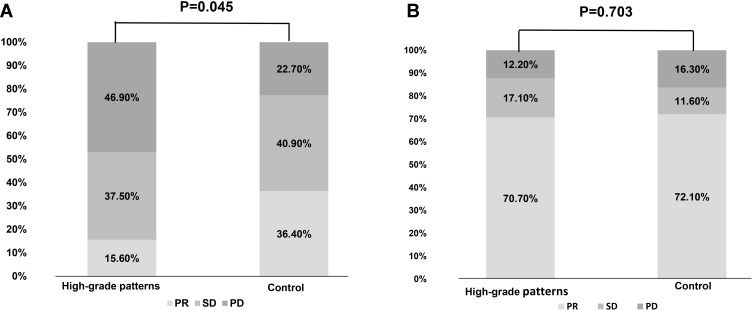
Results: In total, 239 patients with adenocarcinoma, including 115 (48.1%) high-grade patterns and 124 (51.9%) control groups, were enrolled. Patients' clinical characteristics such as age, sex, smoking status, and stage were similar between the two groups. Among them, 108 patients received first-line chemotherapy, and 131 received epidermal growth factor receptor-tyrosine kinase inhibitors (EGFR-TKIs). In the chemotherapy group, adenocarcinoma of high-grade patterns had a significantly lower objective response rate (ORR; 15.6% vs 36.4%, P=0.045), shorter progression-free survival (PFS; median 4.1 vs 5.4 months, P=0.007) and overall survival (OS, median 19.6 vs 23.8 months, P=0.048) compared with the control group. As for these treated with EGFR-TKIs, a similar ORR (70.7% vs 72.1%, P=0.703), PFS (median 11.3 vs 13.9 months, P=0.065) and OS (median 34.1 vs 29.6%, p=0.575) were observed between these two groups.
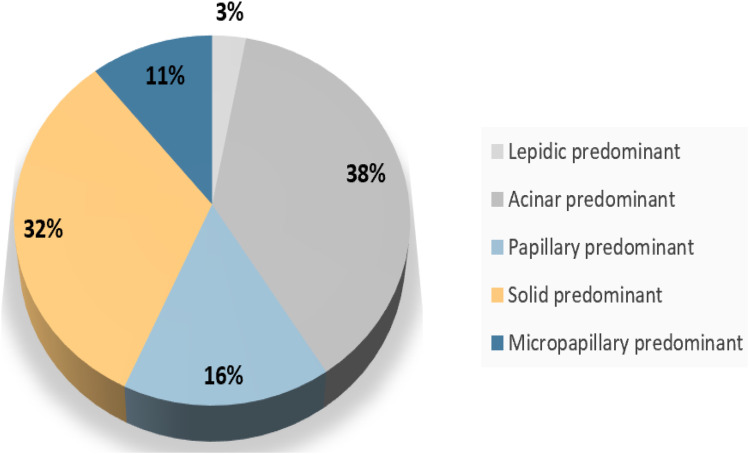
Conclusion: An adenocarcinoma with high-grade patterns is associated with inferior outcomes to first-line chemotherapy in relapsed lung cancer. Patients who received chemotherapy had a significantly shorter PFS and OS and lower ORR than control subjects, while there was no difference in the EGFR-TKI cohort. This study is the first to report the distribution of adenocarcinoma with high-grade patterns.
Keywords: EGFR-TKIs; adenocarcinoma; chemotherapy; micropapillary; solid.
© 2021 Yu et al.
Conflict of interest statement
The authors report no conflicts of interest or financial interest in this work.
Figures
References
-
- Kadota K, Nitadori JI, Sima CS, et al. Tumor spread through air spaces is an important pattern of invasion and impacts the frequency and location of recurrences after limited resection for small stage i lung adenocarcinomas. J Thorac Oncol. 2015;10(5):806–814. doi: 10.1097/JTO.0000000000000486 - DOI - PMC - PubMed
-
- Kadota K, Kushida Y, Kagawa S, et al. Cribriform subtype is an independent predictor of recurrence and survival after adjustment for the eighth edition of TNM staging system in patients with resected lung adenocarcinoma. J Thorac Oncol. 2019;14(2):245–254. doi: 10.1016/j.jtho.2018.09.028 - DOI - PubMed
LinkOut - more resources
Full Text Sources
Other Literature Sources
Research Materials
Miscellaneous
