


Leveraging Pseudomonas Stress Response Mechanisms for Industrial Applications
- PMID: 34040596
- PMCID: PMC8141521
- DOI: 10.3389/fmicb.2021.660134
Leveraging Pseudomonas Stress Response Mechanisms for Industrial Applications
Abstract
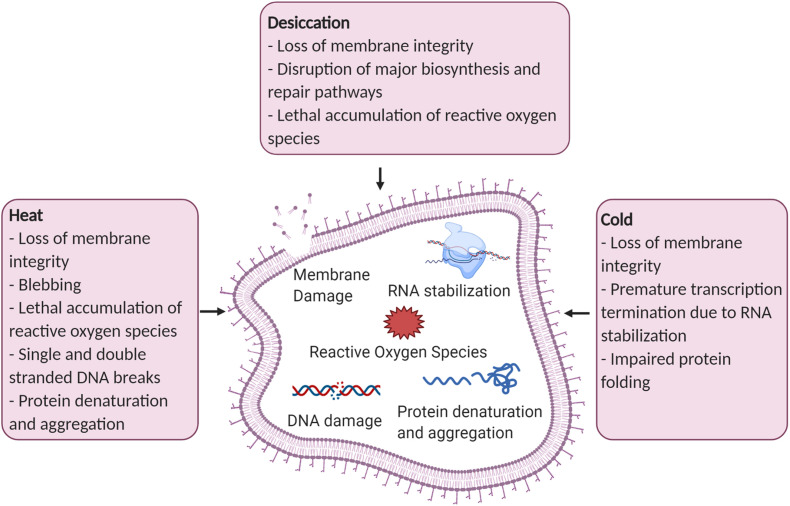
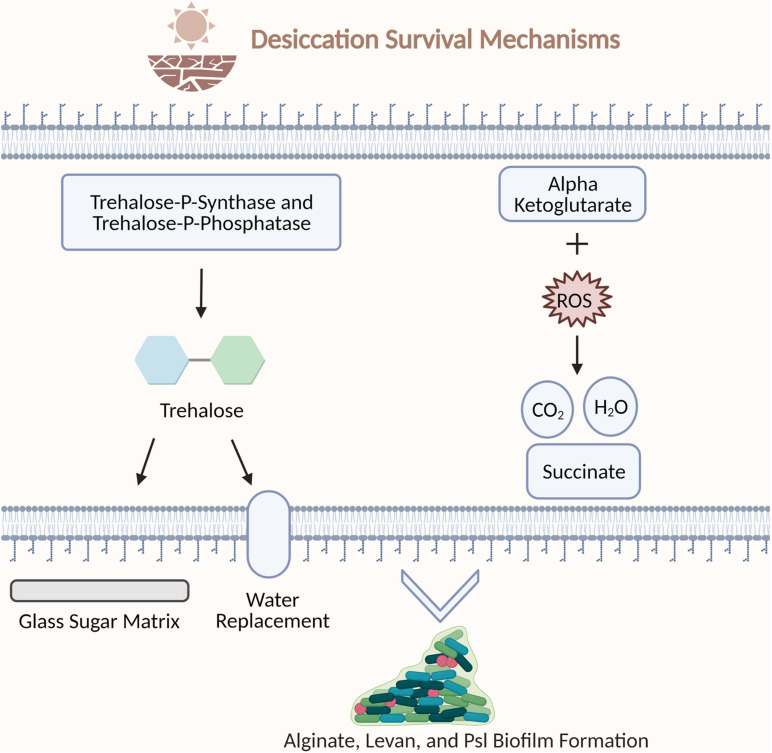
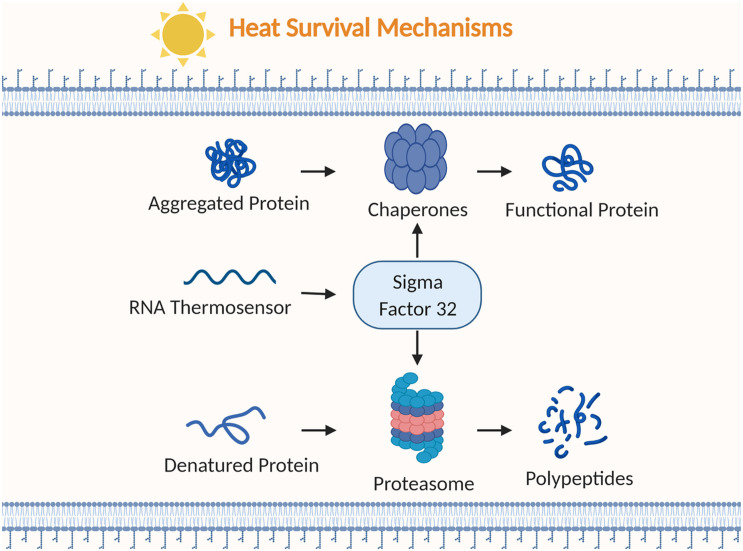
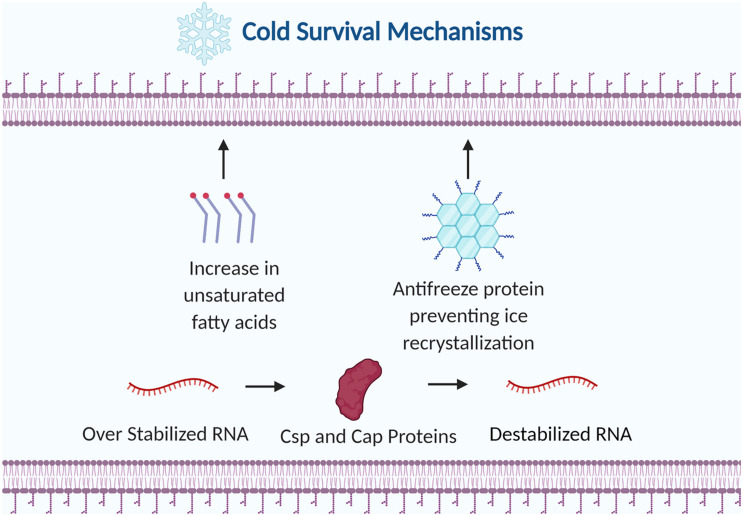
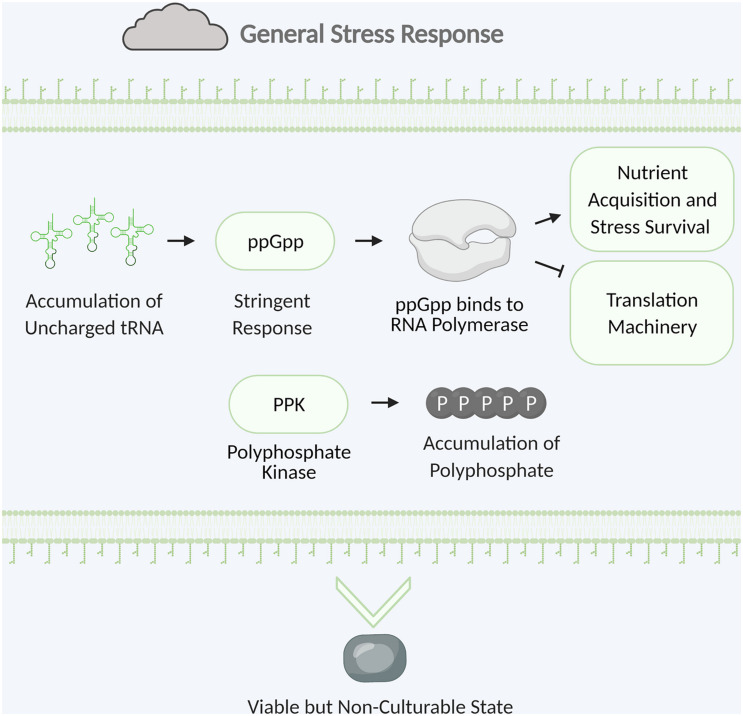
Members of the genus Pseudomonas are metabolically versatile and capable of adapting to a wide variety of environments. Stress physiology of Pseudomonas strains has been extensively studied because of their biotechnological potential in agriculture as well as their medical importance with regards to pathogenicity and antibiotic resistance. This versatility and scientific relevance led to a substantial amount of information regarding the stress response of a diverse set of species such as Pseudomonas chlororaphis, P. fluorescens, P. putida, P. aeruginosa, and P. syringae. In this review, environmental and industrial stressors including desiccation, heat, and cold stress, are cataloged along with their corresponding mechanisms of survival in Pseudomonas. Mechanisms of survival are grouped by the type of inducing stress with a focus on adaptations such as synthesis of protective substances, biofilm formation, entering a non-culturable state, enlisting chaperones, transcription and translation regulation, and altering membrane composition. The strategies Pseudomonas strains utilize for survival can be leveraged during the development of beneficial strains to increase viability and product efficacy.
Keywords: Pseudomonas; biofilm; chaperone; cold; desiccation; formulation; heat; stress.
Copyright © 2021 Craig, Johnson and Grunden.
Conflict of interest statement
KC and BJ are employed by the company AgBiome Inc. The remaining author declares that the research was conducted in the absence of any commercial or financial relationships that could be construed as a potential conflict of interest.
Figures
References
-
- Aiello D., Restuccia C., Stefani E., Vitale A., Cirvilleri G. (2019). Postharvest biocontrol ability of Pseudomonas synxantha against Monilinia fructicola and Monilinia fructigena on stone fruit. Postharv. Biol. Technol. 149 83–89. 10.1016/j.postharvbio.2018.11.020 - DOI
-
- Ali S. Z., Sandhya V., Venkateswar Rao L. (2013). Isolation and characterization of drought-tolerant ACC deaminase and exopolysaccharide-producing fluorescent Pseudomonas sp. Ann. Microbiol. 64 493–502. 10.1007/s13213-013-0680-3 - DOI
-
- Alix J. −H. (2006). “The Work of Chaperones,” in Protein Synthesis and Ribosome Structure, eds Nierhaus K. H., Wilson D. N. (New Jersey, NJ: Wiley; ), 10.1002/3527603433.ch13 - DOI
-
- Anderson A. J., Kim Y. C. (2018). Biopesticides produced by plant-probiotic Pseudomonas chlororaphis isolates. Crop Protect. 105 62–69. 10.1016/j.cropro.2017.11.009 - DOI
Publication types
LinkOut - more resources
Full Text Sources
Other Literature Sources
