


Elusive Enterobacter cloacae causing pacemaker endocarditis
- PMID: 34040983
- PMCID: PMC8141458
- DOI: 10.1016/j.idcr.2021.e01149
Elusive Enterobacter cloacae causing pacemaker endocarditis
Abstract
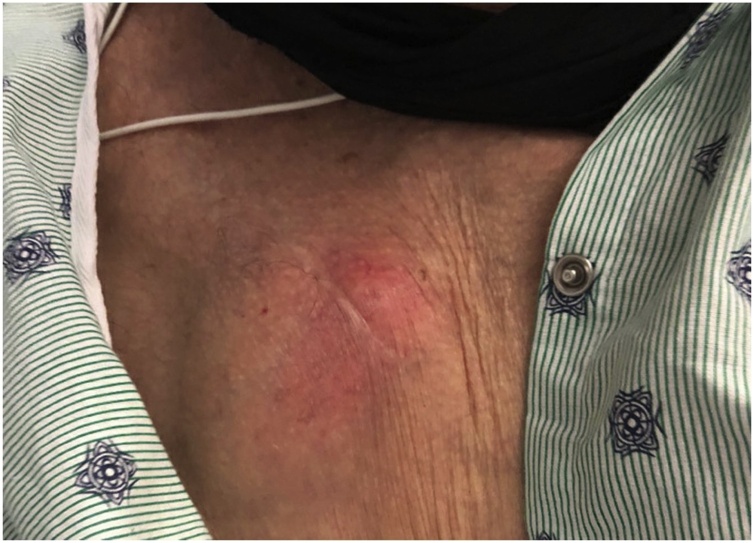
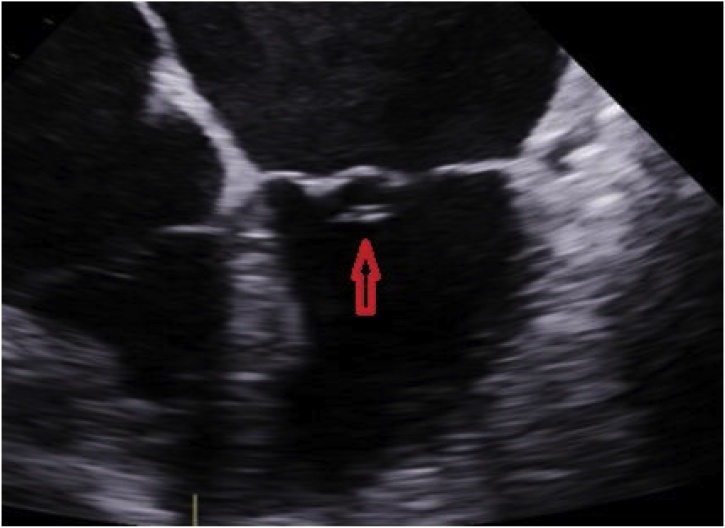
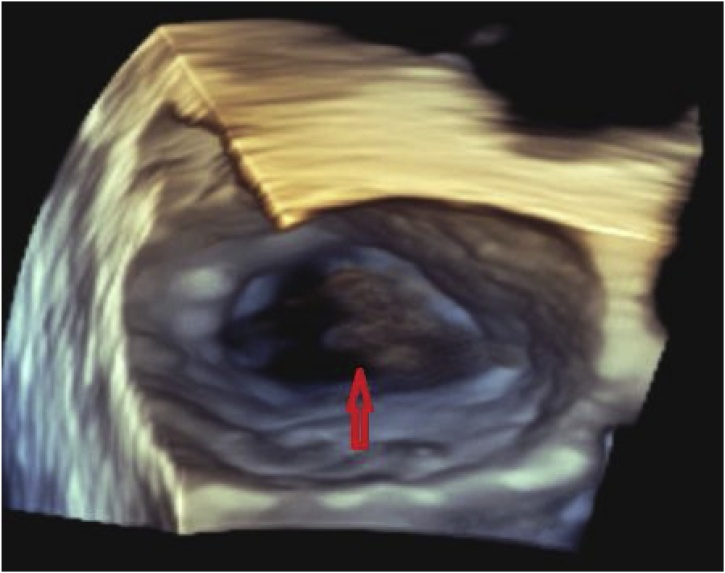
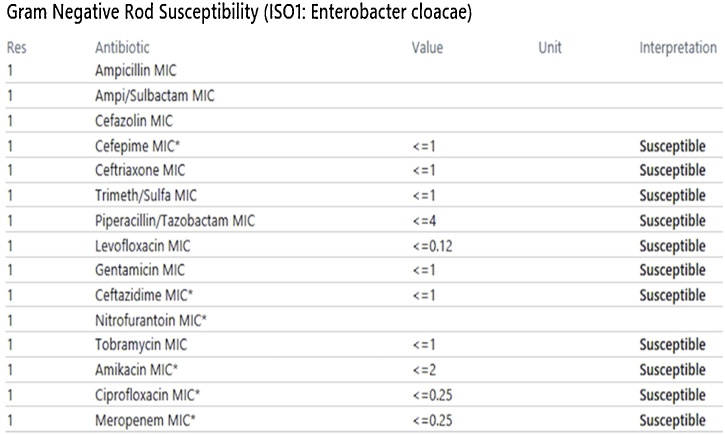
An 80-year-old patient was admitted for fever, chills, and chest wall pain. He had a past medical history significant for heart failure with a cardiac resynchronization therapy pacemaker implantation. Extensive workup revealed Enterobacter cloacae endocarditis of the pacemaker leads and the mitral valve, a rare etiology with an unidentified source in our patient. He was managed with a rather unconventional method which proved to be successful. This case sheds light on non-HACEK (other than Haemophilus spp., Aggregatibacter actinomycetemcomitans, Cardiobacterium hominis, Eikenella corrodens, or Kingella spp). gram-negative organisms, and particularly E. cloacae, as uncommon causes of endocarditis with elevated mortality, and discusses potential treatment modalities.
Keywords: Cardiac implantable electronic device endocarditis; Endocarditis; Enterobacter cloacae; Non-HACEK gram-negative rods; Pacemaker endocarditis.
© 2021 The Authors. Published by Elsevier Ltd.
Conflict of interest statement
The authors report no declarations of interest. There was no funding for this manuscript.
Figures
References
-
- Klein M., Wang A. Infective endocarditis. J Intensive Care Med. 2016;31(3):151–163. - PubMed
-
- Baddour L.M., Wilson W.R., Bayer A.S., Fowler V.J., Tleyjeh I.M., Rybak M.J. Infective endocarditis in adults: diagnosis, antimicrobial therapy, and management of complications: a scientific statement for healthcare professionals from the American Heart Association. Circulation. 2015;132(15):1435–1486. - PubMed
-
- Morpeth S., Murdoch D., Cabell C.H., Karchmer A.W., Pappas P., Levine D. Non-HACEK gram-negative bacillus endocarditis. Ann Intern Med. 2007;147(12):829–835. - PubMed
Publication types
LinkOut - more resources
Full Text Sources
Other Literature Sources
Miscellaneous
