


Premature Ovarian Insufficiency: Past, Present, and Future
- PMID: 34041247
- PMCID: PMC8141617
- DOI: 10.3389/fcell.2021.672890
Premature Ovarian Insufficiency: Past, Present, and Future
Abstract
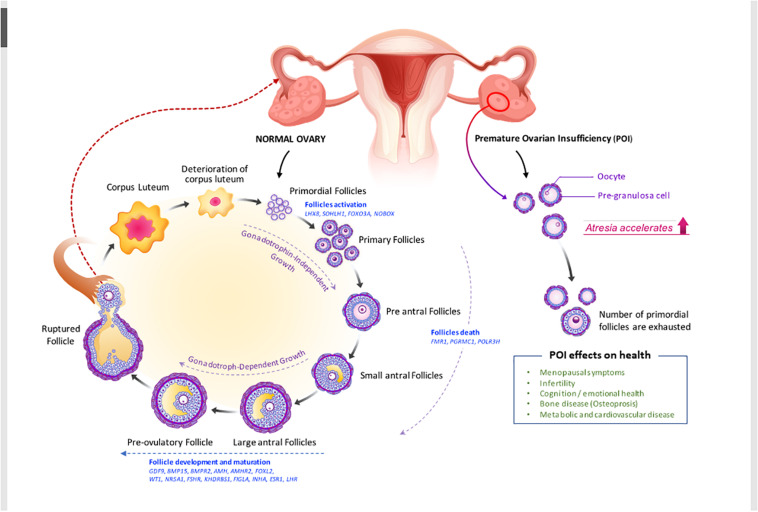
Premature ovarian insufficiency (POI) is the loss of normal ovarian function before the age of 40 years, a condition that affects approximately 1% of women under 40 years old and 0.1% of women under 30 years old. It is biochemically characterized by amenorrhea with hypoestrogenic and hypergonadotropic conditions, in some cases, causing loss of fertility. Heterogeneity of POI is registered by genetic and non-genetic causes, such as autoimmunity, environmental toxins, and chemicals. The identification of possible causative genes and selection of candidate genes for POI confirmation remain to be elucidated in cases of idiopathic POI. This review discusses the current understanding and future prospects of heterogeneous POI. We focus on the genetic basis of POI and the recent studies on non-coding RNA in POI pathogenesis as well as on animal models of POI pathogenesis, which help unravel POI mechanisms and potential targets. Despite the latest discoveries, the crosstalk among gene regulatory networks and the possible therapies targeting the same needs to explore in near future.
Keywords: early menopause; ovarian aging; ovary; premature ovarian failure; premature ovarian insufficiency.
Copyright © 2021 Chon, Umair and Yoon.
Conflict of interest statement
The authors declare that the research was conducted in the absence of any commercial or financial relationships that could be construed as a potential conflict of interest.
Figures
References
-
- Aittomäki K., Lucena J. D., Pakarinen P., Sistonen P., Tapanainen J., Gromoll J., et al. (1995). Mutation in the follicle-stimulating hormone receptor gene causes hereditary hypergonadotropic ovarian failure. Cell 82 959–968. - PubMed
-
- Allen E., Sullivan A., Marcus M., Small C., Dominguez C., Epstein M., et al. (2007). Examination of reproductive aging milestones among women who carry the FMR1 premutation. Hum. Reprod. 22 2142–2152. - PubMed
-
- Allshouse A. A., Semple A. L., Santoro N. F. (2015). Evidence for prolonged and unique amenorrhea-related symptoms in women with premature ovarian failure/primary ovarian insufficiency. Menopause 22 166–174. - PubMed
Publication types
LinkOut - more resources
Full Text Sources
Other Literature Sources
Miscellaneous
