


Spirulina platensis Inclusion Reverses Circulating Pro-inflammatory (Chemo)cytokine Profiles in Broilers Fed Low-Protein Diets
- PMID: 34041289
- PMCID: PMC8141556
- DOI: 10.3389/fvets.2021.640968
Spirulina platensis Inclusion Reverses Circulating Pro-inflammatory (Chemo)cytokine Profiles in Broilers Fed Low-Protein Diets
Abstract
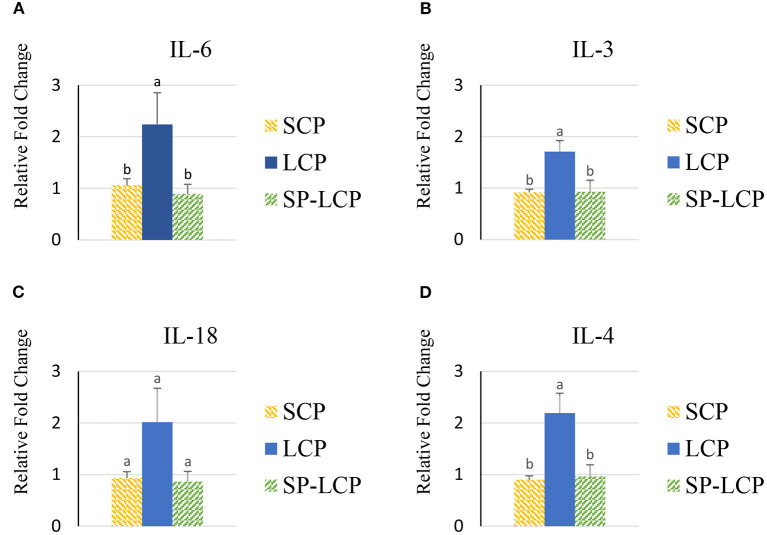
Proteins are considered the most expensive nutrients in commercial modern broiler production, and their dietary inclusion at low levels is pivotal to minimize feed costs and reduce nitrogen waste. The quest for an environmentally friendly source of proteins that favor the formulation of low protein diets without compromising broiler health, welfare, and growth performance has become a hotspot in nutrition research. Due to its high protein content, the naturally growing Spirulina microalgae is considered a promising nutrient source. The purpose of the present study was, therefore, to determine the effects of Spirulina supplementation on liver bacterial translocation, hematological profile, and circulating inflammatory and redox markers in broilers fed a low-protein diet. One-day-old Ross 708 male broilers (n = 180) were randomly assigned into one of three experimental treatments: standard diet as a control, low protein diet, and low protein diet supplemented with 100 g/kg of Spirulina. Target molecular markers were measured in the peripheral blood circulation using real-time quantitative PCR. Reducing dietary proteins increased bacterial translocation and systemic inflammation as indicated by proportions of basophils among blood leukocytes. The expression levels of circulating pro-inflammatory cytokines [interleukin (IL)-3, IL-6, IL-4, IL-18, and tumor necrosis factor-α], chemokines (CCL-20), and NOD-like receptor family pyrin domain containing 3 inflammasome were significantly upregulated in birds fed the low protein diet compared with the control. The inclusion of Spirulina reversed these effects, which indicates that Spirulina reduces systemic inflammation- and bacterial translocation-induced by a low protein diet and could be a promising alternative protein source in poultry diets.
Keywords: Spirulina; broilers; chemokines; cytokines; inflammasome; inflammation; low protein diet.
Copyright © 2021 Mullenix, Greene, Emami, Tellez-Isaias, Bottje, Erf, Kidd and Dridi.
Conflict of interest statement
The authors declare that the research was conducted in the absence of any commercial or financial relationships that could be construed as a potential conflict of interest.
Figures


References
-
- The Future of Food Agriculture – Alternative Pathways to 2050. Rome: FAO; (2018).
-
- European Parliament and of the Council - Regulation (EC) No 999/2001. Available online at: https://eur-lex.europa.eu/legal-content/en/TXT/PDF/?uri=CELEX:02001R0999... (accessed November 5, 2020).
-
- Fraps GS. Relation of protein, fat, and energy of the ration to the composition of chickens. Poult Sci. (1943) 22:421–4. 10.3382/ps.0220421 - DOI
-
- Lemme A, Hiller P, Klahsen M, Taube V, Stegemann J, Simon I. Reduction of dietary protein in broiler diets not only reduces n-emissions but is also accompanied by several further benefits. J Appl Poult Res. (2019) 28:867–80. 10.3382/japr/pfz045 - DOI
LinkOut - more resources
Full Text Sources
Other Literature Sources
Miscellaneous
