Neurocognitive abilities associated with antisocial behavior with and without callous-unemotional traits in a community sample
- PMID: 34043388
- PMCID: PMC8350929
- DOI: 10.1037/neu0000733
Neurocognitive abilities associated with antisocial behavior with and without callous-unemotional traits in a community sample
Abstract
Objective: Antisocial behavior (aggression, rule breaking) is associated with lower intelligence and executive function deficits. Research has not clarified whether these associations differ with the presence of callous-unemotional (CU) traits, particularly within levels of antisocial behavior observed in the community.
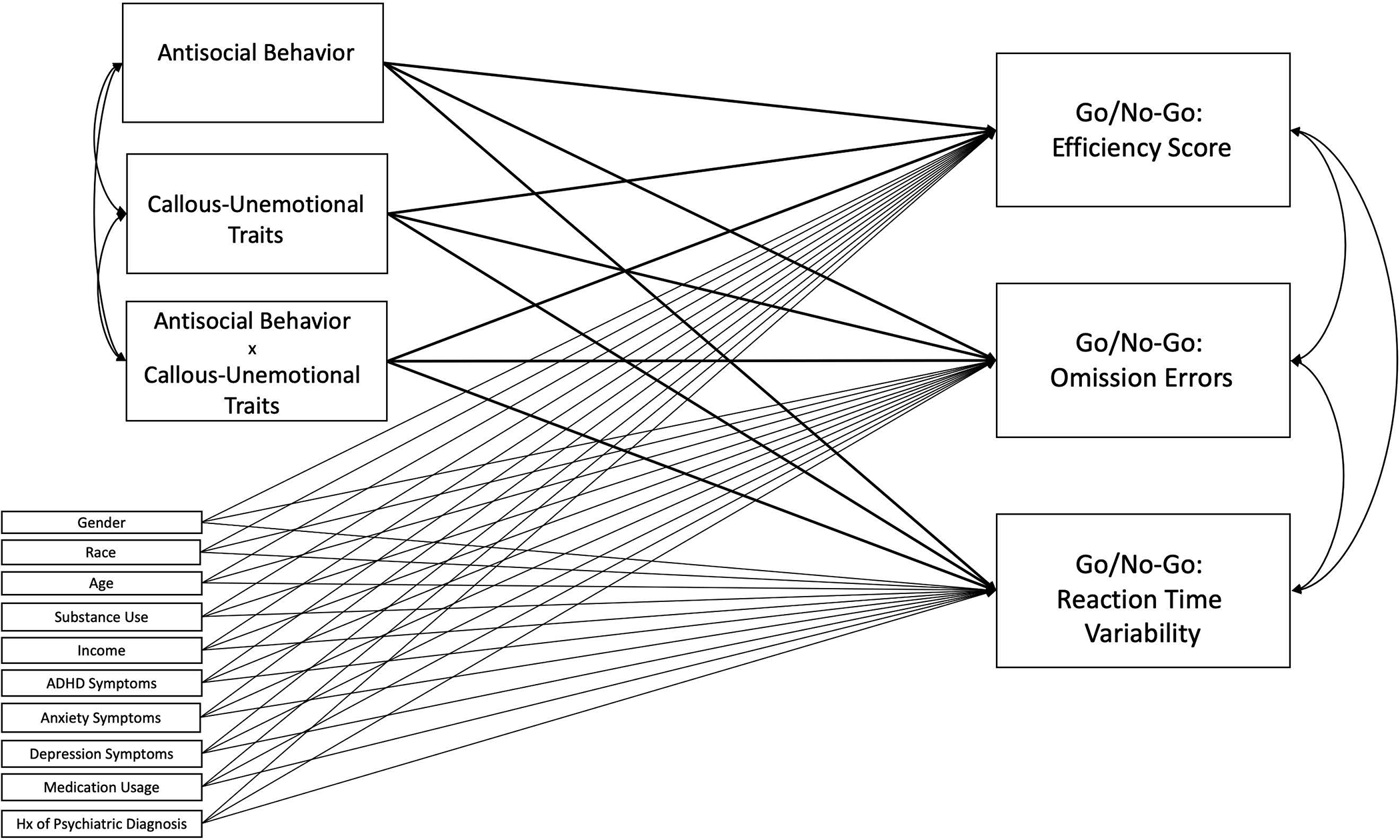
Method: We examined whether antisocial behavior and CU traits were differentially associated with intelligence and executive function metrics in 474 adolescent twins (Mean age = 14.18; SD = 2.20) sampled from birth records to represent youth in the community living in neighborhoods with above average levels of poverty. Intelligence was assessed using standardized scores from the Shipley-2. Executive function was assessed using Go/No-Go and Stop Signal tasks.
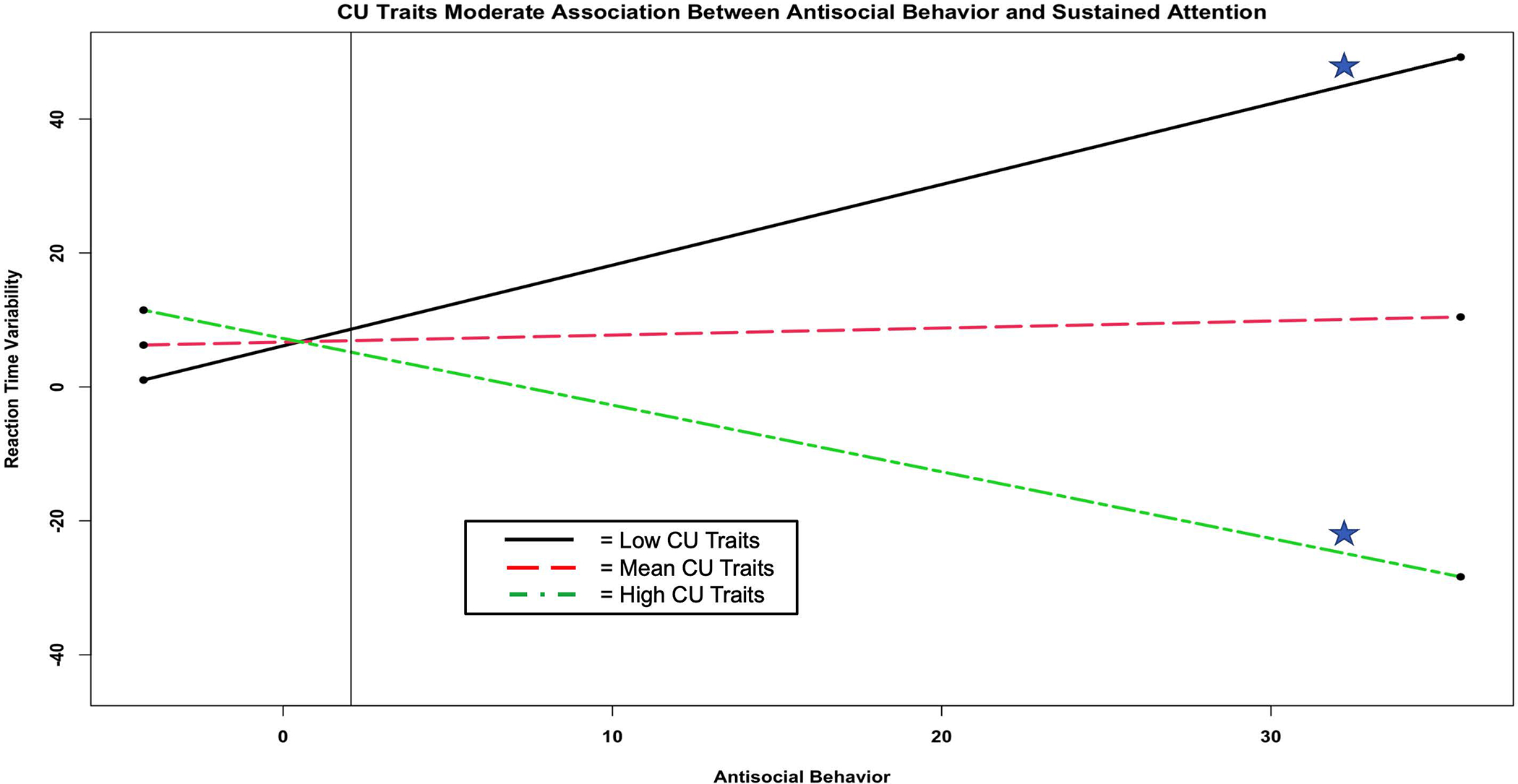
Results: Neither antisocial behavior, nor CU traits alone, were associated with cognitive functioning when accounting for demographic factors. However, antisocial behavior and CU traits interacted to predict reaction time variability. At low levels of CU traits, antisocial behavior was associated with higher reaction time variability (traditionally thought to reflect worse sustained attention). At high levels of CU traits, antisocial behavior was associated with lower reaction time variability (thought to reflect better sustained attention).
Conclusion: Elevated antisocial behavior and CU traits may be characterized by a distinct neurocognitive profile compared to elevated antisocial behavior in isolation. (PsycInfo Database Record (c) 2021 APA, all rights reserved).
Conflict of interest statement
Figures
References
-
- Achenbach TM (1991). Integrative guide for the 1991 CBCL/4–18, YSR, and TRF profiles. Department of Psychiatry, University of Vermont.
-
- Achenbach TM, McConaughy SH, & Howell CT (1987). Child/adolescent behavioral and emotional problems: implications of cross-informant correlations for situational specificity. Psychological bulletin, 101(2), 213. - PubMed
-
- Aguinis H, Beaty JC, Boik RJ, & Pierce CA (2005). Effect size and power in assessing moderating effects of categorical variables using multiple regression: a 30-year review. Journal of Applied Psychology, 90(1), 94. - PubMed
-
- Aiken LS, West SG, & Reno RR (1991). Multiple regression: Testing and interpreting interactions. Sage.
-
- Allen JL, Briskman J, Humayun S, Dadds MR, & Scott S (2013). Heartless and cunning? Intelligence in adolescents with antisocial behavior and psychopathic traits. Psychiatry research, 210(3), 1147–1153. - PubMed
Publication types
MeSH terms
Grants and funding
LinkOut - more resources
Full Text Sources
Other Literature Sources