


Branching development of early post-implantation human embryonic-like tissues in 3D stem cell culture
- PMID: 34044259
- PMCID: PMC8325636
- DOI: 10.1016/j.biomaterials.2021.120898
Branching development of early post-implantation human embryonic-like tissues in 3D stem cell culture
Abstract
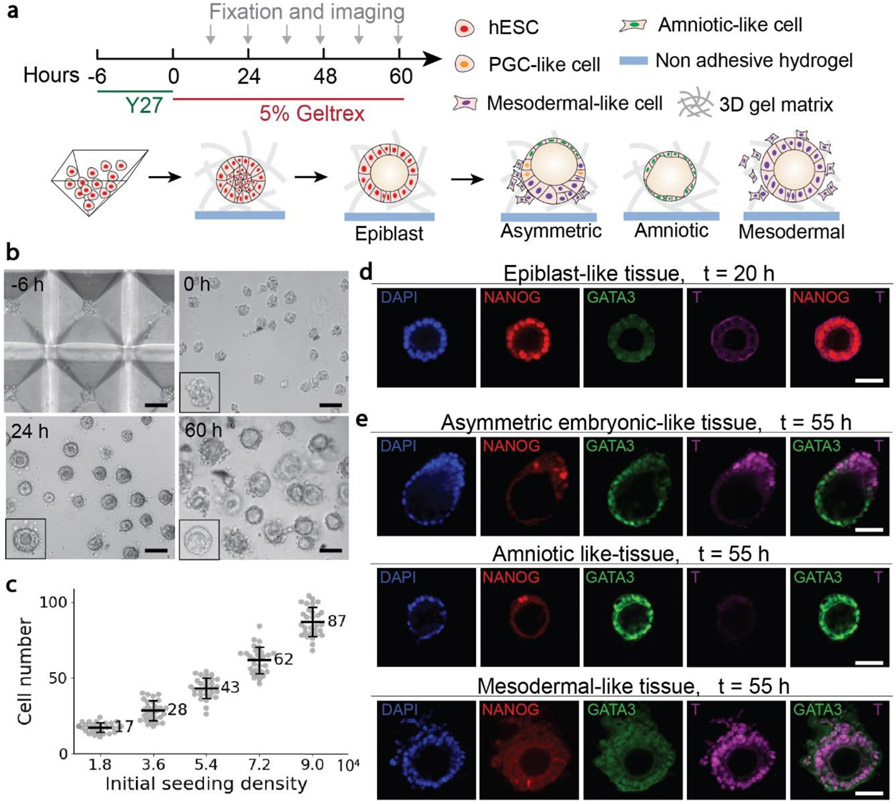
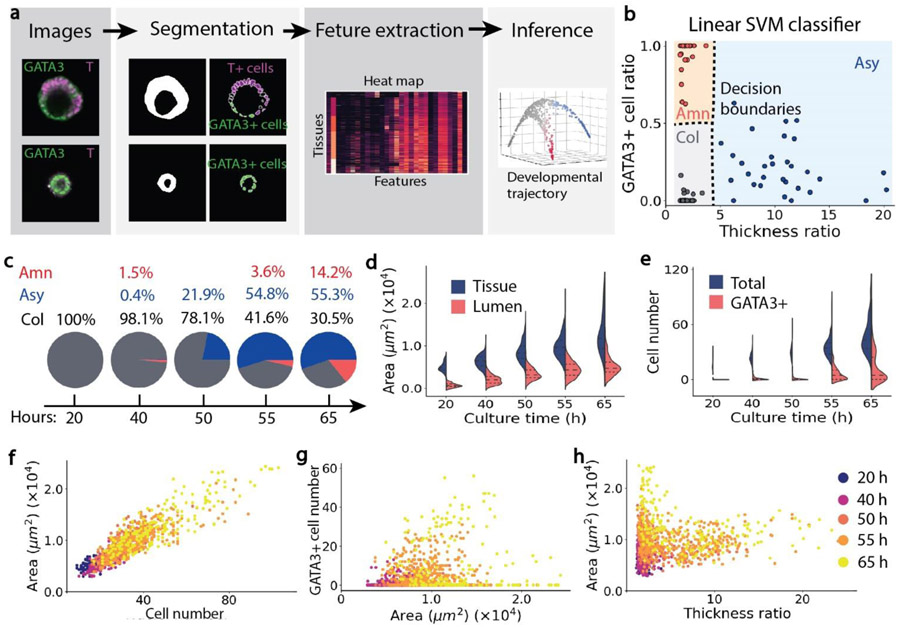
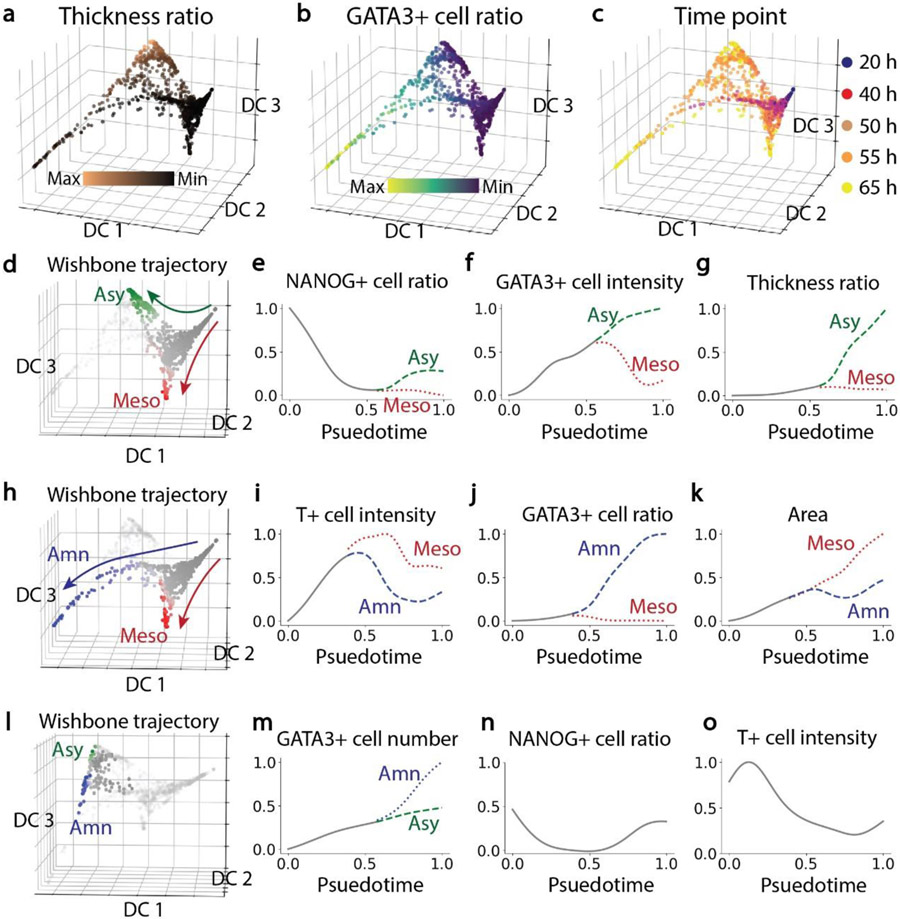
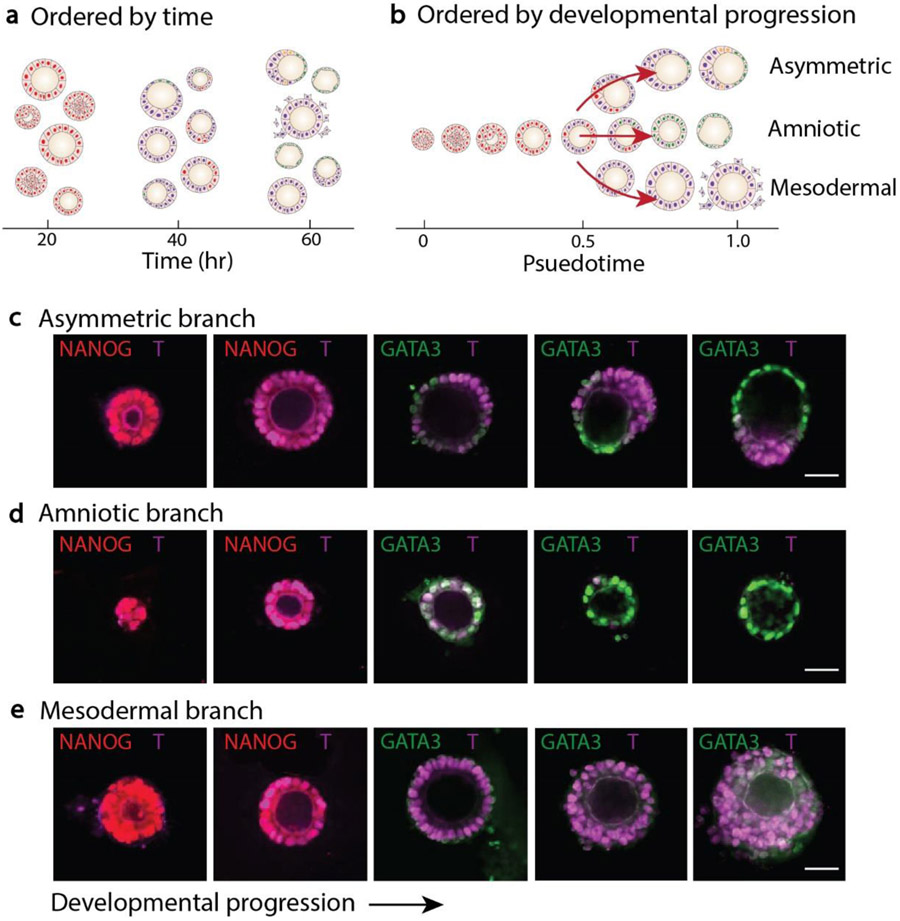
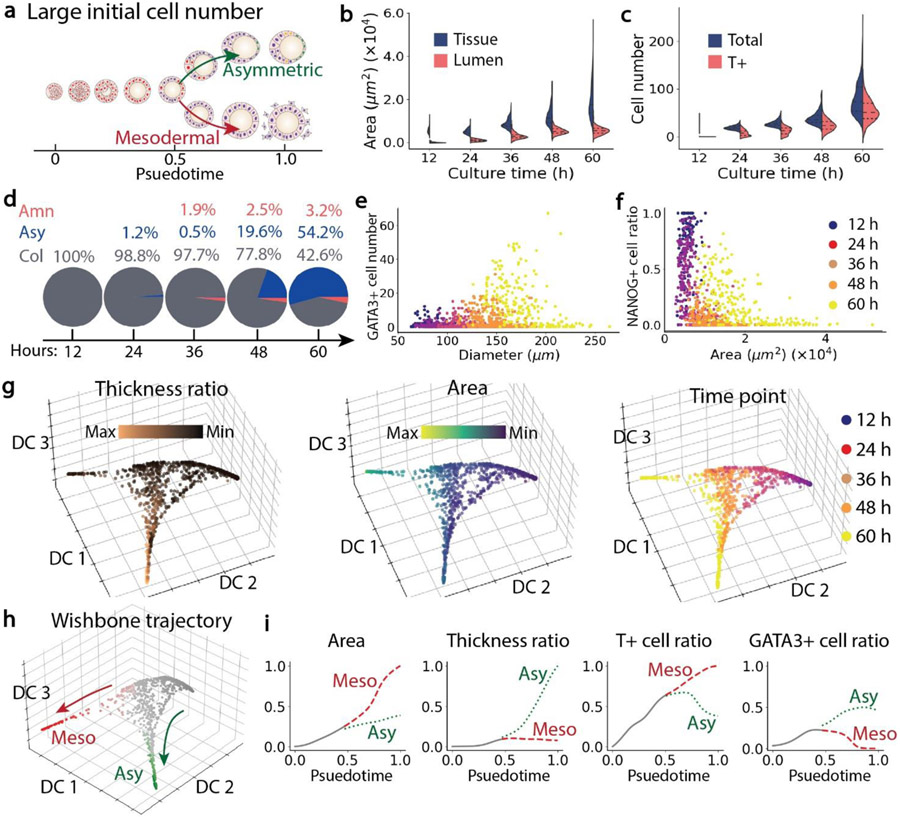
Human embryonic stem cells (hESCs) have the intrinsic capacity to self-organize and generate patterned tissues. In vitro models that coax hESCs to form embryonic-like structures by modulating physical environments and priming with chemical signals have become a powerful tool for dissecting the regulatory mechanisms underlying early human development. Here we present a 3D suspension culture system of hESCs that can generate post-implantation, pre-gastrulation embryonic-like tissues in an efficient and controllable manner. The efficiency of the development of asymmetric tissues, which mimic the post-implantation, pre-gastrulation amniotic sac, was about 50% in the 3D suspension culture. Quantitative imaging profiling and unsupervised trajectory analysis revealed that hESC aggregates first entered into a transitional stage expressing Brachyury (or T), before their development branched into different paths to develop into asymmetric embryonic-like tissues, amniotic-like tissues, and mesodermal-like tissues, respectively. Moreover, the branching developmental trajectory of embryonic-like structures was affected by the initial cell seeding density or cluster size of hESCs. A higher percentage of amniotic-like tissues was observed under a small initial cell seeding density of hESCs. Conversely, a large initial cell seeding density of hESCs promoted the development of mesodermal-like tissues. Intermediate cell seeding densities of hESCs in the 3D suspension culture promoted the development of asymmetric embryonic-like tissues. Our results suggest that hESCs have the intrinsic capability to sense the initial cell population size, which in turn regulates their differentiation and self-organization into different embryonic-like tissues. Our 3D suspension culture thus provides a promising experimental tool to study the interplay between tissue topology and self-organization and progressive embryonic development using in vitro hESC-based models.
Keywords: Branching tissue development; Human pluripotent stem cells; Synthetic embryonic model.
Copyright © 2021 Elsevier Ltd. All rights reserved.
Conflict of interest statement
Declaration of interests
The authors declare that they have no known competing financial interests or personal relationships that could have appeared to influence the work reported in this paper.
Figures

References
-
- Harland Richard M. "A new view of embryo development and regeneration." Science 360, no. 6392 (2018): 967–968. - PubMed
-
- Shahbazi Marta N., and Zernicka-Goetz Magdalena. "Deconstructing and reconstructing the mouse and human early embryo." Nature cell biology 20, no. 8 (2018): 878–887. - PubMed
-
- Hyun Insoo, Wilkerson Amy, and Johnston Josephine. "Embryology policy: Revisit the 14-day rule." Nature 533, no. 7602 (2016): 169–171. - PubMed
-
- Pera Martin F. "Human embryo research and the 14-day rule." Development 144, no. 11 (2017): 1923–1925. - PubMed
Publication types
MeSH terms
Grants and funding
LinkOut - more resources
Full Text Sources
Other Literature Sources
