Modified high-flow nasal cannula for children with respiratory distress
- PMID: 34044481
- PMCID: PMC8898618
- DOI: 10.3345/cep.2020.01403
Modified high-flow nasal cannula for children with respiratory distress
Abstract
Background: High-flow nasal cannula (HFNC) is a noninvasive respiratory support that provides the optimum flow of an air-oxygen mixture. Several studies demonstrated its usefulness and good safety profile for treating pediatric respiratory distress patients. However, the cost of the commercial HFNC is high; therefore, the modified high-flow nasal cannula was developed.
Purpose: This study aimed to compare the effectiveness, safety, and nurses' satisfaction of the modified system versus the standard commercial HFNC.
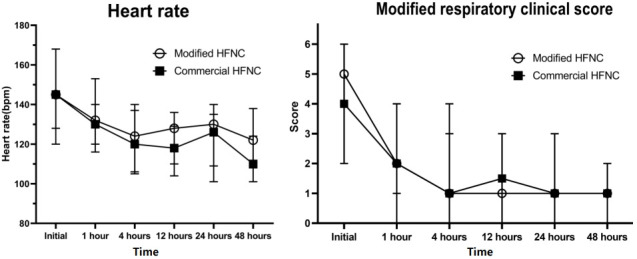
Methods: This prospective comparative study was performed in a tertiary care hospital. We recruited children aged 1 month to 5 years who developed acute respiratory distress and were admitted to the pediatric intensive care unit. Patients were assigned to 2 groups (modified vs. commercial). The effectiveness and safety assessments included vital signs, respiratory scores, intubation rate, adverse events, and nurses' satisfaction.
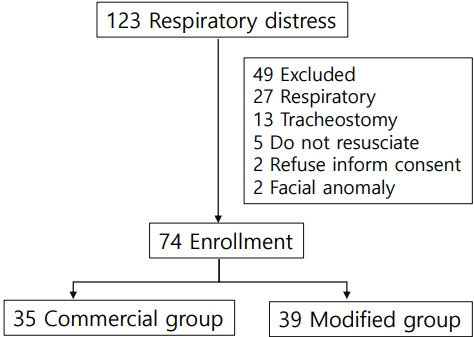
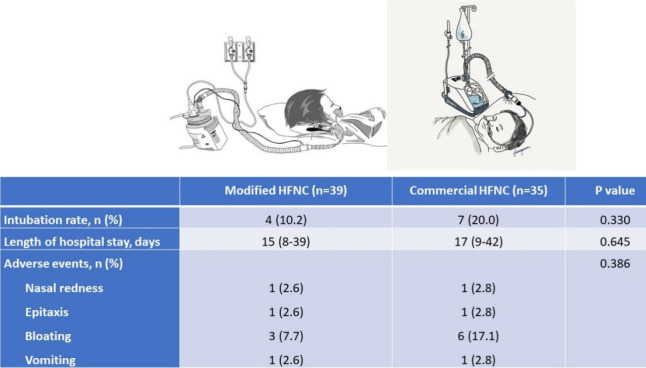
Results: A total of 74 patients were treated with HFNC. Thirty- nine patients were assigned to the modified group, while the remaining 35 patients were in the commercial group. Intubation rate and adverse events did not differ significantly between the 2 groups. However, the commercial group had higher nurses' satisfaction scores than the modified group.
Conclusion: Our findings suggest that our low-cost modified HFNC could be a useful respiratory support option for younger children with acute respiratory distress, especially in hospital settings with financial constraints.
Keywords: High-flow nasal cannula; Noninvasive respiratory support; Respiratory distress; Respiratory failure.
Conflict of interest statement
No potential conflict of interest relevant to this article was reported.
Figures

References
-
- Ward JJ. High-flow oxygen administration by nasal cannula for adult and perinatal patients. Respir Care. 2013;58:98–122. - PubMed
-
- Dysart K, Miller TL, Wolfson MR, Shaffer TH. Research in high flow therapy: mechanisms of action. Respir Med. 2009;103:1400–5. - PubMed
-
- Bueno Campana M, Olivares Ortiz J, Notario Munoz C, Rupérez Lucas M, Fernández Rincón A, Patiño Hernández O, et al. High flow therapy versus hypertonic saline in bronchiolitis: randomised controlled trial. Arch Dis Child. 2014;99:511–5. - PubMed
Grants and funding
LinkOut - more resources
Full Text Sources
Other Literature Sources