


Engineered Axonal Tracts as "Living Electrodes" for Synaptic-Based Modulation of Neural Circuitry
- PMID: 34045935
- PMCID: PMC8152180
- DOI: 10.1002/adfm.201701183
Engineered Axonal Tracts as "Living Electrodes" for Synaptic-Based Modulation of Neural Circuitry
Abstract
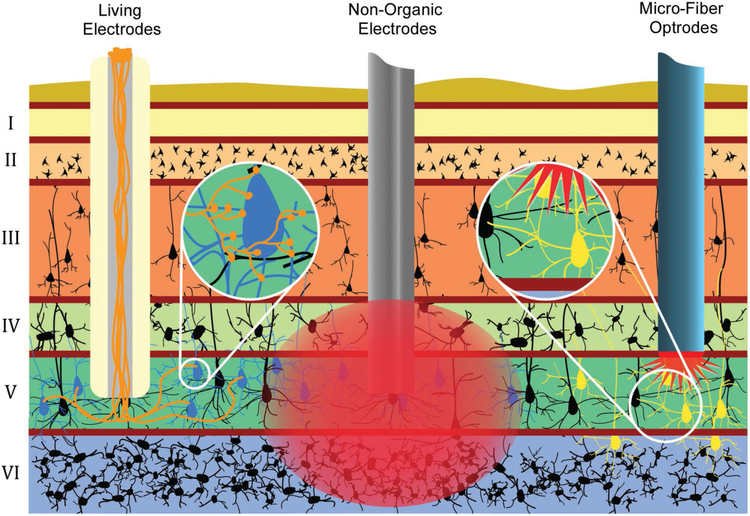
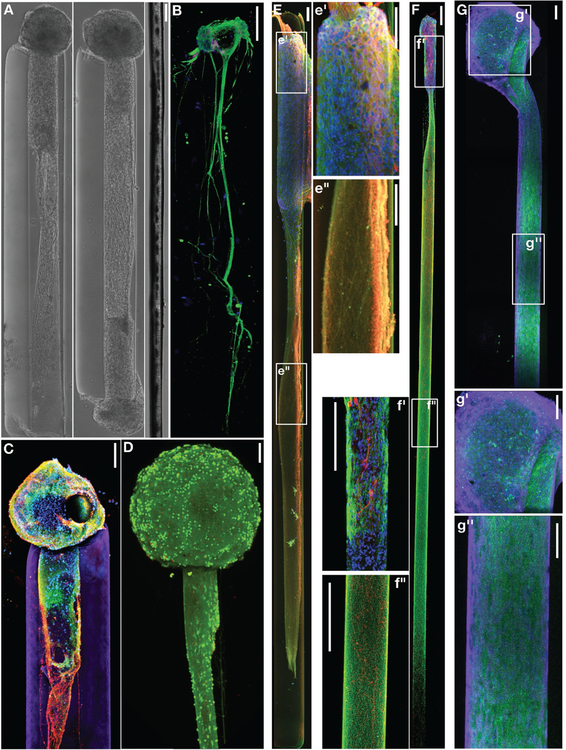
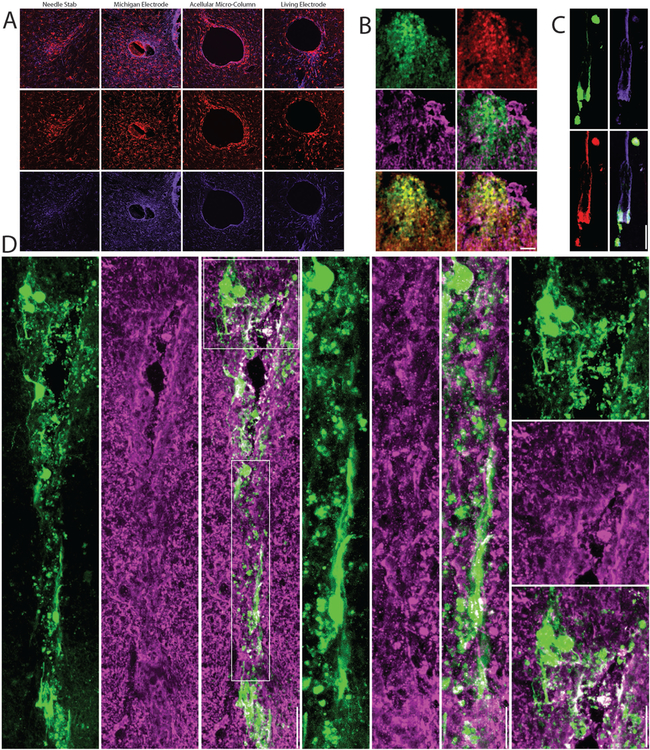
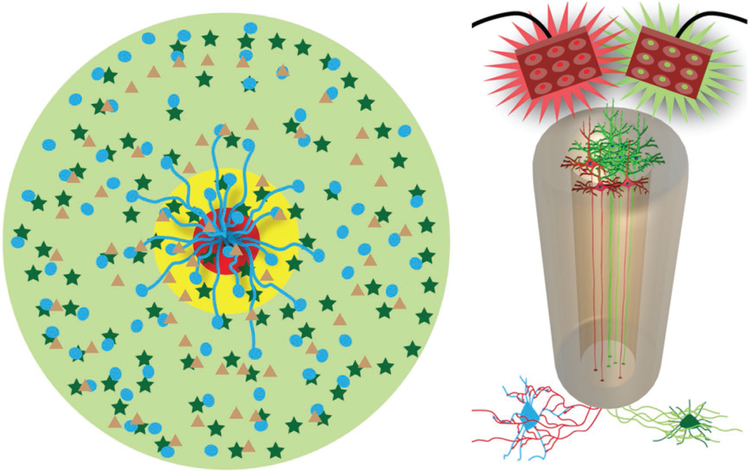
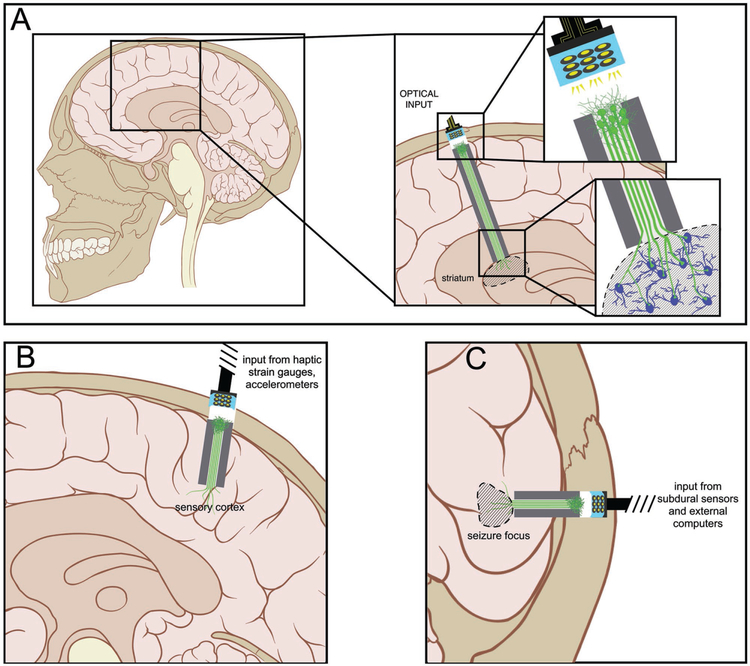
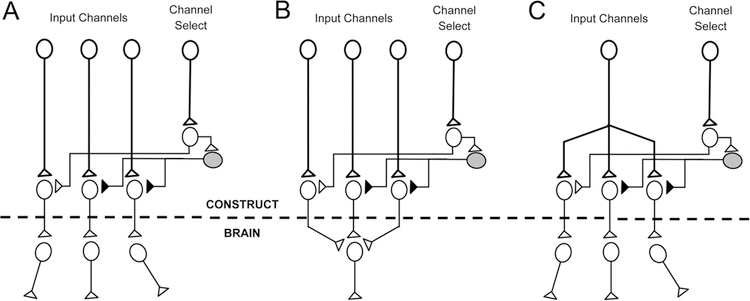
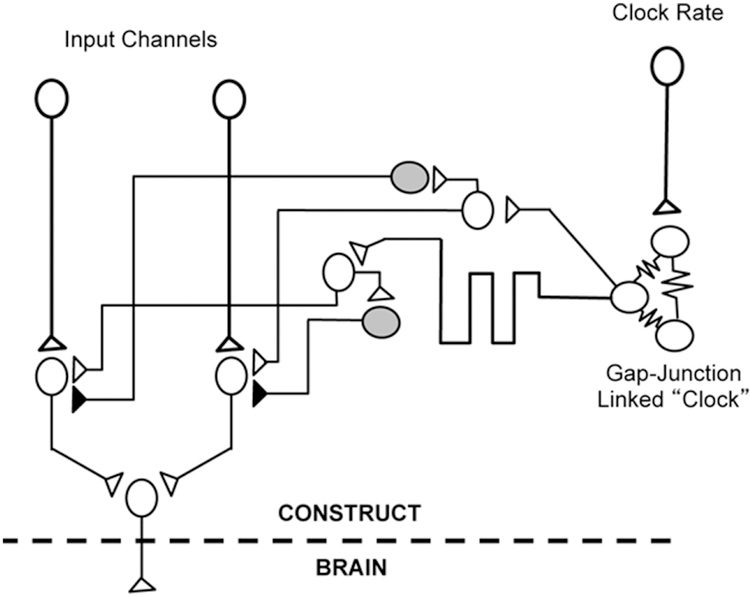
Brain-computer interface and neuromodulation strategies relying on penetrating non-organic electrodes/optrodes are limited by an inflammatory foreign body response that ultimately diminishes performance. A novel "biohybrid" strategy is advanced, whereby living neurons, biomaterials, and microelectrode/optical technology are used together to provide a biologically-based vehicle to probe and modulate nervous-system activity. Microtissue engineering techniques are employed to create axon-based "living electrodes", which are columnar microstructures comprised of neuronal population(s) projecting long axonal tracts within the lumen of a hydrogel designed to chaperone delivery into the brain. Upon microinjection, the axonal segment penetrates to prescribed depth for synaptic integration with local host neurons, with the perikaryal segment remaining externalized below conforming electrical-optical arrays. In this paradigm, only the biological component ultimately remains in the brain, potentially attenuating a chronic foreign-body response. Axon-based living electrodes are constructed using multiple neuronal subtypes, each with differential capacity to stimulate, inhibit, and/or modulate neural circuitry based on specificity uniquely afforded by synaptic integration, yet ultimately computer controlled by optical/electrical components on the brain surface. Current efforts are assessing the efficacy of this biohybrid interface for targeted, synaptic-based neuromodulation, and the specificity, spatial density and long-term fidelity versus conventional microelectronic or optical substrates alone.
Keywords: biologically-mediated neuromodulation; brain–computer interfaces; living scaffolds; microtissue engineering; tissue engineering.
Conflict of interest statement
Conflict of Interest The authors declare no conflict of interest.
Figures
References
-
- Duda JE, Struzyna LA, Browne KD, Chen HI, Wolf JA, Cullen DK, Proceedings of 21st International Congress of Parkinson’s Disease and Movement Disorders 2017.
Grants and funding
LinkOut - more resources
Full Text Sources
Other Literature Sources