


Transplantation of CD34+ cells for myocardial ischemia
- PMID: 34046316
- PMCID: PMC8131931
- DOI: 10.5500/wjt.v11.i5.138
Transplantation of CD34+ cells for myocardial ischemia
Abstract
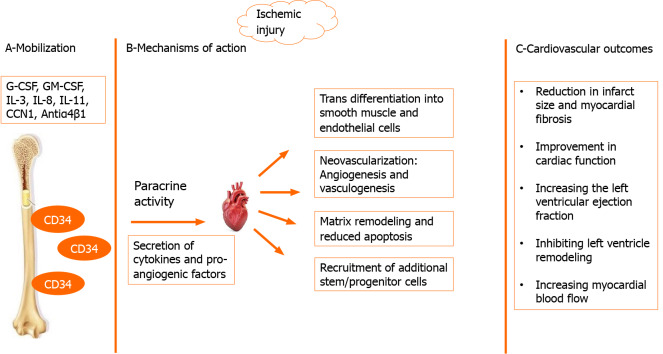
CD34+ cells are multipotent hematopoietic stem cells also known as endothelial progenitor cells and are useful in regenerative medicine. Naturally, these cells are mobilized from the bone marrow into peripheral circulation in response to ischemic tissue injury. CD34+ cells are known for their high proliferative and differentiation capacities that play a crucial role in the repair process of myocardial damage. They have an important paracrine activity in secreting factors to stimulate vasculogenesis, reduce endothelial cells and cardiomyocytes apoptosis, remodel extracellular matrix and activate additional progenitor cells. Once they migrate to the target site, they enhance angiogenesis, neovascularization and tissue regeneration. Several trials have demonstrated the safety and efficacy of CD34+ cell therapy in different settings, such as peripheral limb ischemia, stroke and cardiovascular disease. Herein, we review the potential utility of CD34+ cell transplantation in acute myocardial infarction, refractory angina and ischemic heart failure.
Keywords: Cell therapy; Coronary microvascular dysfunction; Endothelial progenitor cells; Heart failure; Myocardial ischemia; Refractory angina.
©The Author(s) 2021. Published by Baishideng Publishing Group Inc. All rights reserved.
Conflict of interest statement
Conflict-of-interest statement: The authors declare no conflicts of interest.
Figures
References
-
- Irwin S. Clinical manifestations and assessment of ischemic heart disease. Phys Ther. 1985;65:1806–1811. - PubMed
-
- Kaski JC, Crea F, Gersh BJ, Camici PG. Reappraisal of Ischemic Heart Disease. Circulation. 2018;138:1463–1480. - PubMed
-
- Roncalli JG, Tongers J, Renault MA, Losordo DW. Endothelial progenitor cells in regenerative medicine and cancer: a decade of research. Trends Biotechnol. 2008;26:276–283. - PubMed
Publication types
LinkOut - more resources
Full Text Sources
Other Literature Sources
