


Silica Nanoparticle-Endothelial Interaction: Uptake and Effect on Platelet Adhesion under Flow Conditions
- PMID: 34046558
- PMCID: PMC8152525
- DOI: 10.1021/acsabm.8b00466
Silica Nanoparticle-Endothelial Interaction: Uptake and Effect on Platelet Adhesion under Flow Conditions
Abstract
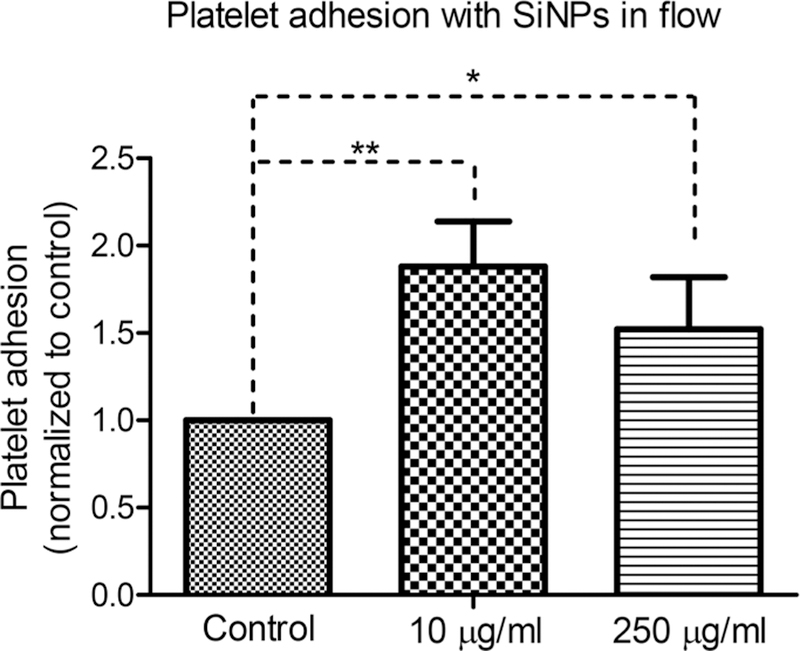
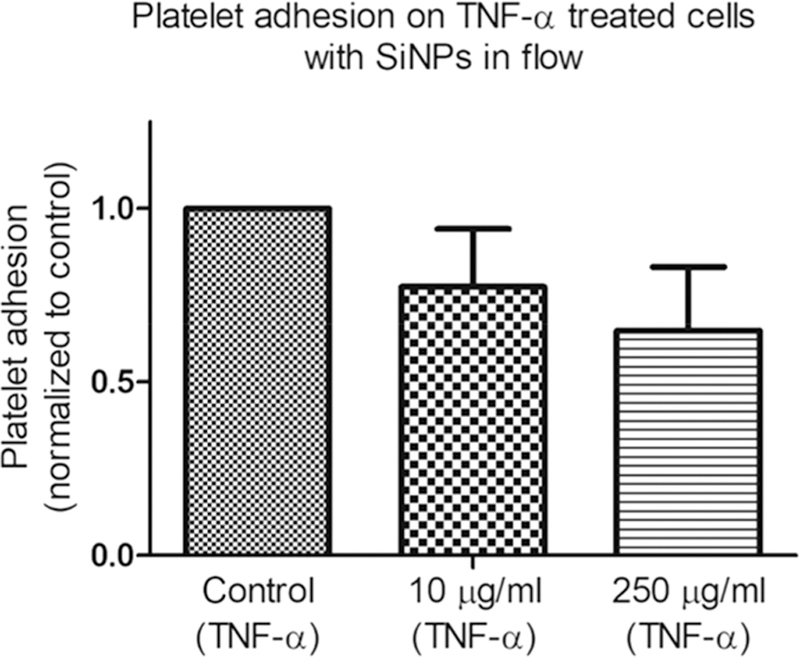
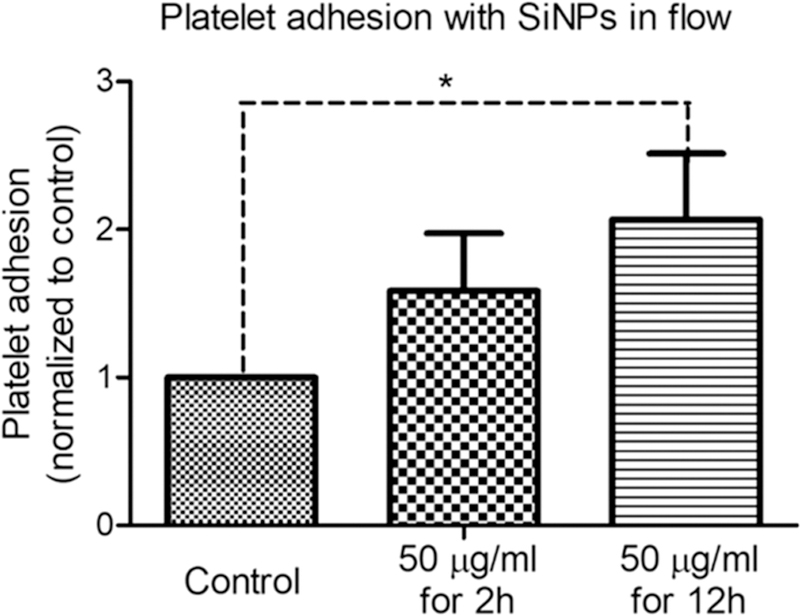
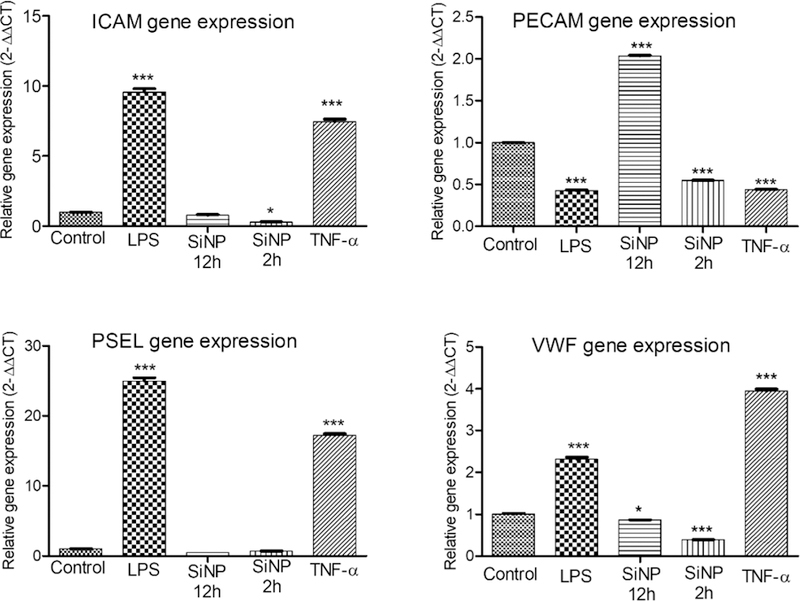
Silica nanoparticles are extensively used in biomedical applications and consumer products. Little is known about the interaction of these NPs with the endothelium and effect on platelet adhesion under flow conditions in circulation. In this study, we investigated the effect of silica nanoparticles on the endothelium and its inflammation, and subsequent adhesion of flowing platelets in vitro. Platelet counts adhered onto the surface of endothelial cells in the presence of nanoparticles increased at both low and high concentrations of nanoparticles. Preincubation of endothelial cells with nanoparticles also increased platelet adhesion. Interestingly, platelet adhesion onto TNF-α-treated endothelial cells decreased in the presence of nanoparticles at different concentrations as compared with the absence of nanoparticles. We monitored the expression of different endothelial proteins, known to initiate platelet adhesion, in the presence and absence of silica nanoparticles. We found that silica nanoparticles caused changes in the endothelium such as overexpression of PECAM that promoted platelet adhesion to the endothelial cell.
Keywords: BAEC; adhesion; blood platelets; endothelium; inflammation; silica nanoparticles.
Conflict of interest statement
The authors declare no competing financial interest.
Figures


References
-
- Gimbrone MA Vascular Endothelium in Hemostasis and Thrombosis; Churchill Livingstone, 1986; Vol. 2.
-
- Mehta D; Malik AB Signaling Mechanisms Regulating Endothelial Permeability. Physiol. Rev 2006, 86, 279–367. - PubMed
-
- Rumbaut RE; Thiagarajan P Platelet-Vessel Wall Interactions in Hemostasis and Thrombosis. In Synthesis Lectures on Integrated Systems Physiology: From Molecule to Function; Morgan & Claypool Life Sciences, San Rafael, CA: 2010; Vol. 2, pp 1–75. - PubMed
-
- Fujimura Y; Titani K; Holland L; Russell S; Roberts J; Elder J; Ruggeri Z; Zimmerman T von Willebrand Factor. A Reduced and Alkylated 52/48-kDa Fragment Beginning at Amino Acid Residue 449 Contains the Domain Interacting with Platelet Glycoprotein Ib. J. Biol. Chem 1986, 261, 381–385. - PubMed
Grants and funding
LinkOut - more resources
Full Text Sources