Characteristics and outcome of patients with low-/intermediate-risk acute promyelocytic leukemia treated with arsenic trioxide: an international collaborative study
- PMID: 34047178
- PMCID: PMC8634174
- DOI: 10.3324/haematol.2021.278722
Characteristics and outcome of patients with low-/intermediate-risk acute promyelocytic leukemia treated with arsenic trioxide: an international collaborative study
Abstract
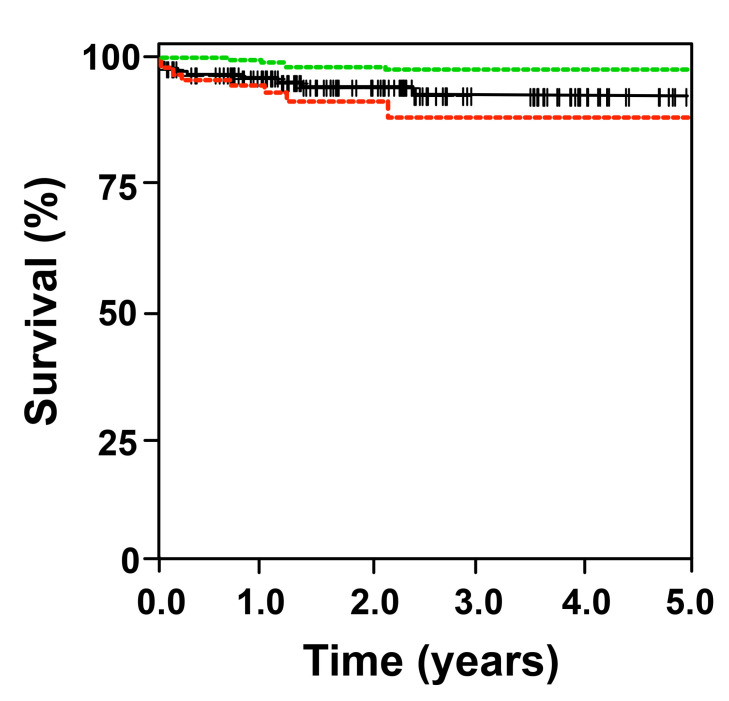
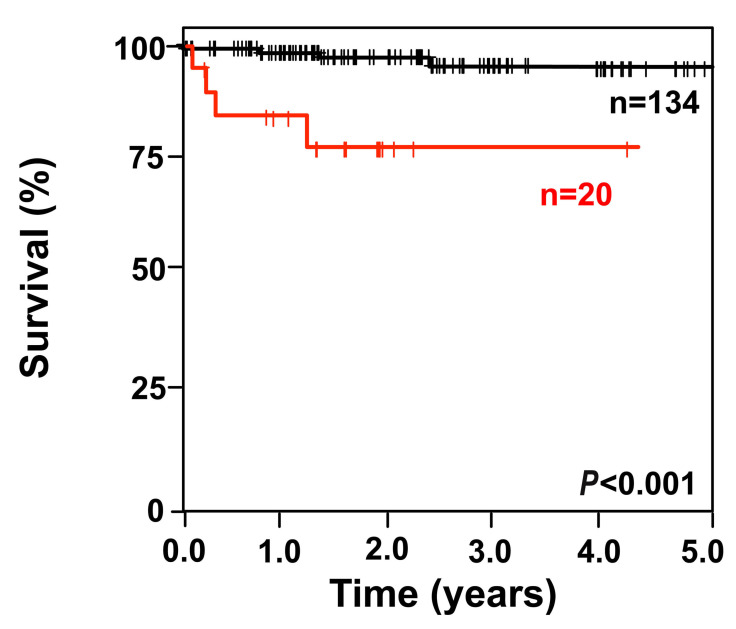
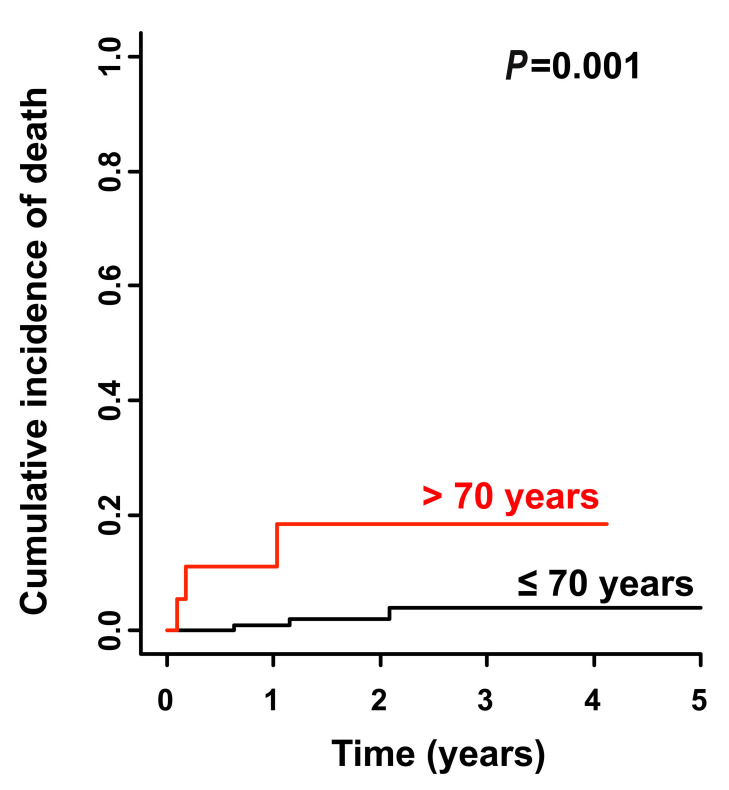
The aim of this study was to characterize a large series of 154 patients with acute promyelocytic leukemia (median age, 53 years; range, 18-90 years) and evaluate real-life outcome after up-front treatment with arsenic trioxide and all-trans retinoic acid. All patients were included in the prospective NAPOLEON registry (NCT02192619) between 2013 and 2019. The acute promyelocytic leukemia was de novo in 91% (n=140) and therapy-related in 9% (n=14); 13% (n=20) of the patients were older than 70 years. At diagnosis bleeding/hemorrhage was present in 38% and thrombosis in 3%. Complete remission was achieved in 152 patients (99%), whereas two patients (1%) experienced induction death within 18 days after starting therapy. With a median follow-up of 1.99 years (95% confidence interval: 1.61-2.30 years) 1-year and 2-year overall survival rates were 97% (95% confidence interval: 94-100%) and 95% (95% confidence interval: 91-99%), respectively. Age above 70 years was associated with a significantly shorter overall survival (P<0.001) compared to that of younger patients. So far no relapses have been observed. Six patients (4%) died in complete remission at a median of 0.95 years after diagnosis (range, 0.18-2.38 years). Our data confirm the efficiency and durability of arsenic trioxide and all-trans retinoic acid therapy in the primary management of adults with low-/intermediate-risk acute promyelocytic leukemia in the real-life setting, irrespective of age.
Figures
Comment in
-
Arsenic and all-trans retinoic acid for acute promyelocytic leukemia: yes, it really is as good as it seems.Haematologica. 2021 Dec 1;106(12):3031-3032. doi: 10.3324/haematol.2021.278984. Haematologica. 2021. PMID: 34047181 Free PMC article. No abstract available.
References
-
- Swerdlow SH, Campo E, Harris NL, et al. WHO Classification of Tumours of Haematopoietic and Lymphoid Tissues. Revised 4th edition. WHO Press, Geneva, Switzerland, 2017.
-
- Lo-Coco F, Avvisati G, Vignetti M, et al. Retinoic acid and arsenic trioxide for acute promyelocytic leukemia. N Engl J Med. 2013;369(2):111-121. - PubMed
-
- Platzbecker U, Avvisati G, Cicconi L, et al. Improved outcomes with retinoic acid and arsenic trioxide compared with retinoic acid and chemotherapy in non-high-risk acute promyelocytic leukemia: final results of the randomized Italian-German APL0406 trial. J Clin Oncol. 2016;35(6):605-612. - PubMed
-
- Burnett AK, Russell NH, Hills RK, et al. Arsenic trioxide and all-trans retinoic acid treatment for acute promyelocytic leukaemia in all risk groups (AML17): results of a randomised, controlled, phase 3 trial. Lancet Oncol. 2015;16(13):1295-1305. - PubMed
-
- Paulson K, Serebrin A, Lambert P, et al. Acute promyelocytic leukaemia is characterized by stable incidence and improved survival that is restricted to patients managed in leukaemia referral centres: a pan-Canadian epidemiological study. Br J Haematol. 2014;166(5):660-666. - PubMed
MeSH terms
Substances
Associated data
LinkOut - more resources
Full Text Sources
Other Literature Sources
Medical