


Digging behavior discrimination test to probe burrowing and exploratory digging in male and female mice
- PMID: 34048600
- PMCID: PMC9066774
- DOI: 10.1002/jnr.24857
Digging behavior discrimination test to probe burrowing and exploratory digging in male and female mice
Abstract
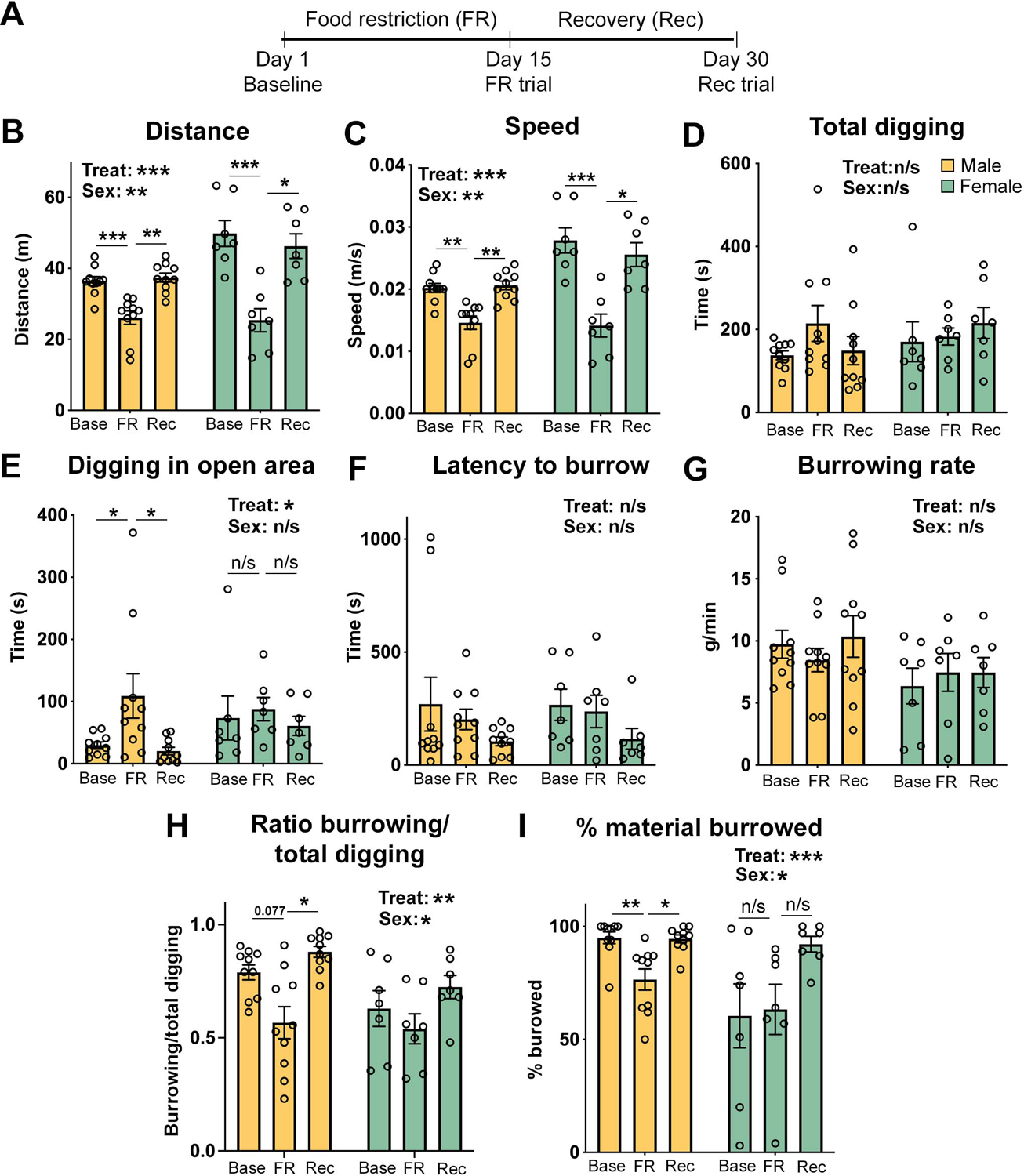
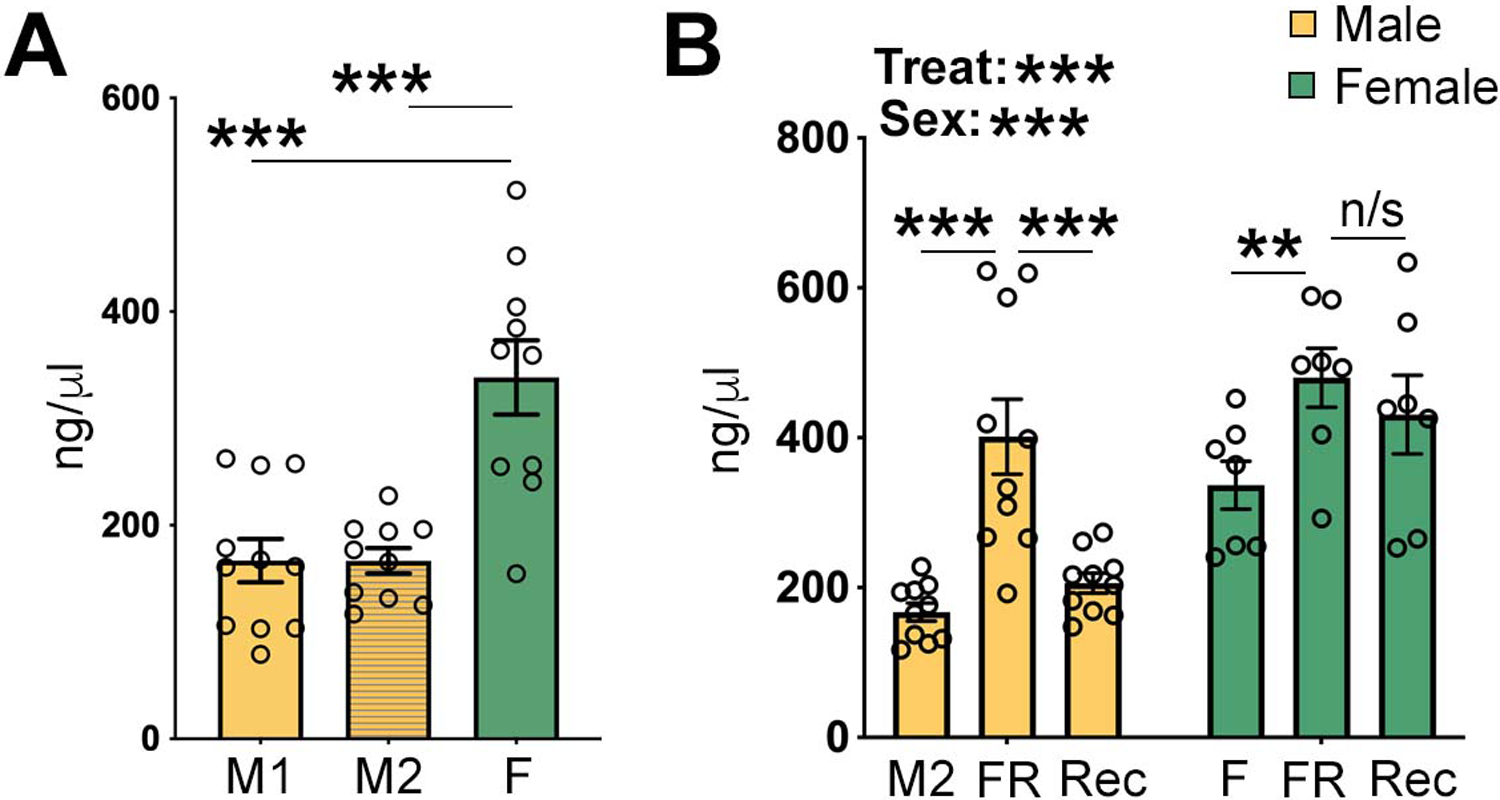
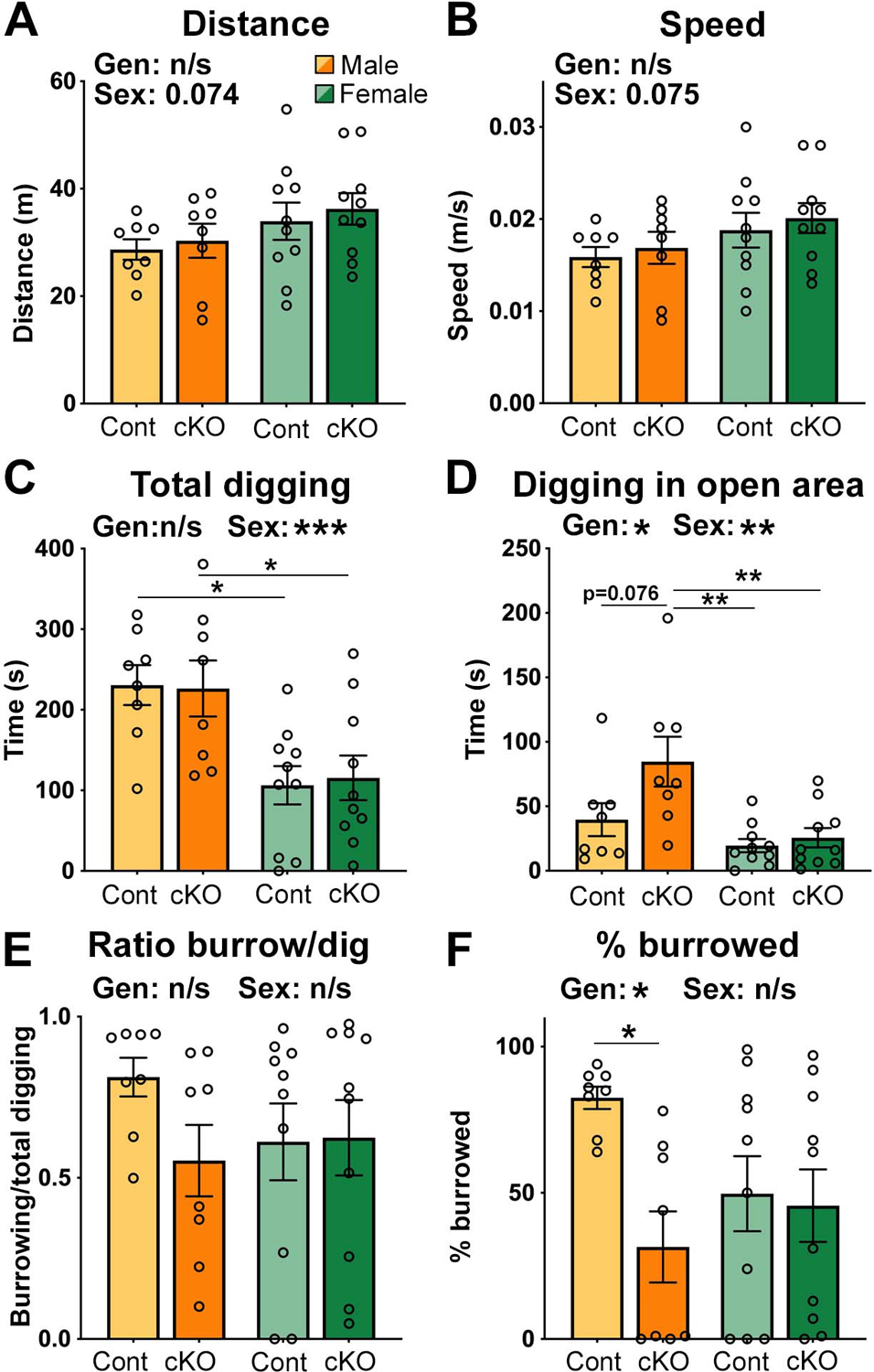
Digging behavior is often used to test motor function and repetitive behaviors in mice. Different digging paradigms have been developed for behaviors related to anxiety and compulsion in mouse lines generated to recapitulate genetic mutations leading to psychiatric and neurological disorders. However, the interpretation of these tests has been confounded by the difficulty of determining the motivation behind digging in mice. Digging is a naturalistic mouse behavior that can be focused toward different goals, that is foraging for food, burrowing for shelter, burying objects, or even for recreation as has been shown for dogs, ferrets, and human children. However, the interpretation of results from current testing protocols assumes the motivation behind the behavior often concluding that increased digging is a repetitive or compulsive behavior. We asked whether providing a choice between different types of digging activities would increase sensitivity to assess digging motivation. Here, we present a test to distinguish between burrowing and exploratory digging in mice. We found that mice prefer burrowing when the option is available. When food restriction was used to promote a switch from burrowing to exploration, males readily switched from burrowing to digging outside, while females did not. In addition, when we tested a model of intellectual disability and autism spectrum disorder that had shown inconsistent results in the marble burying test, the Cc2d1a conditional knockout mouse, we found greatly reduced burrowing only in males. Our findings indicate that digging is a nuanced motivated behavior and suggest that male and female rodents may perform it differently.
Keywords: RRID:IMSR_CRL:27; RRID:IMSR_JAX:005359; RRID:IMSR_TAC:b6; RRID:MGI:5449582; behavioral analysis; burrowing; digging; repetitive behaviors.
© 2021 Wiley Periodicals LLC.
Conflict of interest statement
Conflict of Interest Statement
The authors declare no conflicts of interest.
Figures

References
-
- American Psychiatric Association. (2013). Diagnostic and Statistical Manual of Mental Disorders (Fifth Edition). American Psychiatric Association.
-
- Avenant NL, & Smith VR (2003). The microenvironment of house mice on Marion Island (sub-Antarctic). Polar Biology, 26(2), 129–141.
MeSH terms
Grants and funding
LinkOut - more resources
Full Text Sources
Other Literature Sources
Molecular Biology Databases
