


Improving assessment of demand for postpartum tubal ligation among publicly insured women in Texas
- PMID: 34048752
- PMCID: PMC10348345
- DOI: 10.1016/j.contraception.2021.05.009
Improving assessment of demand for postpartum tubal ligation among publicly insured women in Texas
Abstract
Objective: To assess an alternative method for estimating demand for postpartum tubal ligation and evaluate reproductive trajectories of low-income women who did not obtain a desired procedure.
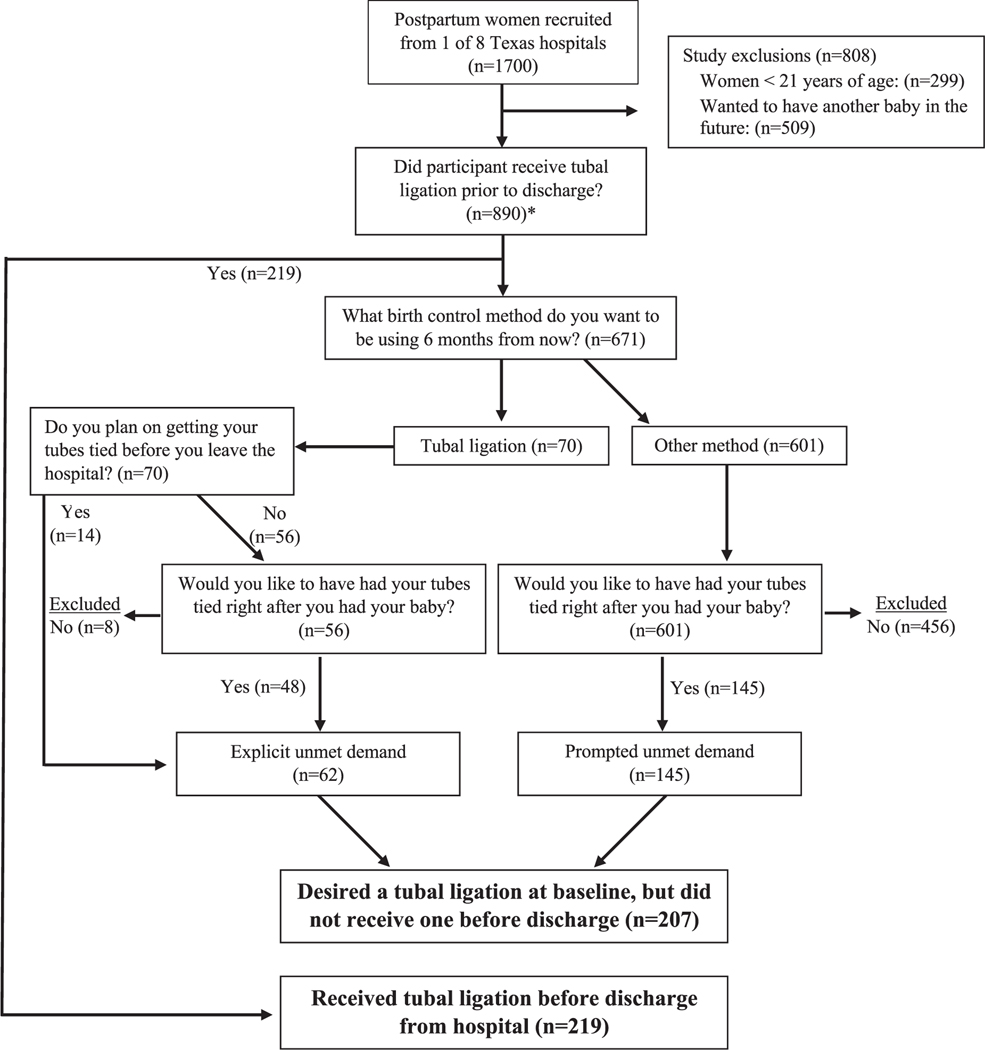
Study design: In a 2-year cohort study of 1700 publicly insured women who delivered at 8 hospitals in Texas, we identified those who had an unmet demand for tubal ligation prior to discharge from the hospital. We classified unmet demand as explicit or prompted based on survey questions that included a prompt regarding whether the respondent would like to have had a tubal ligation at the time of delivery. We assessed persistence of demand for permanent contraception, contraceptive use, and repeat pregnancies among all study participants who wanted but did not get a postpartum procedure.
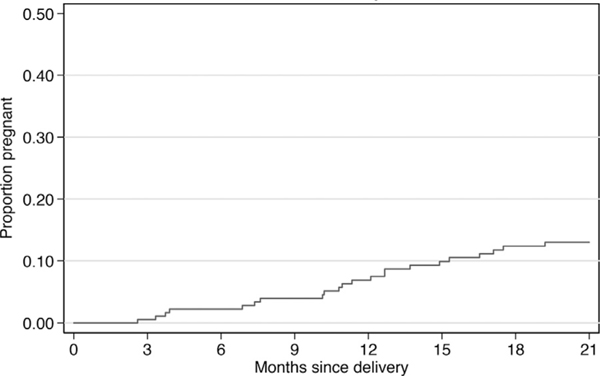
Results: Some 426 women desired a postpartum tubal ligation; 219 (51%) obtained one prior to discharge. Among the 207 participants with unmet demand, 62 (30%) expressed an explicit preference for the procedure, while 145 (70%) were identified from the prompt. Most with unmet demand still wanted permanent contraception 3 months after delivery (156/184), but only 23 had obtained interval procedures. By 18 months, the probability of a woman with unmet demand conceiving a pregnancy that she would likely carry to term was 12.5% (95% CI: 8.3%-18.5%).
Conclusions: The majority of unmet demand for postpartum tubal ligation among publicly insured women in Texas was uncovered via a prompt and would not have been evident in clinical records or from consent forms. Women unable to obtain a desired procedure had a substantial chance of pregnancy within 18 months after delivery.
Implications: Estimates of unmet demand for postpartum tubal ligation based on clinical records and consent forms likely underestimate desire for permanent contraception. Among low-income women in Texas, those with unmet demand for postpartum tubal ligation require improved access to effective contraception.
Keywords: Contraception; Family planning; Female sterilization; Permanent contraception; Postpartum; Sterilization; Texas; Tubal ligation.
Copyright © 2021 The Authors. Published by Elsevier Inc. All rights reserved.
Conflict of interest statement
Conflict of interest: The authors declare that they have no known competing financial interests or personal relationships that could have appeared to influence the work reported in this paper.
Figures
References
-
- Chan LC, Westhoff C. Tubal sterilization trends in the United States. Fertil Steril 2010;94(1):1–6. - PubMed
-
- Whiteman MK, Cox S, Tepper NK, Curtis KM, Jamieson DJ, Penman-Aguilar A, et al. Postpartum intrauterine device insertion and postpartum tubal sterilization in the United States. Am J Obstet Gynecol 2012;206(127):e1–7. - PubMed
-
- Nations United, Department of Economic and Social Affairs, Population Division World contraceptive patterns 2013; 2013.
-
- Allen RH, Desimone M, Boardman LA. Barriers to completion of desired postpartum sterilization. R I Med J 2013;96:32–4. - PubMed
-
- Seibel-Seamon J, Visintine JF, Leiby BE, Weinstein L. Factors predictive for failure to perform postpartum tubal ligations following vaginal delivery. J Reprod Med 2009;54:160–4. - PubMed
Publication types
MeSH terms
Grants and funding
LinkOut - more resources
Full Text Sources
Other Literature Sources
Medical
