


Transepithelial Versus Epithelium-Off Corneal Crosslinking for Progressive Keratoconus: Findings From a Cochrane Systematic Review
- PMID: 34048801
- PMCID: PMC8599612
- DOI: 10.1016/j.ajo.2021.05.009
Transepithelial Versus Epithelium-Off Corneal Crosslinking for Progressive Keratoconus: Findings From a Cochrane Systematic Review
Abstract
Purpose: The purpose of this study was to summarize key findings from a systematic review of the effectiveness and safety of transepithelial corneal crosslinking (CXL) compared with epithelium-off CXL for progressive keratoconus.
Design: Cochrane systematic review.
Methods: We included in our review only randomized controlled trials (RCTs) in which transepithelial and epithelium-off CXL had been compared among participants with progressive keratoconus. The primary outcome was keratoconus stabilization based on post-operative maximum keratometry (Kmax). We adhered to Cochrane methods for trial selection, data extraction, risk of bias evaluation, and data synthesis.
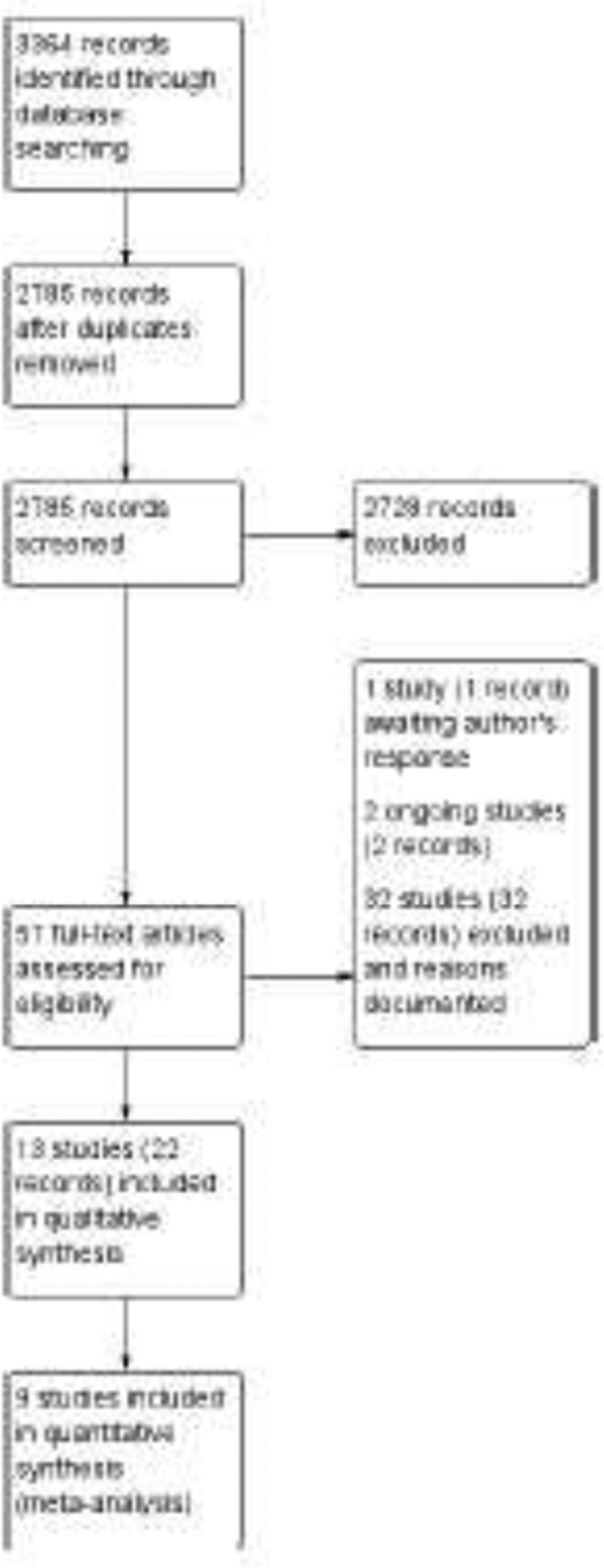
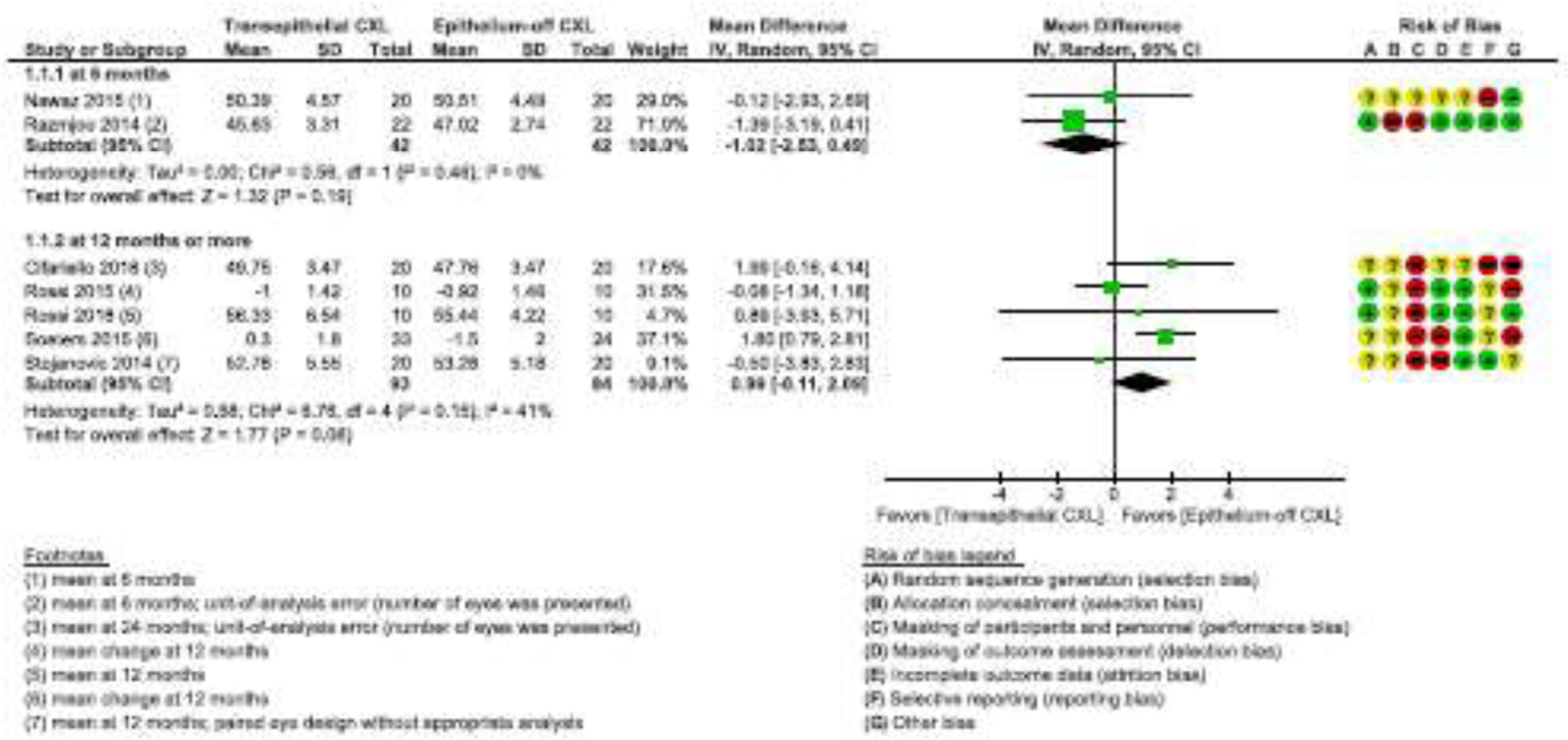
Results: Thirteen RCTs with 567 participants (661 eyes) were included; 11 studies compared non-iontophoresis-assisted transepithelial with epithelium-off CXL. Keratoconus stabilization was described as an outcome in 2 studies. The estimated difference in Kmax means (ie, the "mean difference," MD) from meta-analysis of 177 eyes in 5 RCTs indicated that there were no differences between intervention groups in Kmax at 12 months or later (MD: 0.99 diopter [D]; 95% confidence interval: -0.11 to 2.09). Meta-analysis of keratometry and visual acuity outcomes at 12 months or longer after surgery from 2 studies that had compared transepithelial CXL using iontophoresis provided no conclusive evidence of an advantage over epithelium-off CXL.
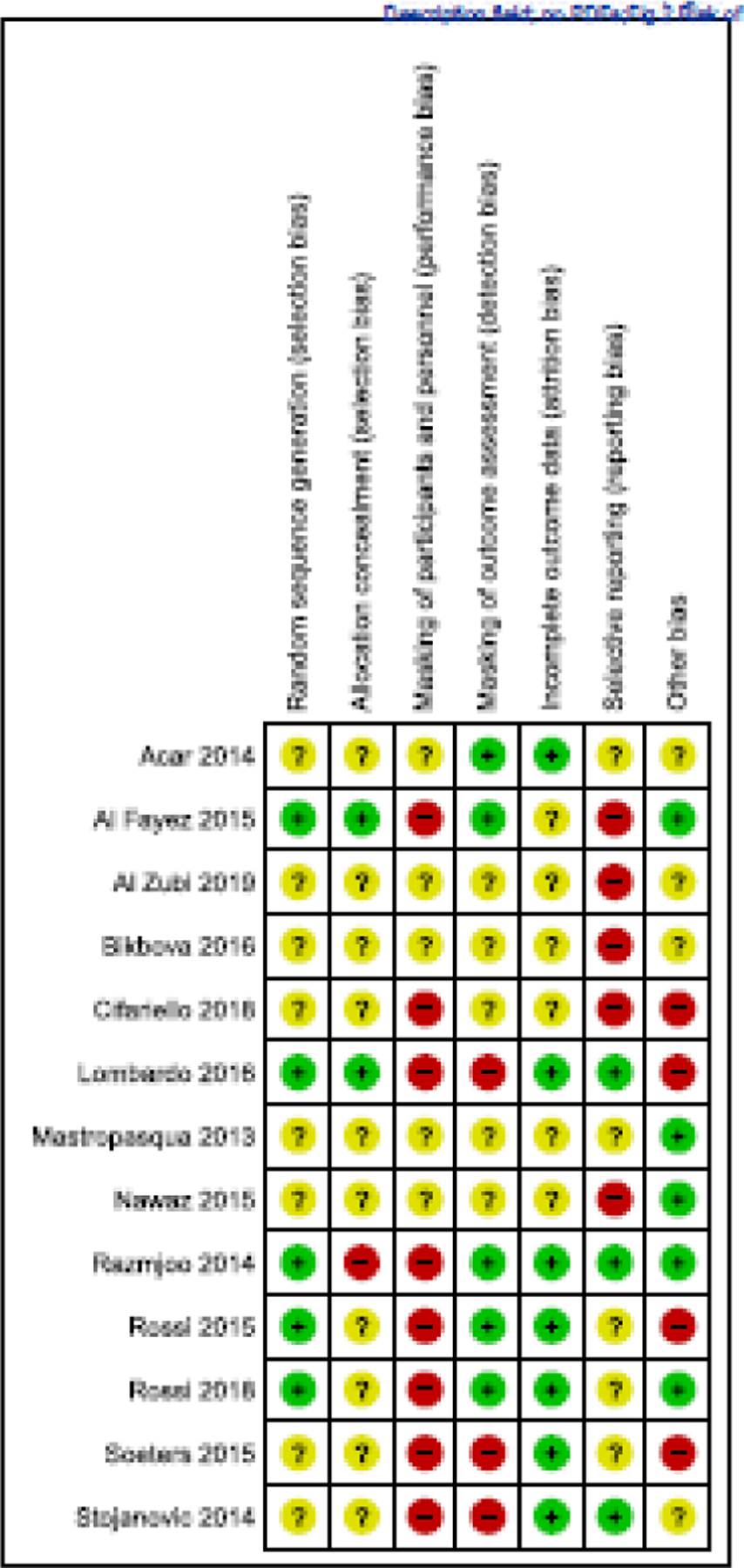
Conclusions: Lack of precision due to small sample sizes, indeterminate risk of bias due to inadequate reporting, and inconsistency in how outcomes were measured and reported among studies make it difficult to state with confidence whether transepithelial CXL confers an advantage over epithelium-off CXL for patients with progressive keratoconus with respect to stabilization of keratoconus, visual acuity, or patient-reported outcomes based on available data.
Copyright © 2021 Elsevier Inc. All rights reserved.
Figures
References
-
- Rabinowitz YS. Keratoconus. Surv Ophthalmol. 1998;42(4):297–319. - PubMed
-
- Godefrooij DA, de Wit GA, Uiterwaal CS, Imhof SM, Wisse RP. Age-specific incidence and prevalence of keratoconus: a nationwide registration study. Am J Ophthalmol. 2017;175:169–172. - PubMed
-
- Kennedy RH, Bourne WM, Dyer JA. A 48-year clinical and epidemiologic study of keratoconus. Am J Ophthalmol. 1986;101(3):267–273. - PubMed
-
- Caporossi A, Mazzotta C, Baiocchi S, Caporossi T. Long-term results of riboflavin ultraviolet a corneal collagen cross-linking for keratoconus in Italy: the Siena eye cross study. Am J Ophthalmol. 2010;149(4):585–593. - PubMed
Publication types
MeSH terms
Substances
Grants and funding
LinkOut - more resources
Full Text Sources
Other Literature Sources
