


Cannabis-related diagnosis in pregnancy and adverse maternal and infant outcomes
- PMID: 34049105
- PMCID: PMC8282693
- DOI: 10.1016/j.drugalcdep.2021.108757
Cannabis-related diagnosis in pregnancy and adverse maternal and infant outcomes
Abstract
Background: Cannabis use and cannabis use disorders are increasing in prevalence, including among pregnant women. The objective was to evaluate the association of a cannabis-related diagnosis (CRD) in pregnancy and adverse maternal and infant outcomes.
Methods: We queried an administrative birth cohort of singleton deliveries in California between 2011-2017 linked to maternal and infant hospital discharge records. We classified pregnancies with CRD from International Classification of Disease codes. We identified nicotine and other substance-related diagnoses (SRD) in the same manner. Outcomes of interest included maternal (hypertensive disorders) and infant (prematurity, small for gestational age, NICU admission, major structural malformations) adverse outcomes.
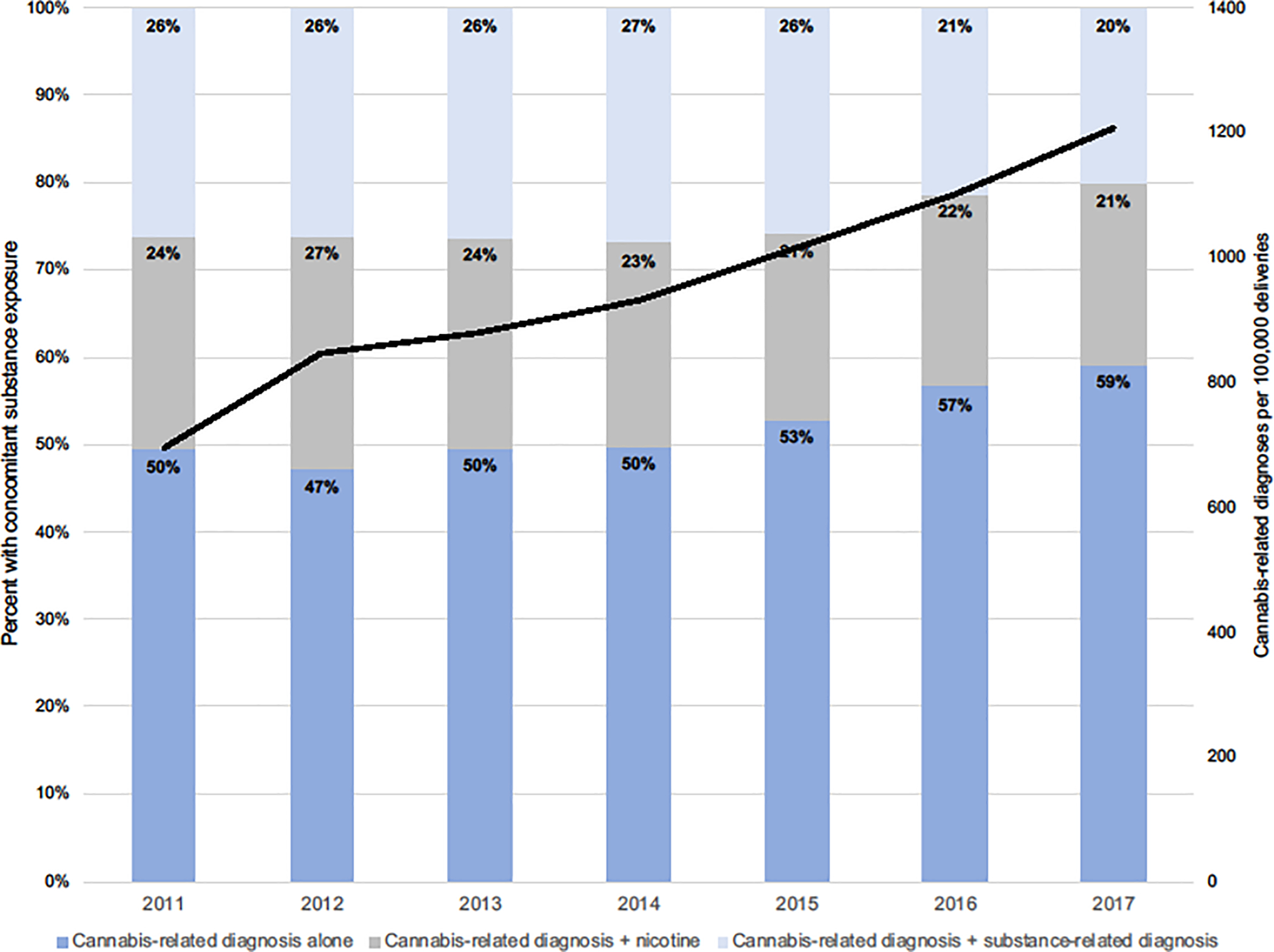
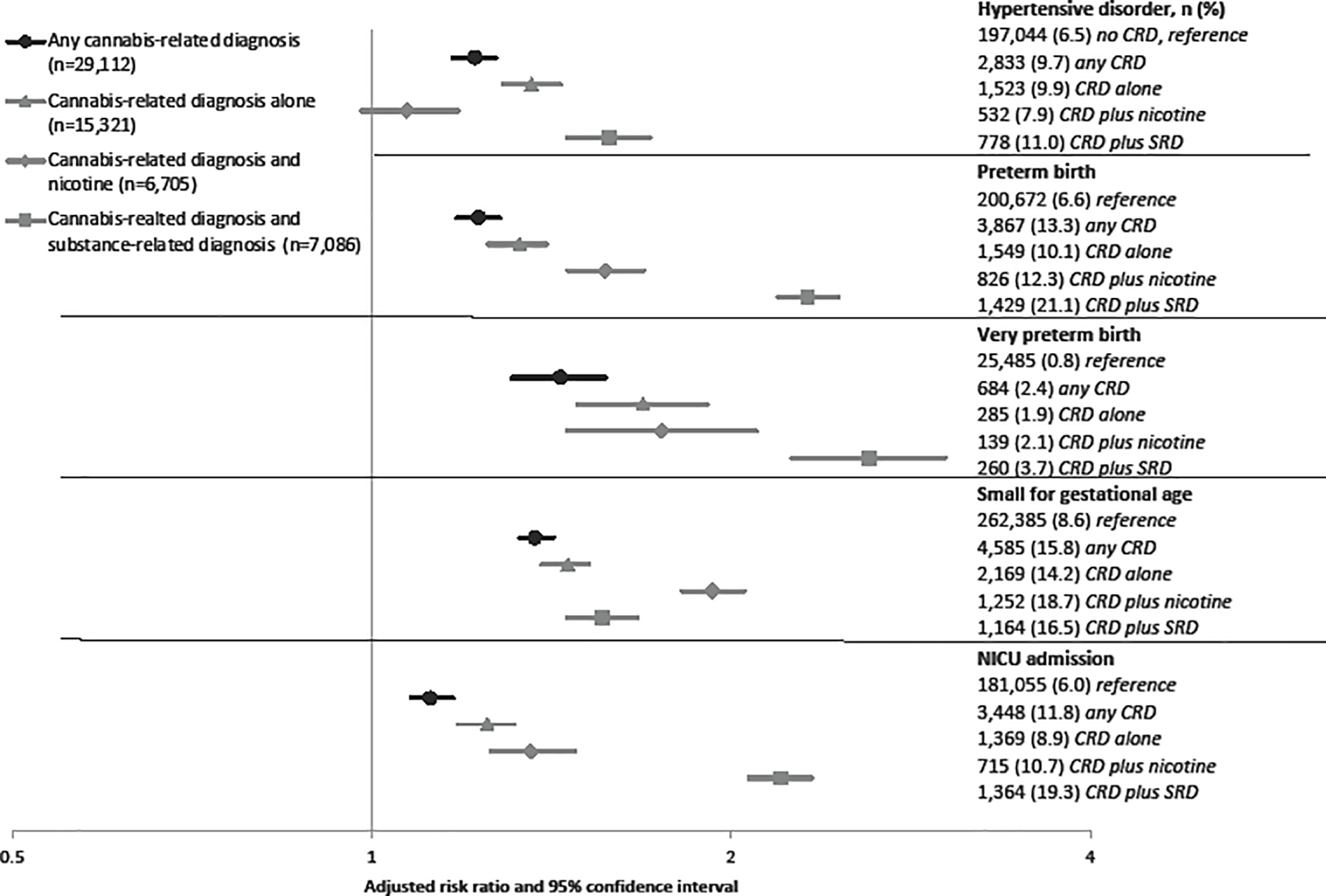
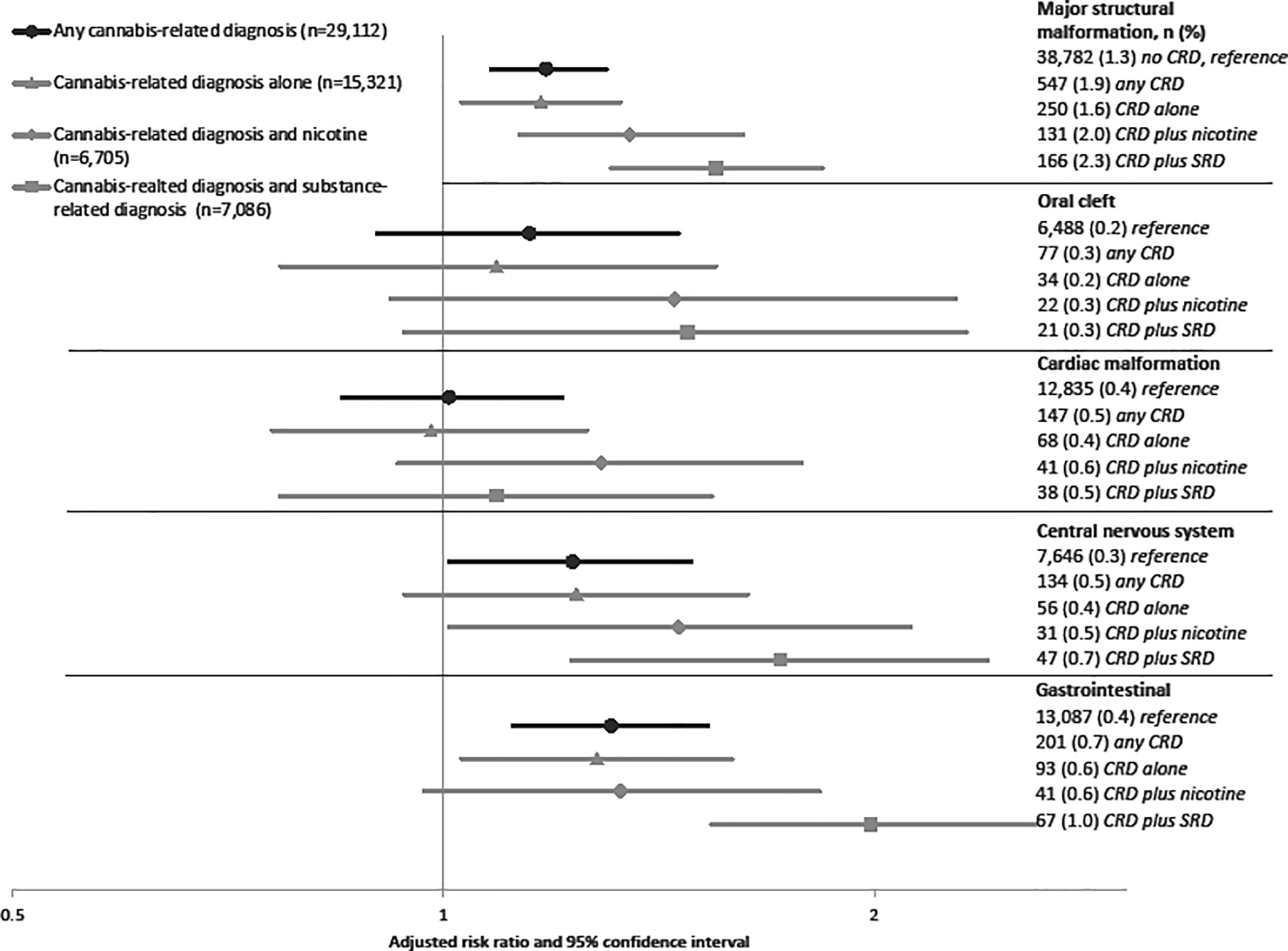
Results: From 3,067,069 pregnancies resulting in live births, 29,112 (1.0 %) had a CRD. CRD was associated with an increased risk of all outcomes studied; the strongest risks observed were for very preterm birth (aRR 1.4, 95 % CI 1.3, 1.6) and small for gestational age (aRR 1.4, 95 % CI 1.3, 1.4). When analyzed with or without co-exposure diagnoses, CRD alone conferred increased risk for all outcomes compared to no use. The strongest effects were seen for CRD with other SRD (preterm birth aRR 2.3, 95 % CI 2.2, 2.5; very preterm birth aRR 2.6, 95 % CI 2.3, 3.0; gastrointestinal malformations aRR 2.0, 95 % CI 1.6, 2.6). The findings were generally robust to unmeasured confounding and misclassification analyses.
Conclusions: CRD in pregnancy was associated with increased risk of adverse maternal and infant outcomes. Providing education and effective treatment for women with a CRD during prenatal care may improve maternal and infant health.
Keywords: Adverse birth outcomes; Adverse maternal outcomes; Cannabis related diagnosis; Epidemiology.
Copyright © 2021 Elsevier B.V. All rights reserved.
Conflict of interest statement
Conflict of interest
The authors report no conflicts to declare.
Figures
References
-
- American Medical Association’s Board of Trustees, 1990. Legal interventions during pregnancy. Court-ordered medical treatments and legal penalties for potentially harmful behavior by pregnant women. JAMA 264, 2663–2670. - PubMed
-
- Angelotta C, Appelbaum PS, 2017. Criminal Charges for Child Harm from Substance Use in Pregnancy. J. Am. Acad. Psychiatry Law 45, 193–203. - PubMed
-
- Bondarenko AI, 2019. Cannabinoids and Cardiovascular System, in: Bukiya AN (Ed.), Recent Advances in Cannabinoid Physiology and Pathology. Springer International Publishing, Cham, pp. 63–87. 10.1007/978-3-030-21737-2_5 - DOI
Publication types
MeSH terms
Grants and funding
LinkOut - more resources
Full Text Sources
Other Literature Sources
