


The comparison of epidemiological characteristics between confirmed and clinically diagnosed cases with COVID-19 during the early epidemic in Wuhan, China
- PMID: 34049599
- PMCID: PMC8161348
- DOI: 10.1186/s41256-021-00200-8
The comparison of epidemiological characteristics between confirmed and clinically diagnosed cases with COVID-19 during the early epidemic in Wuhan, China
Abstract
Background: To put COVID-19 patients into hospital timely, the clinical diagnosis had been implemented in Wuhan in the early epidemic. Here we compared the epidemiological characteristics of laboratory-confirmed and clinically diagnosed cases with COVID-19 in Wuhan.
Methods: Demographics, case severity and outcomes of 29,886 confirmed cases and 21,960 clinically diagnosed cases reported between December 2019 and February 24, 2020, were compared. The risk factors were estimated, and the effective reproduction number (Rt) of SARS-CoV-2 was also calculated.
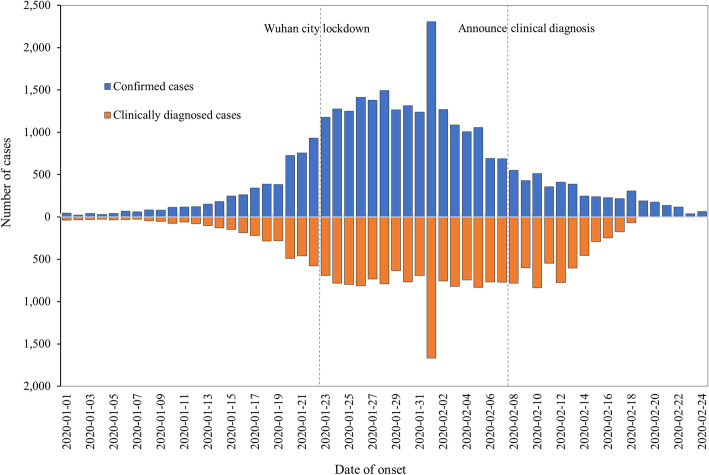
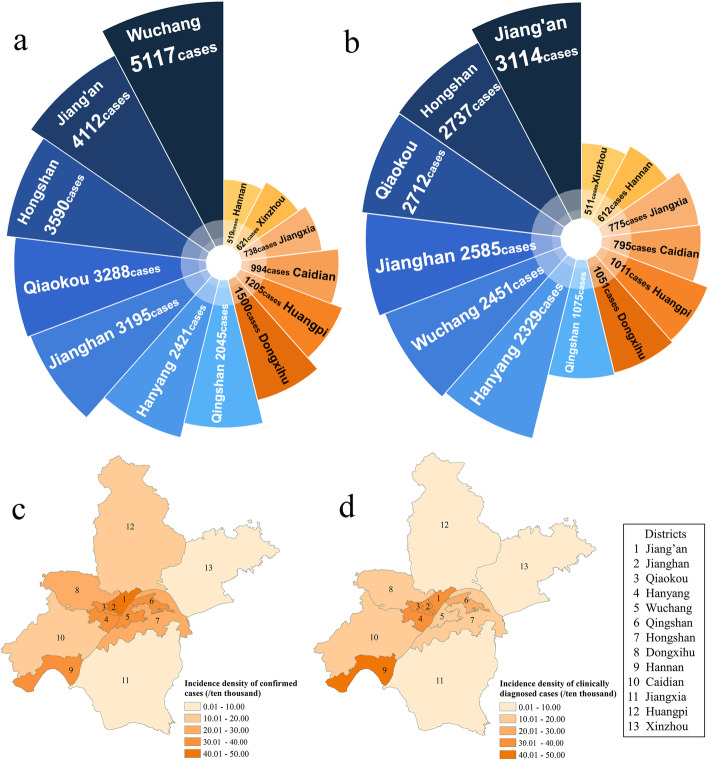
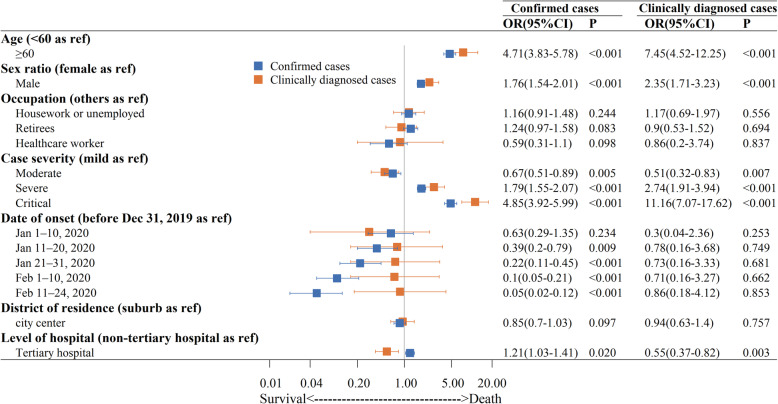
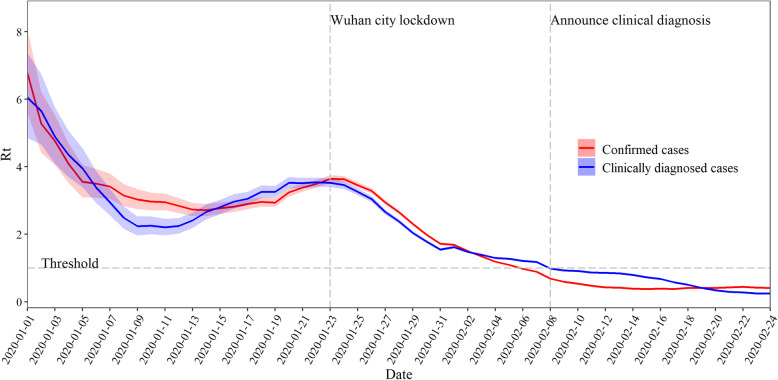
Results: The age and occupation distribution of confirmed cases and clinically diagnosed cases were consistent, and their sex ratio were 1.0 and 0.9, respectively. The epidemic curve of clinical diagnosis cases was similar to that of confirmed cases, and the city centers had more cumulative cases and higher incidence density than suburbs in both of two groups. The proportion of severe and critical cases (21.5 % vs. 14.0 %, P < 0.0001) and case fatality rates (5.2 % vs. 1.2 %, P < 0.0001) of confirmed cases were all higher than those of clinically diagnosed cases. Risk factors for death we observed in both of two groups were older age, male, severe or critical cases. Rt showed the same trend in two groups, it dropped below 1.0 on February 6 among confirmed cases, and February 8 among clinically diagnosed cases.
Conclusions: The demographic characteristics and spatiotemporal distributions of confirmed and clinically diagnosed cases are roughly similar, but the disease severity and clinical outcome of clinically diagnosed cases are better than those of confirmed cases. In cases when detection kits are insufficient during the early epidemic, the implementation of clinical diagnosis is necessary and effective.
Keywords: COVID-19; Clinical diagnosis; Effective reproduction number; Epidemiology; Risk factor; Wuhan city.
Conflict of interest statement
The authors declare that they have no competing interests.
Figures
References
-
- WHO. Naming the coronavirus disease (COVID-19) and the virus that causes it. https://www.who.int/emergencies/diseases/novel-coronavirus-2019/technica.... Accessed 19 Feb 2020.
-
- Wang X, Yu Y, Hu Y, Yu C. COVID-19 analysis and forecast based on exponential smoothing model in Hubei Province (in Chinese). J Public Health Prev Med. 2020;30(1):1-4.
-
- National health commission of the People’s Republic of China. Notice on guideline over the diagnosis and treatment of COVID-19 (Revision version fifth). http://www.nhc.gov.cn/yzygj/s7653p/202002/d4b895337e19445f8d728fcaf1e3e1.... Accessed 8 Feb 2020.
Publication types
MeSH terms
Grants and funding
LinkOut - more resources
Full Text Sources
Other Literature Sources
Medical
Miscellaneous
