


A single resistance factor to solve vineyard degeneration due to grapevine fanleaf virus
- PMID: 34050254
- PMCID: PMC8163887
- DOI: 10.1038/s42003-021-02164-4
A single resistance factor to solve vineyard degeneration due to grapevine fanleaf virus
Abstract
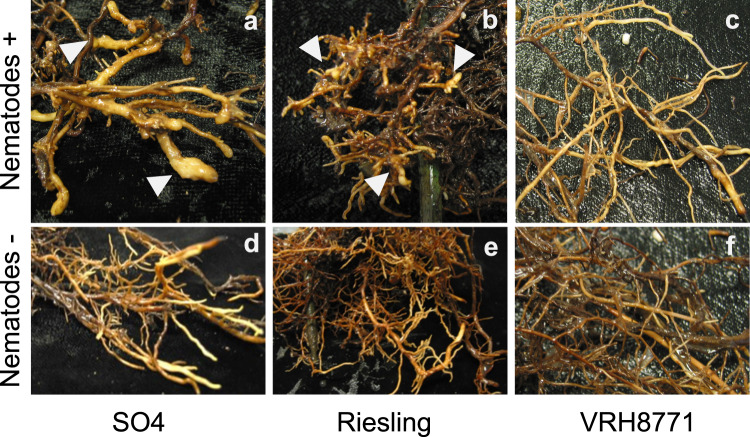
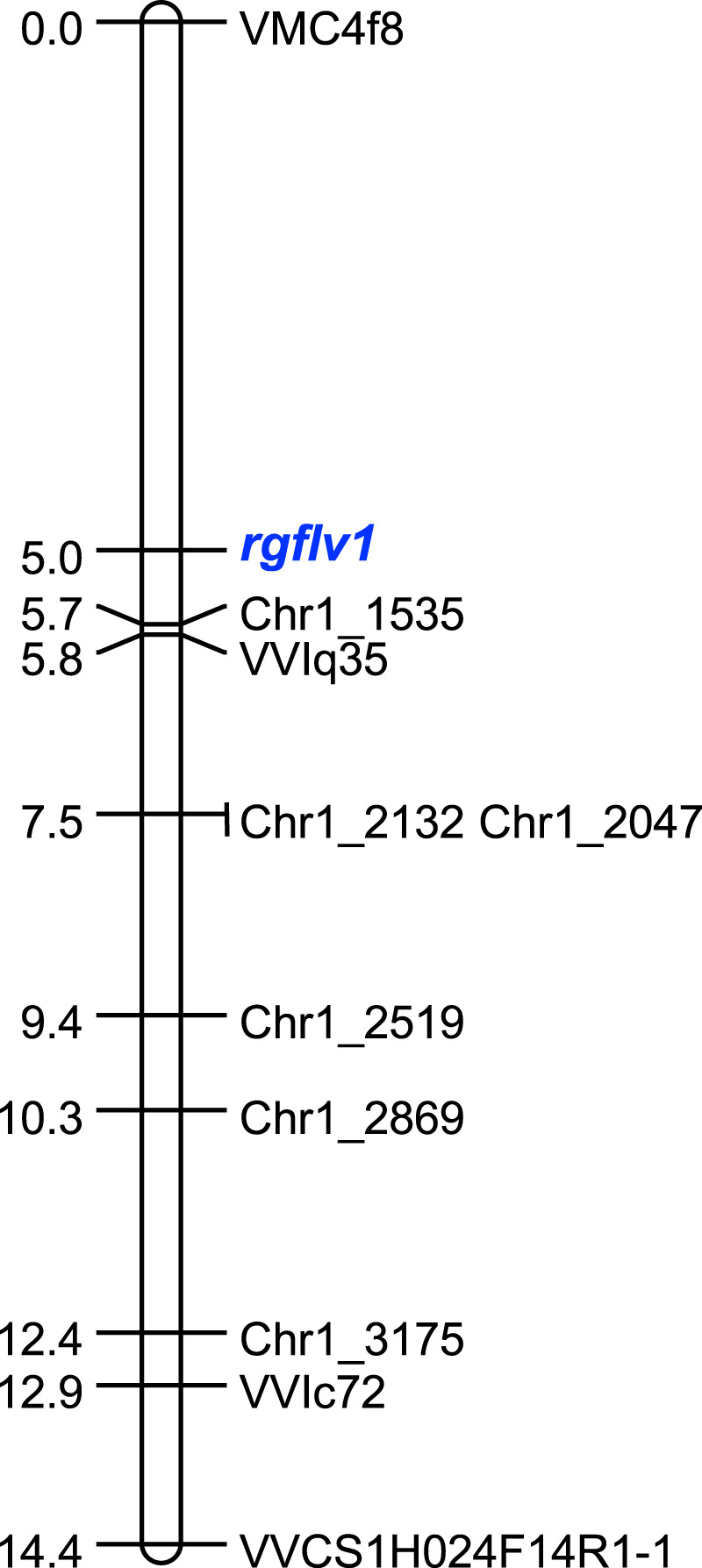
Grapevine fanleaf disease, caused by grapevine fanleaf virus (GFLV), transmitted by the soil-borne nematode Xiphinema index, provokes severe symptoms and economic losses, threatening vineyards worldwide. As no effective solution exists so far to control grapevine fanleaf disease in an environmentally friendly way, we investigated the presence of resistance to GFLV in grapevine genetic resources. We discovered that the Riesling variety displays resistance to GFLV, although it is susceptible to X. index. This resistance is determined by a single recessive factor located on grapevine chromosome 1, which we have named rgflv1. The discovery of rgflv1 paves the way for the first effective and environmentally friendly solution to control grapevine fanleaf disease through the development of new GFLV-resistant grapevine rootstocks, which was hitherto an unthinkable prospect. Moreover, rgflv1 is putatively distinct from the virus susceptibility factors already described in plants.
Conflict of interest statement
The authors declare no competing interests.
Figures


References
-
- OIV. 2019 Statistical Report on World Vitiviniculture (International Organisation of Vine and Wine, 2019).
-
- Falcade, I. In 39th World Congress of Vine and Wine Vol. 7 BIO Web of Conferences (ed. Aurand, J. M.) (E D P Sciences, 2016).
-
- Fraga, H. Viticulture and winemaking under climate change. Agronomy9, 783 (2019).
-
- Sanchez-Sanchez MA, Belmonte-Serrato F, Pelegrin GB. Landscape and territorial identity of the natural, rural and urban environment of Jumilla (Murcia, SE Spain) M + a-Rev. Electron. De. Medio Ambient. 2017;18:177–188.
-
- Mannini, F. & Digiaro, M. In Grapevine Viruses: Molecular Biology, Diagnostics and Management (eds Meng, B., Martelli, G. P., Golino, D. A. & Fuchs, M.) 453–482 (Springer, 2017).
Publication types
MeSH terms
Supplementary concepts
LinkOut - more resources
Full Text Sources
Other Literature Sources
Research Materials
