


Digital PCR assay for the effective detection of COVID-19 patients with SARS-CoV-2 low viral load
- PMID: 34051244
- PMCID: PMC8149472
- DOI: 10.1016/j.jviromet.2021.114185
Digital PCR assay for the effective detection of COVID-19 patients with SARS-CoV-2 low viral load
Abstract
Objective: Viral nucleic acid detection by real-time reverse transcription polymerase chain reaction (qPCR) is the current standard method for diagnosis of SARS-CoV-2 infection. However, due to low viral load in some COVID-19 patients, false negative results from this method have been repeatedly reported.
Method: In this study, we compared the sensitivity and specificity of digital PCR (dPCR) in simulated samples and clinical samples with qPCR assay through a series of vigorous tests.
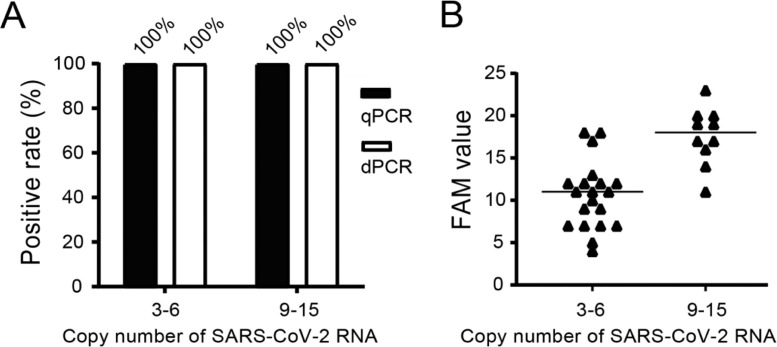
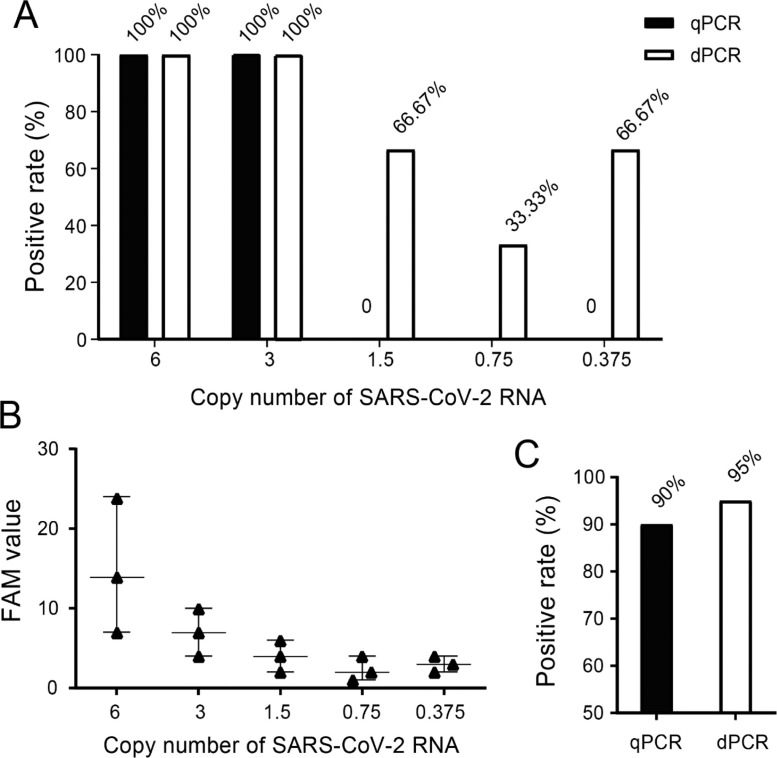
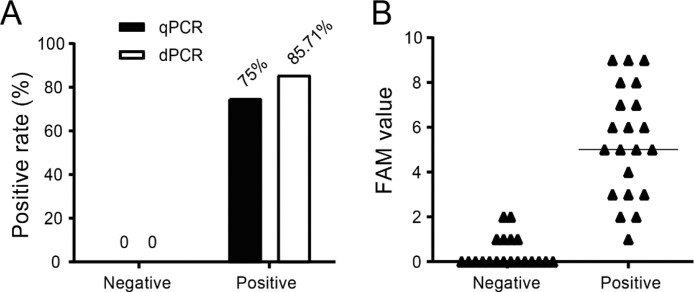
Results: The results showed that dPCR was more sensitive than qPCR especially for samples with low viral load (≤3 copies). In addition, dPCR had similar specificity as qPCR and could effectively distinguish other human coronaviruses and influenza virus from SARS-CoV-2. More importantly, dPCR was more sensitive than qPCR in detecting the virus in the "negative" samples from recurrent COVID-19 patients.
Conclusions: In summary, dPCR could serve as a powerful complement to the current qPCR method for SARS-CoV-2 detection, especially for the samples with extremely low viral load, such as recurrent COVID-19 patients.
Keywords: Digital PCR (dPCR); Recurrent COVID-19 patient; SARS-CoV-2; Sensitivity; Specificity.
Copyright © 2021. Published by Elsevier B.V.
Conflict of interest statement
The authors have no conflicts of interests to declare.
Figures
References
-
- Alteri C., Cento V., Antonello M., Colagrossi L., Merli M., Ughi N., Renica S., Matarazzo E., Di Ruscio F., Tartaglione L., et al. Detection and quantification of SARS-CoV-2 by droplet digital PCR in real-time PCR negative nasopharyngeal swabs from suspected COVID-19 patients. PLoS One. 2020;15(9):10. - PMC - PubMed
-
- Basu A.S. Digital assays part I: partitioning statistics and digital PCR. SLAS Technol. 2017;22(4):369–386. - PubMed
Publication types
MeSH terms
Substances
LinkOut - more resources
Full Text Sources
Other Literature Sources
Medical
Miscellaneous
