


Time-of-day as a critical biological variable
- PMID: 34052279
- PMCID: PMC8504485
- DOI: 10.1016/j.neubiorev.2021.05.017
Time-of-day as a critical biological variable
Abstract
Time-of-day is a crucial, yet often overlooked, biological variable in biomedical research. We examined the top 25 most cited papers in several domains of behavioral neuroscience to determine whether time-of-day information was reported. The majority of studies report behavioral testing conducted during the day, which does not coincide with the optimal time to perform the testing from an functional perspective of the animals being tested. The majority of animal models used in biomedical research are nocturnal rodents; thus, testing during the light phase (i.e. animals' rest period) may alter the results and introduce variability across studies. Time-of-day is rarely considered in analyses or reported in publications; the majority of publications fail to include temporal details when describing their experimental methods, and those few that report testing during the dark rarely report whether measures are in place to protect from exposure to extraneous light. We propose that failing to account for time-of-day may compromise replication of findings across behavioral studies and reduce their value when extrapolating results to diurnal humans.
Keywords: Aggression; Attention; Circadian rhythms; Diel; Drug seeking behaviors; Food intake; Learning; Mating behavior; Memory.
Copyright © 2021 Elsevier Ltd. All rights reserved.
Conflict of interest statement
CONFLICTS OF INTEREST
The authors do not have any conflicts of interest to report.
Figures
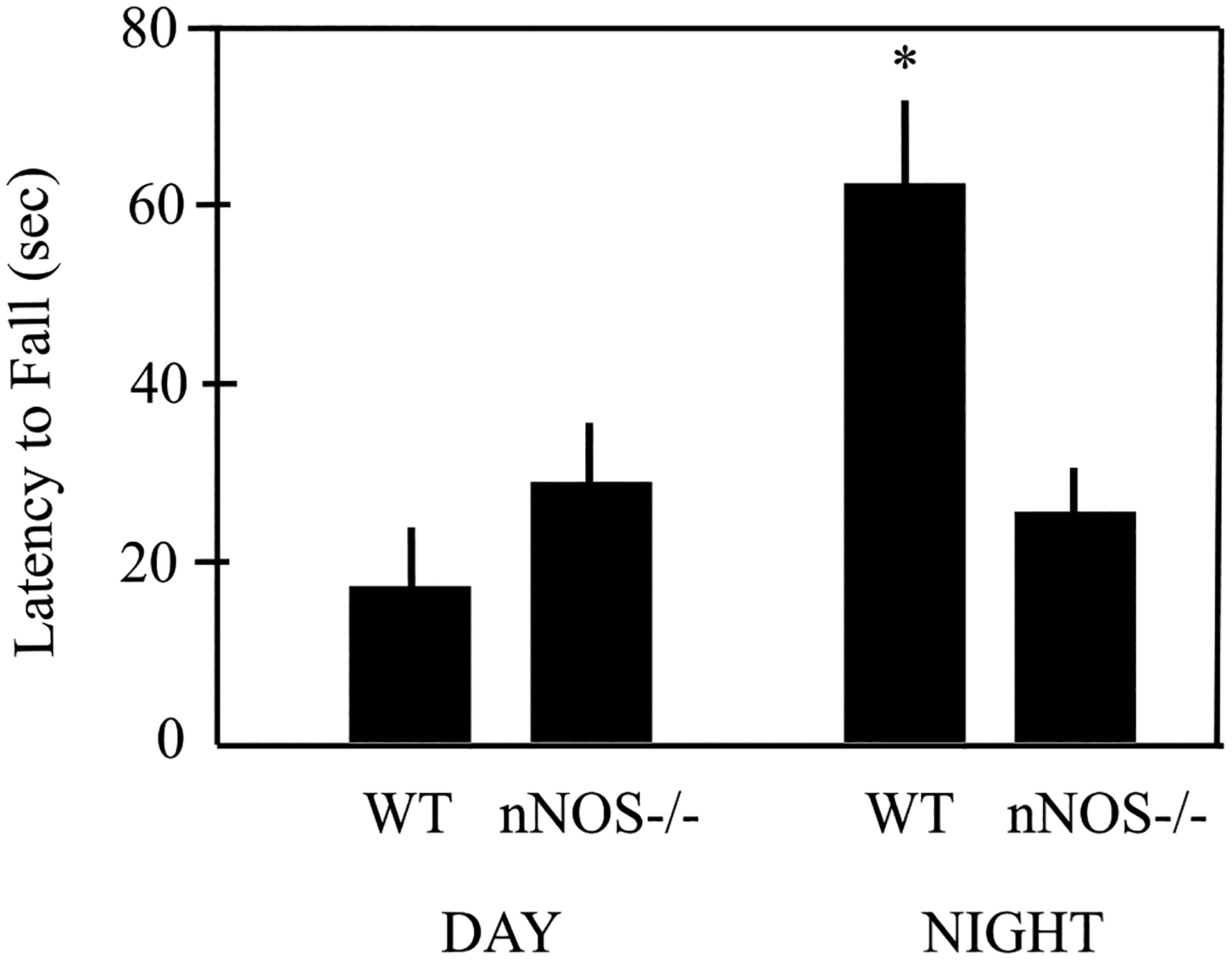
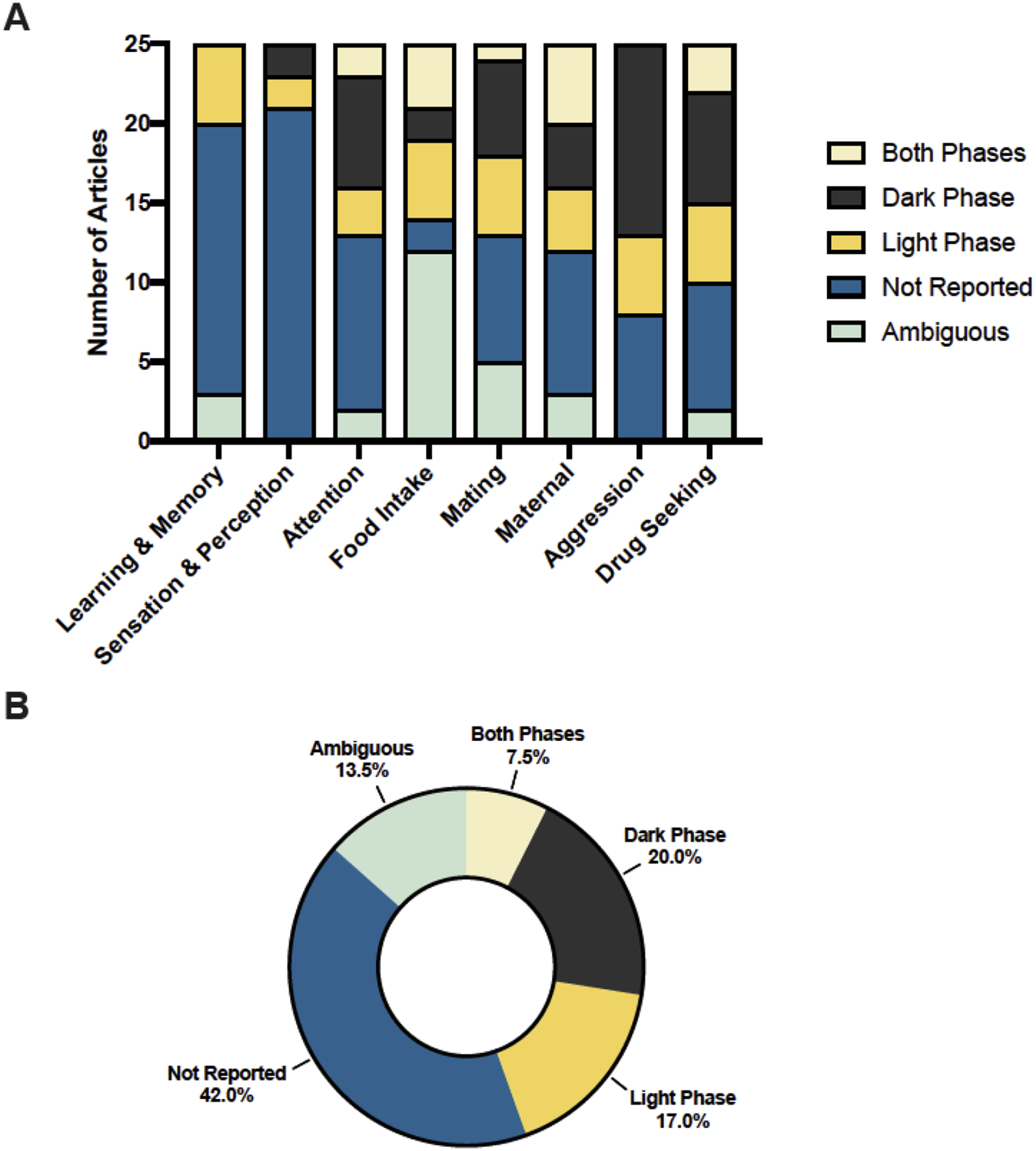
References
-
- Akhisaroglu M, Ahmed R, Kurtuncu M, Manev H, and Uz T, 2004. Diurnal rhythms in cocaine sensitization and in period1 levels are common across rodent species. Pharmacol. Biochem. Behav 1, 37–42. - PubMed
-
- Amir S, Cain S, Sullivan J, Robinson B, and Stewart J, 1999. In rats, odor-induced fos in the olfactory pathways depends on the phase of the circadian clock. Neurosci. Lett 3, 175–178. - PubMed
-
- Antle MC, and Silver R, 2016. Circadian insights into motivated behavior. Curr. Top. Behav. Neurosci 137–169. - PubMed
-
- Arvanitogiannis A, Sullivan J, and Amir S, 2000. Time acts as a conditioned stimulus to control behavioral sensitization to amphetamine in rats. Neuroscience 1, 1–3. - PubMed
Publication types
MeSH terms
Grants and funding
LinkOut - more resources
Full Text Sources
Other Literature Sources
