Review
. 2021 May 31;6(1):201.
doi: 10.1038/s41392-021-00572-w.

Small molecules in targeted cancer therapy: advances, challenges, and future perspectives

Affiliations
Review

Small molecules in targeted cancer therapy: advances, challenges, and future perspectives

Lei Zhong et al. Signal Transduct Target Ther. .

Abstract

Due to the advantages in efficacy and safety compared with traditional chemotherapy drugs, targeted therapeutic drugs have become mainstream cancer treatments. Since the first tyrosine kinase inhibitor imatinib was approved to enter the market by the US Food and Drug Administration (FDA) in 2001, an increasing number of small-molecule targeted drugs have been developed for the treatment of malignancies. By December 2020, 89 small-molecule targeted antitumor drugs have been approved by the US FDA and the National Medical Products Administration (NMPA) of China. Despite great progress, small-molecule targeted anti-cancer drugs still face many challenges, such as a low response rate and drug resistance. To better promote the development of targeted anti-cancer drugs, we conducted a comprehensive review of small-molecule targeted anti-cancer drugs according to the target classification. We present all the approved drugs as well as important drug candidates in clinical trials for each target, discuss the current challenges, and provide insights and perspectives for the research and development of anti-cancer drugs.


Conflict of interest statement

Shengyong Yang is the editorial board member of Signal Transduction and Targeted Therapy, but he has not been involved in the process of manuscript handling. The remaining authors declare no competing interests.

Figures
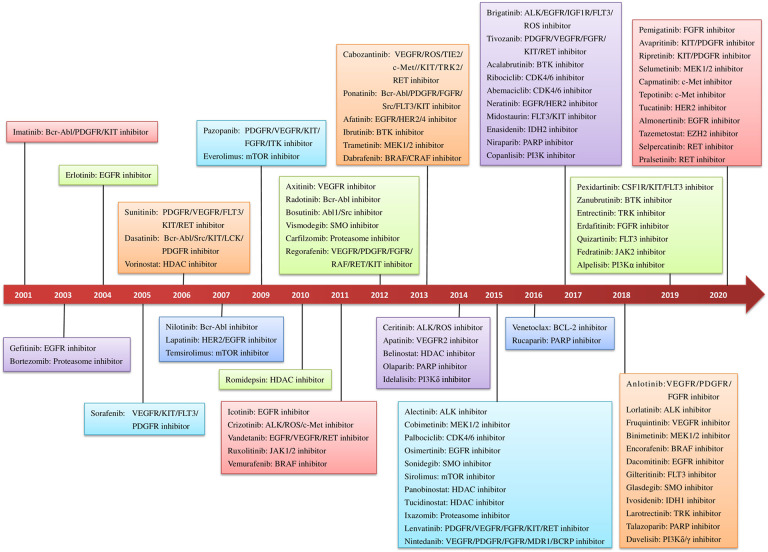
Fig. 1
Fig. 1
Timeline for the approval of small-molecule targeted anti-cancer drugs
Fig. 2
Fig. 2
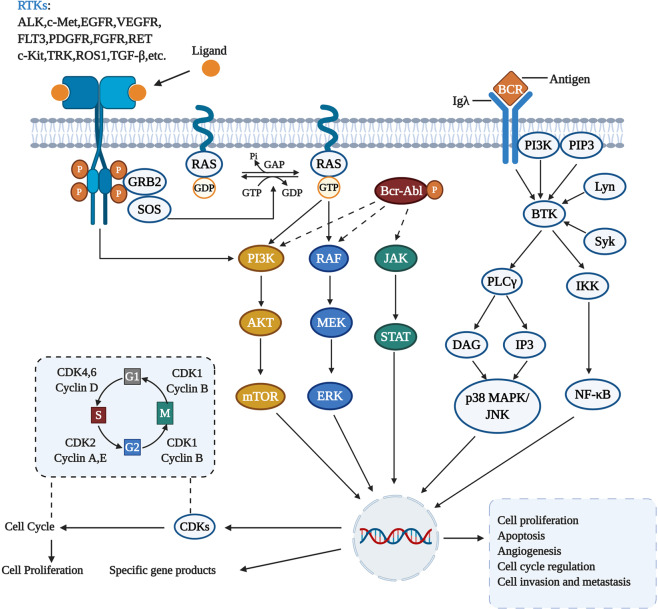
Activation of different protein kinase-dependent pathways. The set of RTKs influences a small number of intermediaries, such as phosphoinositide 3-kinase (PI3K) and mitogen-activated protein kinases (MAPK), thereby activating the complex signaling networks that are related to cell proliferation, differentiation, adhesion, apoptosis, and migration. The aggregation, activation, and depolymerization of the periodic CDK-cyclin complex are critical events driving cell cycle turnover. Figure created with BioRender.com
Fig. 3
Fig. 3
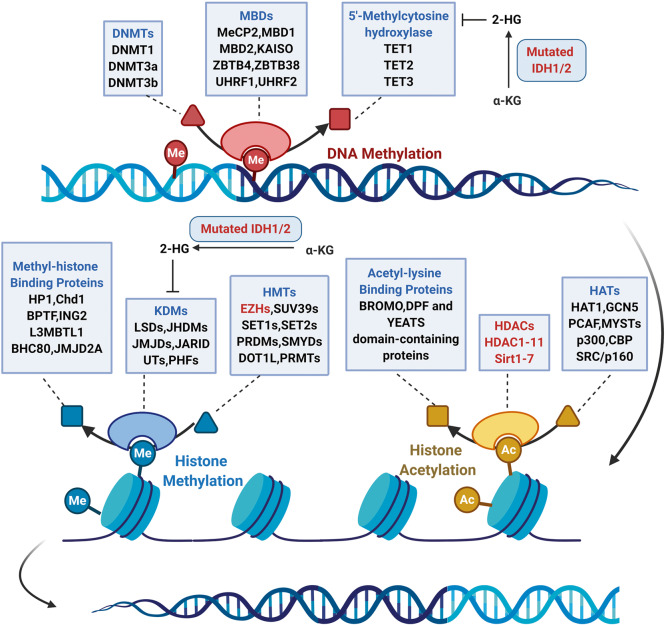
Commonly altered epigenetic regulatory proteins implicated in cancer. Gene silencing in mammalian cells is usually caused by methylation of DNA CpG islands as well as hypermethylation or hypoacetylation of histones. The writers (DNMTs, HATs, and HMTs) refer to enzymes that transfer chemical groups to DNA or histones; the erasers (HDACs and KDMs) are enzymes responsible for removing chemical groups from histones; the proteins (MBDs and BET family proteins) that can recognize the methyl-CpGs and modified histones are readers. Mutated IDH1/2 catalyzes the reduction of α-KG to 2-HG, which inhibits the activity of TET and lysine demethylases, resulting in DNA hypermethylation and increased histone lysine methylation. Figure created with BioRender.com
Fig. 4
Fig. 4
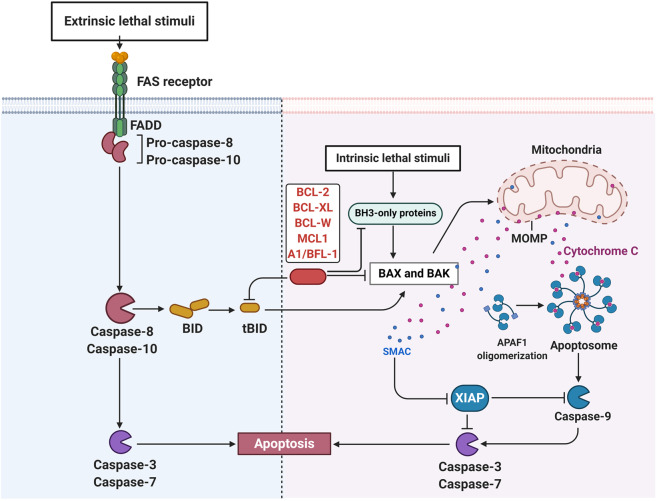
Schematic illustration of extrinsic and intrinsic pathways of apoptosis. In healthy cells, anti-apoptotic BCL-2 proteins (BCL-2, BCL-XL, BCL-W, MCL-1, and A1/BFL-1) bind to and inhibit activators (BH3-only proteins) and effectors (BAX and BAK). Treatment with BCL-2 inhibitors releases the inhibitory effects of anti-apoptotic BCL-2 proteins on activators and effectors. The subsequent activation and oligomerization of the pro-apoptotic proteins BAK and BAX result in the formation of mitochondrial outer membrane permeabilization (MOMP) and the release of cytochrome C as well as a second mitochondria-derived activator of caspase (SMAC) from the mitochondria. Cytochrome C can form a complex with procaspase 9 and apoptosis protease-activating factor 1 (APAF1), thereby activating caspase 9. Caspase 9 then activates procaspase 3 and procaspase 7, resulting in cell apoptosis. Figure created with BioRender.com
Fig. 5
Fig. 5
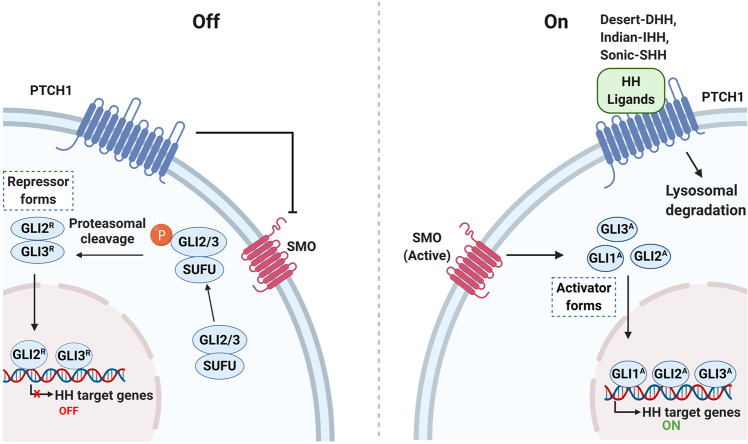
Canonical SMO-dependent hedgehog (HH) signaling pathway. Unliganded PTCH1 prevents the ciliary translocation of SMO effector protein. GLI2 and GLI3 proteins are sequestered in the cytoplasm by SUFU and phosphorylated by protein kinases, thereby preventing HH target-gene transcription. HH ligands binding triggers endocytic internalization of PTCH1, which results in the accumulation and activation of SMO. Active SMO relieves SUFU-mediated inhibition of GLI2 and GLI3. Activator forms of GLI (GLI1A/GLI2A/GLI3A) translocate into the nucleus and initiate the transcription of target genes. Figure created with BioRender.com
Fig. 6
Fig. 6
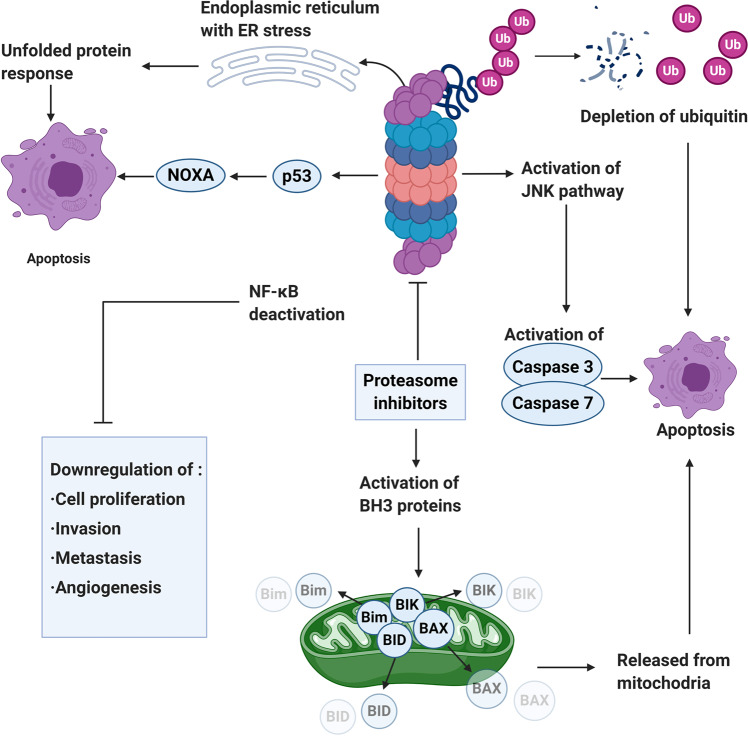
Proteasome inhibition acts through multiple mechanisms to induce cell apoptosis. Proteasome inhibition leads to NF-κB deactivation, thereby downregulating multiple pro-neoplastic pathways associated with cell proliferation, invasion, metastasis, and angiogenesis. Inhibition of proteasome activates the JNK signaling pathway and results in programmed cell death via caspase 3 and 7. Additionally, proteasome inhibition can indirectly cause apoptosis by preventing the degradation of pro-apoptotic family proteins such as BAX, BID, BIK, and BIM as well as NOXA. Inhibition of proteasome prevents the degradation of ubiquitinated proteins, which can increase endoplasmic reticulum (ER) stress and activate the UPR, cell cycle arrest, and subsequent apoptosis. Figure created with BioRender.com
Fig. 7
Fig. 7
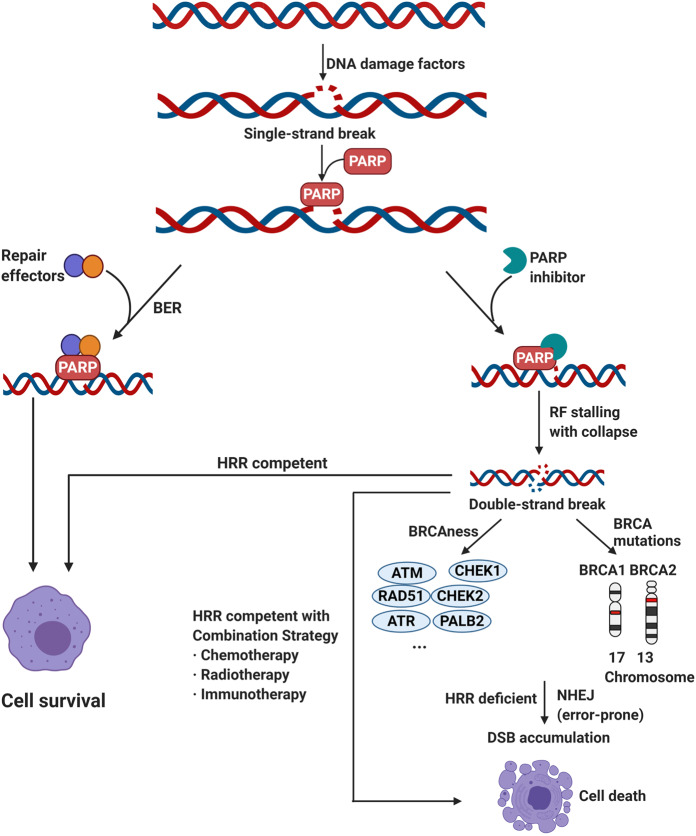
Molecular process of DNA damage repair related to PARP and the mechanism of action of PARP inhibitors. Endogenous single-strand breaks (SSB) are repaired mostly by PARP-dependent base excision repair (BER) pathway. PARP inhibitors suppress the repair of SSB and the unrepaired SSB can be converted to double-strand breaks (DSB) that are toxic to cells. Homologous recombination (HR) is the major pathway to repair DSB. However, the DSB in BRCA1/2 mutant cells cannot be repaired through HR, thus resulting in genomic instability and cell death. Figure created with BioRender.com
Fig. 8
Fig. 8
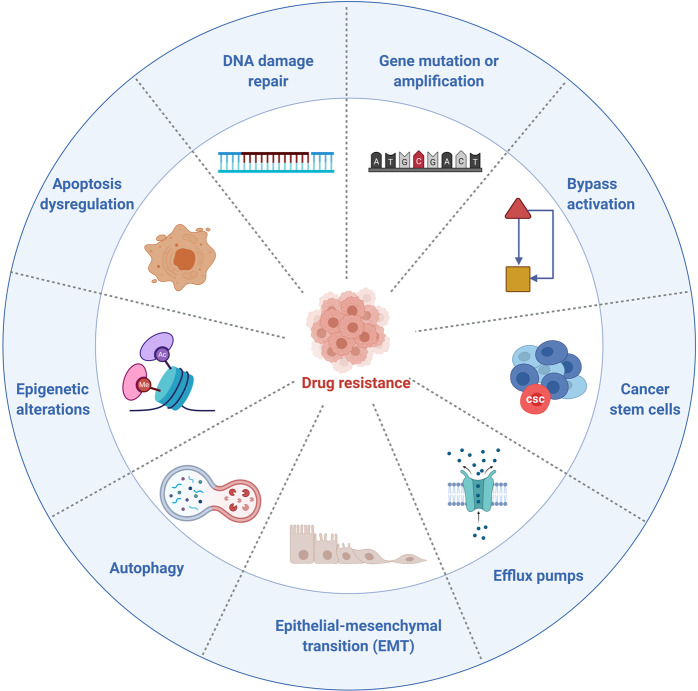
Mechanisms and insights in drug resistance of small-molecule targeted anti-cancer agents. Figure created with BioRender.com

References

    1. Bedard PL, Hyman DM, Davids MS, Siu LL. Small molecules, big impact: 20 years of targeted therapy in oncology. Lancet. 2020;395:1078–1088. doi: 10.1016/S0140-6736(20)30164-1. - DOI - PubMed
    1. Savage DG, Antman KH. Imatinib mesylate–a new oral targeted therapy. N. Engl. J. Med. 2002;346:683–693. doi: 10.1056/NEJMra013339. - DOI - PubMed
    1. Wilkes GM. Targeted therapy: attacking cancer with molecular and immunological targeted agents. Asia Pac. J. Oncol. Nurs. 2018;5:137–155. doi: 10.4103/apjon.apjon_79_17. - DOI - PMC - PubMed
    1. Lee YT, Tan YJ, Oon CE. Molecular targeted therapy: treating cancer with specificity. Eur. J. Pharm. 2018;834:188–196. doi: 10.1016/j.ejphar.2018.07.034. - DOI - PubMed
    1. Ardito F, et al. The crucial role of protein phosphorylation in cell signaling and its use as targeted therapy (review) Int J. Mol. Med. 2017;40:271–280. doi: 10.3892/ijmm.2017.3036. - DOI - PMC - PubMed

Publication types

MeSH terms

Substances