


Prevalence and patterns of musculoskeletal pain among undergraduate students of occupational therapy and physiotherapy in a South African university
- PMID: 34054255
- PMCID: PMC8158404
- DOI: 10.1142/S1013702521500037
Prevalence and patterns of musculoskeletal pain among undergraduate students of occupational therapy and physiotherapy in a South African university
Abstract
Background: Musculoskeletal pain (MSP) conditions are common in the educational leaning environment and are often associated with poor ergonomic conditions.
Objective: This study investigated the prevalence, pattern and possible risk factors of MSP among undergraduate students of occupational therapy and physiotherapy in a South African university.
Methods: A cross-sectional survey using an internet-based self-designed electronic questionnaire was used to obtain information about participants' socio-demography, ergonomic hazards, MSP, and relevant personal information. Descriptive statistics, chi-square, and logistic regression were used in analyzing the data.
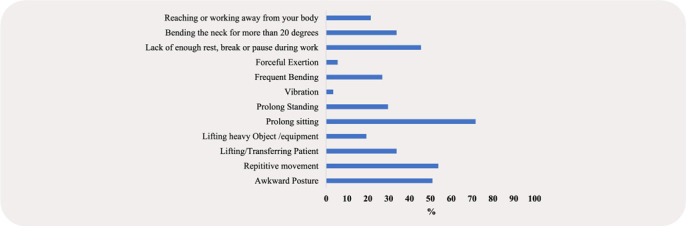
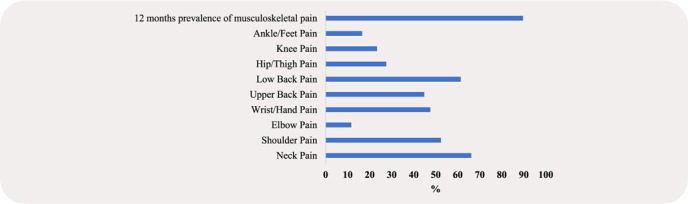
Results: There were 145 participants (females 115 (79.3%); physiotherapy (74) 51.03%), making 36.7% of the present undergraduate student population in the two departments. The most prevalent ergonomic work hazards were prolonged sitting (71.7%) and repetitive movements (53.8%). The 12 months prevalence of MSP among the students was 89.7%. The pattern of MSP revealed that pain on the neck region was most prevalent (66.2%) followed by pain in the low back region (64.4%). Duration of daily travels and participation in regular exercise activities were significantly associated with the prevalence of MSP. Logistic model explained 23.6% of the variance in prevalence of MSP and correctly classified 94.1% of cases ( , ). The right-handed students were 0.13 times more likely to present with MSP than left-handed students. Also, students who exercised regularly were 9.47 times less likely to present with MSP.
Conclusion: MSP is highly prevalent among health science undergraduates and is significantly associated with sedentary postures and inadequacy in structured physical activity participation.
Keywords: Musculoskeletal pain; occupational therapy; physiotherapy; undergraduate student.
© 2021, Hong Kong Physiotherapy Association.
Conflict of interest statement
The authors declare no competing interests.
Figures
References
-
- International Association for the Study of Pain. Musculoskeletal pain. 2009. Accessed on June 30, 2020. Available at http://www.aped-dor.org/images/FactSheets/DorMusculoEsqueletica/en/Muscu....
-
- Ogunlana MO, Awobayo AO, Oyewole OO, Ayodeji AF. Work and musculoskeletal discomfort of Nigerian health workers: Pattern and predictors. Phys Ther Rev 2019;24(6):389–393, 10.1080/10833196.2019.1662208. - DOI
-
- International Association for the Study of Pain. Acute musculoskeletal pain. 2009. Accessed on June 30, 2020. Available at https://s3.amazonaws.com/rdcms-iasp/files/production/public/Content/Cont....
-
- Grichnik KP, Ferrante FM. The difference between acute and chronic pain. Mt Sinai J Med N Y 1991;58(3):217–220. - PubMed
-
- Canadian Centre for Occupational Health and Safety. 2015 Catalogue. 2015. Accessed on June 30, 2020. Available at https://www.ccohs.ca/products/ pdf/PSCatalogue.pdf.
LinkOut - more resources
Full Text Sources
Other Literature Sources
Medical
Research Materials