


Chemical Constituents of Eupatorium japonicum and Anti-Inflammatory, Cytotoxic, and Apoptotic Activities of Eupatoriopicrin on Cancer Stem Cells
- PMID: 34055014
- PMCID: PMC8149239
- DOI: 10.1155/2021/6610347
Chemical Constituents of Eupatorium japonicum and Anti-Inflammatory, Cytotoxic, and Apoptotic Activities of Eupatoriopicrin on Cancer Stem Cells
Abstract
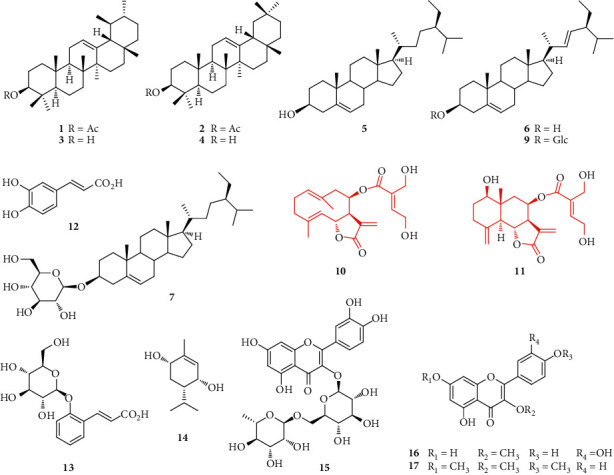
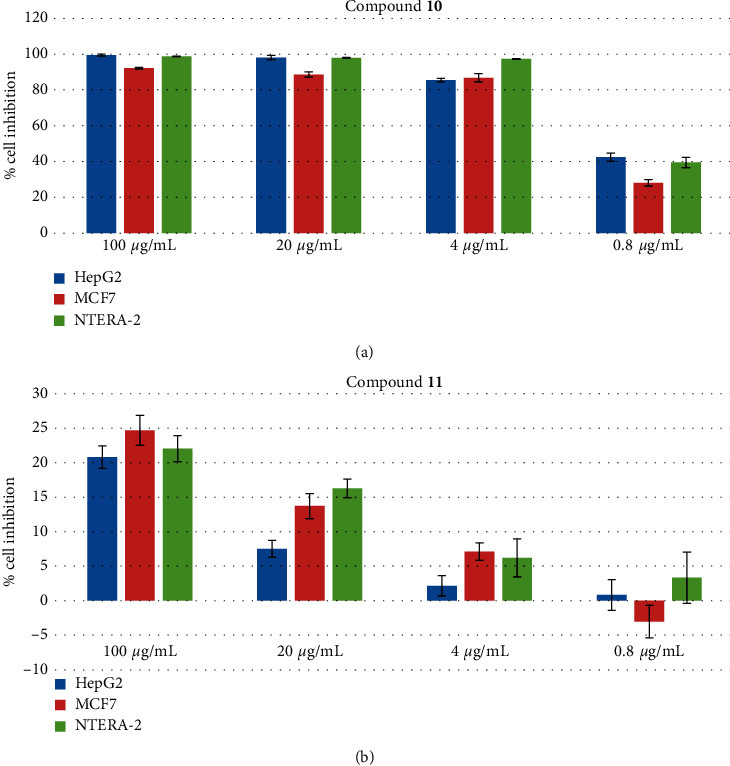
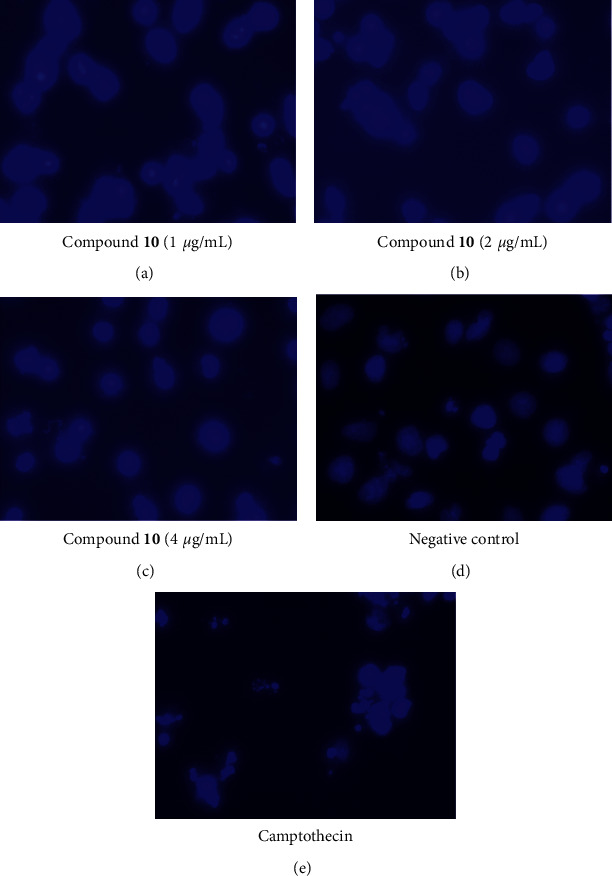
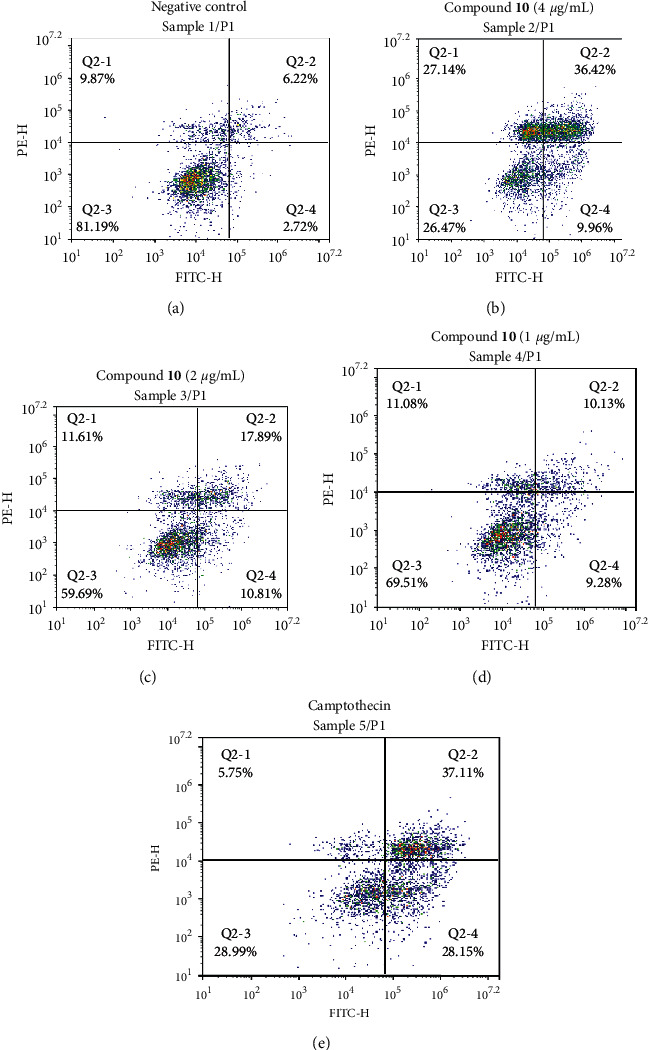
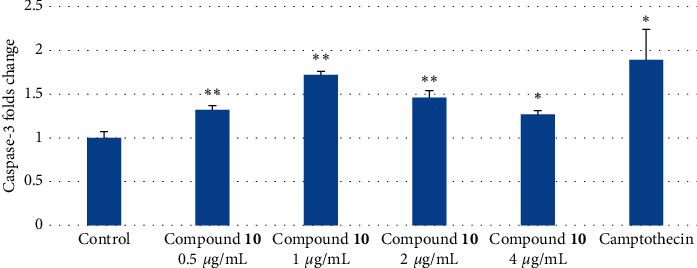
Eupatorium japonicum Thunb. of the plant family Asteraceae is a popular traditional herb in Vietnam. However, its chemical constituents as well as bioactive principles have not been investigated yet. We investigated the phytochemistry of E. japonicum in Vietnam and isolated seventeen compounds (1-17) including phytosterols, terpenoids, phenolic acids, flavonoids, fatty alcohols, and fatty acids. They were structurally determined by MS and NMR analysis. Except for compounds 6 and 12, all the other compounds were identified for the first time from E. japonicum. Since many sesquiterpene lactones with α-methylene γ-lactone ring are reported as anti-inflammatory and anticancer agents, eupatoriopicrin (10), 1-hydroxy-8-(4,5-dihydroxytigloyloxy)eudesma-4(15),11(13)-dien-6,12-olide (11) were selected among the isolates for biological assays. Compound 10 was identified as the main bioactive sesquiterpene lactone of E. japonicum showing its potent anti-inflammatory and cytotoxic activity through inhibiting NO production and the growth of HepG2 and MCF-7 human cancer cell lines. For the first time, eupatoriopicrin (10) was demonstrated to strongly inhibit NTERA-2 human cancer stem cell (CSC) line in vitro. It is noticeable that the cytotoxicity of eupatoriopicrin against NTERA-2 cells is mediated by its apoptosis-inducing capability of 10 as demonstrated by the results of Hoechst 33342 staining, flow cytometry apoptosis analysis, and caspase-3 activity assays. The biological activities of the main bioactive constituents 1-7, 10, 12, and 15 supported the reported anti-inflammatory and anticancer properties of extracts from E. japonicum.
Copyright © 2021 Minh Giang Phan et al.
Conflict of interest statement
The authors declare no conflicts of interest.
Figures
References
-
- Giang P. M., Trang V. M., Huong D. T. V., Kawakami S., Otsuka H. Thymol derivatives from Eupatorium fortunei. Records of Natural Products. 2019;13(5):434–439. doi: 10.25135/rnp.122.18.11.1032. - DOI
-
- Huong D. T. V., Giang P. M., Trang V. M. Coumarins and polar constituents from Eupatorium triplinerve and evaluation of their α-glucosidase inhibitory activity. Journal of Chemistry. 2020;2020:8. doi: 10.1155/2020/8945063.8945063 - DOI
LinkOut - more resources
Full Text Sources
Other Literature Sources
Research Materials
