


Acute Beet Juice Supplementation Does Not Improve 30- or 60-second Maximal Intensity Performance in Anaerobically Trained Athletes
- PMID: 34055148
- PMCID: PMC8136611
- DOI: 10.70252/QGKH6961
Acute Beet Juice Supplementation Does Not Improve 30- or 60-second Maximal Intensity Performance in Anaerobically Trained Athletes
Abstract
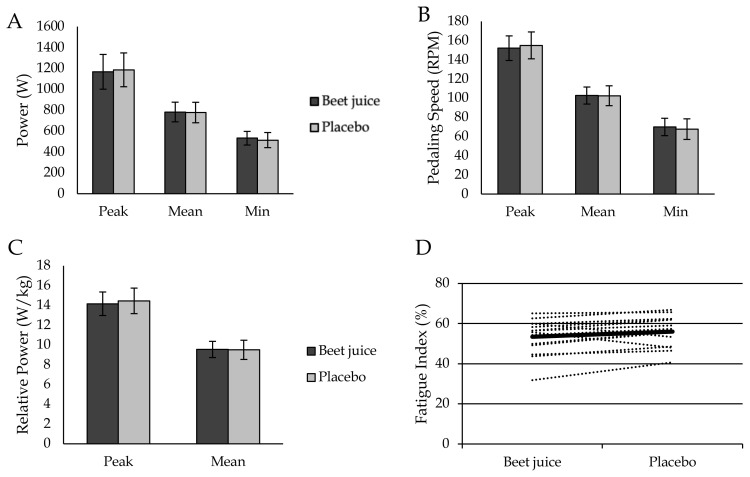
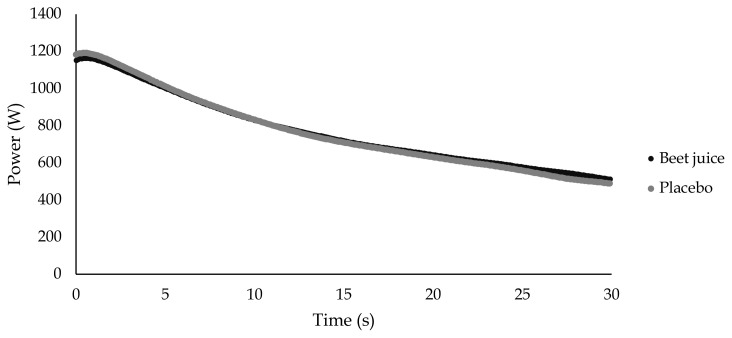
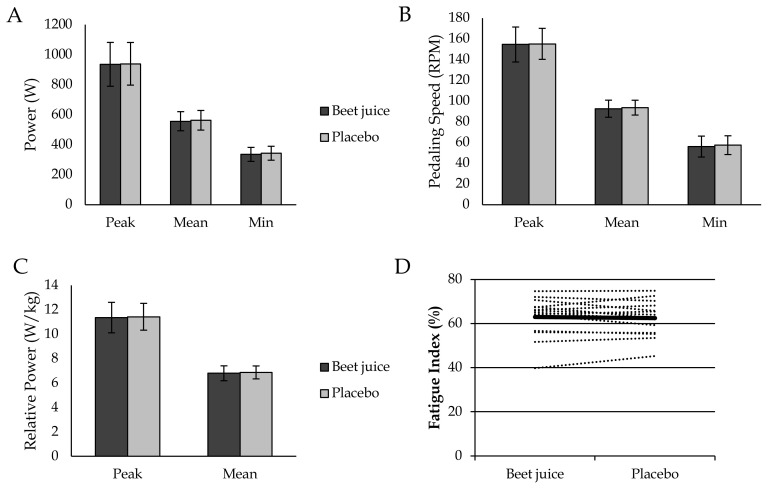
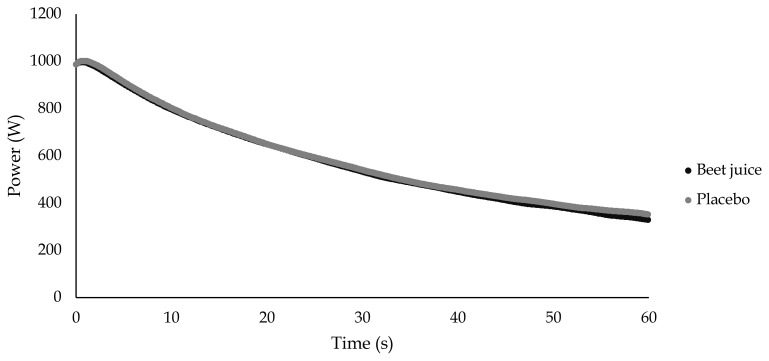
Research suggests that beet juice is beneficial during aerobic exercise. However, the impact of beet juice during primarily anaerobic exercise is equivocal. The purpose of this study was to determine the effects of acute beet juice supplementation on maximal intensity performance during 30-s and 60-s maximal-intensity cycling sprints. Using a double-blind, crossover-study design, 14 anaerobically trained male hockey players completed six Wingate cycling tests: familiarization trials of a 30-s and 60-s Wingate test, followed by 30-s Wingate placebo/beet juice trials, and 60-s Wingate placebo/beet juice trials. Repeated measures ANOVAs were used to compare the change in power between conditions over the duration of each trial. Paired t-tests were run to compare performance between conditions of various work and power variables. One-way ANOVAs were utilized to compare the change between conditions of the 30-s test to the change between conditions of the 60-s test. Beet juice supplementation yielded no statistical differences from placebo in any of the measured variables during the 30-s or 60-s tests (p > 0.05). The percent change for fatigue index was significantly different between the 30-s and 60-s tests (p = 0.032) suggesting less fatigue with beet juice supplementation. Overall, beet juice did not improve maximal intensity performance during 30-s or 60-s cycling sprint tests. Performance during the 60-s bout was not impacted to a greater extent than the 30-s bout after beet juice supplementation. These results suggest that beet juice supplementation does not improve short-duration exercise performance in anaerobically trained athletes.
Keywords: Wingate; beetroot juice; dietary nitrate; power; sprint.
Figures
References
-
- Aim for Health. AIM redibeets, 2020. 2020. Retrieved from: http://aim4health2.com/product/aim-redibeets/
-
- Aucouturier J, Boissiere J, Pawlak-Chaouch M, Cuvelier G, Gamelin FX. Effect of dietary nitrate supplementation on tolerance to supramaximal intensity intermittent exercise. Nitric Oxide. 2015;49:16–25. - PubMed
-
- Bailey SJ, Fulford J, Vanhatalo A, Winyard PG, Blackwell JR, DiMenna FJ, Wilkerson DP, Benjamin N, Jones AM. Dietary nitrate supplementation enhances muscle contractile efficiency during knee-extensor exercise in humans. J Appl Physiol. 2010;109(1):135–148. - PubMed
-
- Bailey SJ, Winyard P, Vanhatalo A, Blackwell JR, DiMenna FJ, Wilkerson DP, Tarr J, Benjamin N, Jones AM. Dietary nitrate supplementation reduces the O2 cost of low-intensity exercise and enhances tolerance to highintensity exercise in humans. J Appl Physiol. 2009;107(4):1144–1155. - PubMed
-
- Barfield JP, Sells PD, Rowe DA, Hannigan-Downs K. Practice effect of the wingate anaerobic test. J Strength Cond Res. 2002;16(3):472–473. - PubMed
LinkOut - more resources
Full Text Sources