


The Mitochondrial Response to DNA Damage
- PMID: 34055802
- PMCID: PMC8149749
- DOI: 10.3389/fcell.2021.669379
The Mitochondrial Response to DNA Damage
Abstract
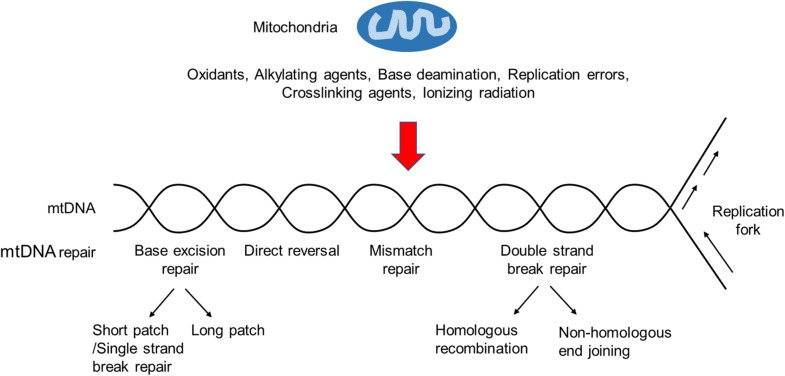
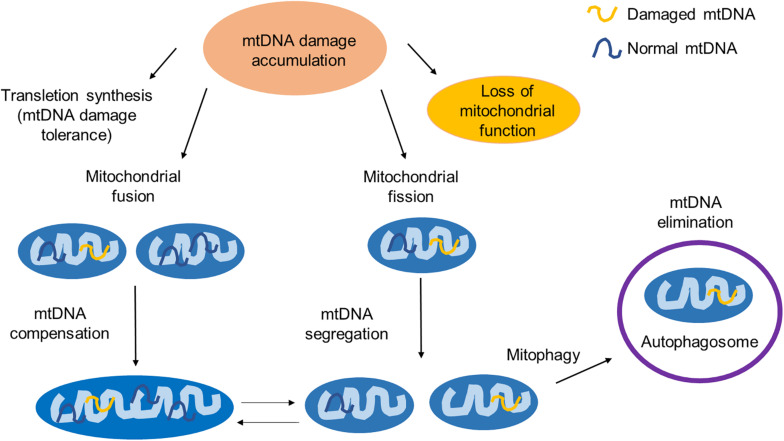
Mitochondria are double membrane organelles in eukaryotic cells that provide energy by generating adenosine triphosphate (ATP) through oxidative phosphorylation. They are crucial to many aspects of cellular metabolism. Mitochondria contain their own DNA that encodes for essential proteins involved in the execution of normal mitochondrial functions. Compared with nuclear DNA, the mitochondrial DNA (mtDNA) is more prone to be affected by DNA damaging agents, and accumulated DNA damages may cause mitochondrial dysfunction and drive the pathogenesis of a variety of human diseases, including neurodegenerative disorders and cancer. Therefore, understanding better how mtDNA damages are repaired will facilitate developing therapeutic strategies. In this review, we focus on our current understanding of the mtDNA repair system. We also discuss other mitochondrial events promoted by excessive DNA damages and inefficient DNA repair, such as mitochondrial fusion, fission, and mitophagy, which serve as quality control events for clearing damaged mtDNA.
Keywords: DNA repair; mitochondrial DNA; mitochondrial fission; mitochondrial fusion; mitophagy.
Copyright © 2021 Rong, Tu, Xu, Sun, Yu, Tu, Guo and Yang.
Conflict of interest statement
The authors declare that the research was conducted in the absence of any commercial or financial relationships that could be construed as a potential conflict of interest.
Figures
References
-
- Ahmad A., Nay S. L., O’Connor T. R. (2015). Direct reversal repair in mammalian cells. Adv. DNA Repair 95–128. 10.5772/60037 - DOI
Publication types
LinkOut - more resources
Full Text Sources
Other Literature Sources
