


The Impact of Shampoo Wash Frequency on Scalp and Hair Conditions
- PMID: 34055906
- PMCID: PMC8138261
- DOI: 10.1159/000512786
The Impact of Shampoo Wash Frequency on Scalp and Hair Conditions
Abstract
Background: How frequently should the scalp and hair be cleansed? A dearth of objective data has led to confusion both among lay people and experts. Each extreme has potential detrimental effects: overcleaning may lead to surface damage while undercleaning may lead to buildup of harmful stimuli. This situation is complicated because both objective and subjective criteria are relevant to assess optimal cleaning.
Objectives: The objective of this work was to combine epidemiological and treatment data with both objective and subjective end points to yield clear data to guide both the consumer and expert as to optimal scalp and hair cleaning practices.
Methods: Two studies were conducted with Asian populations without any specific scalp pathologies. An epidemiological study was conducted as a function of natural wash frequency. This was combined with a controlled wash frequency study. In both cases, objective measures of hair and scalp condition were assessed. These were combined with self-assessments of all participants.
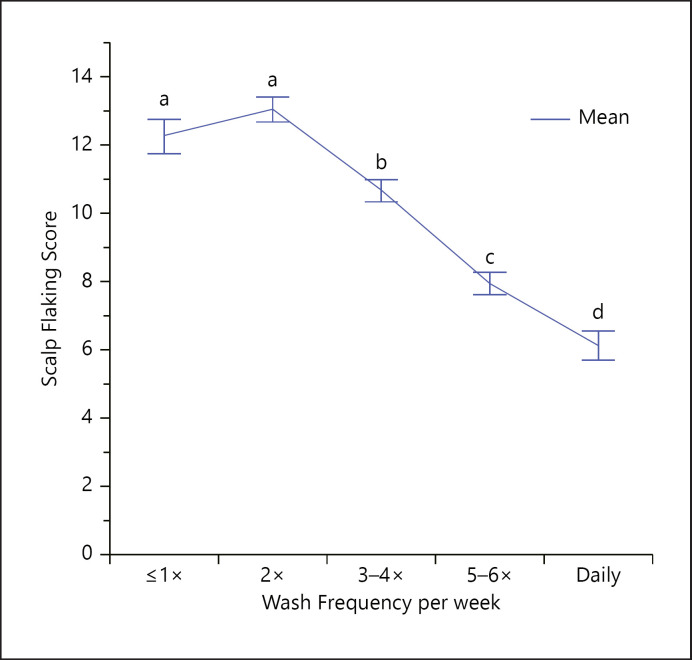
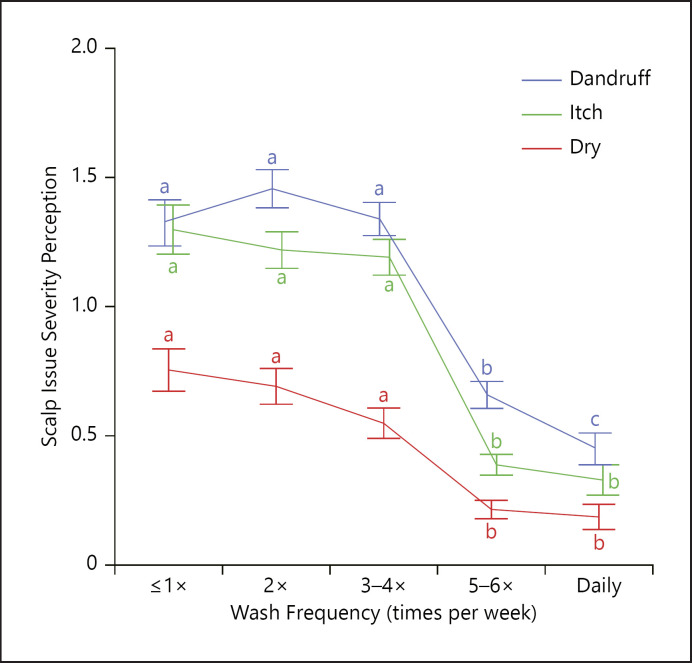
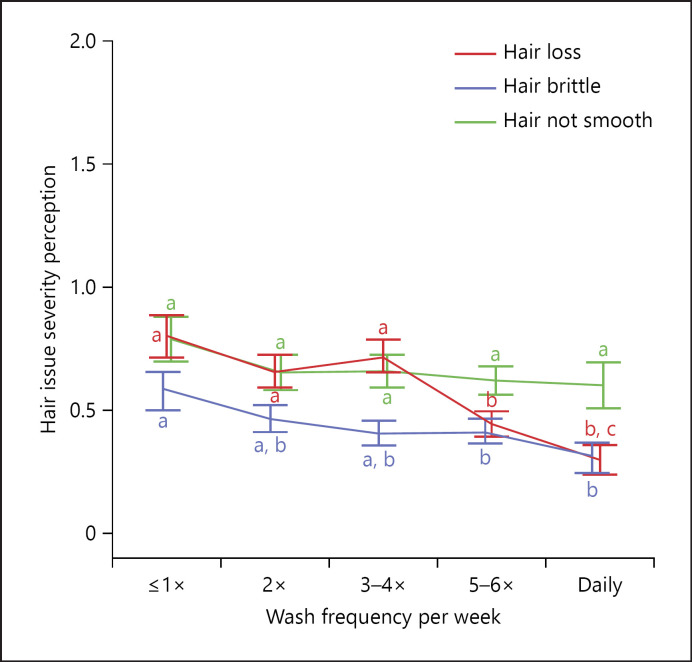
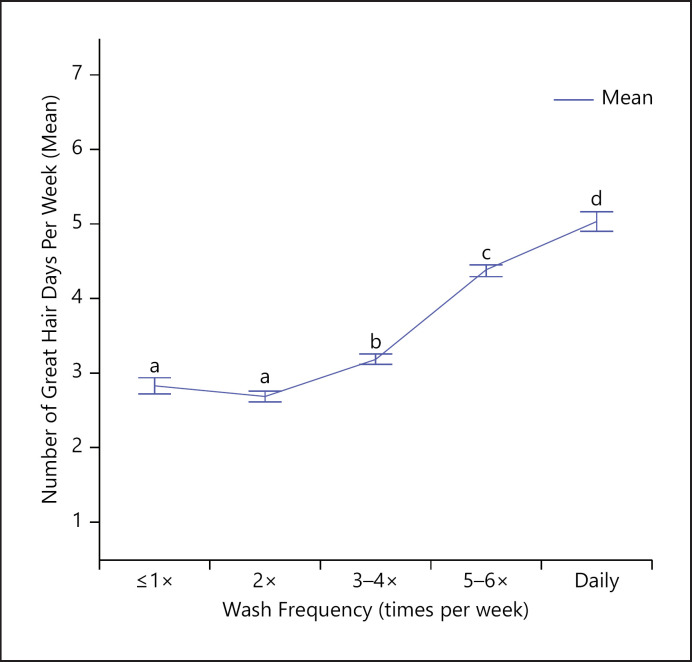
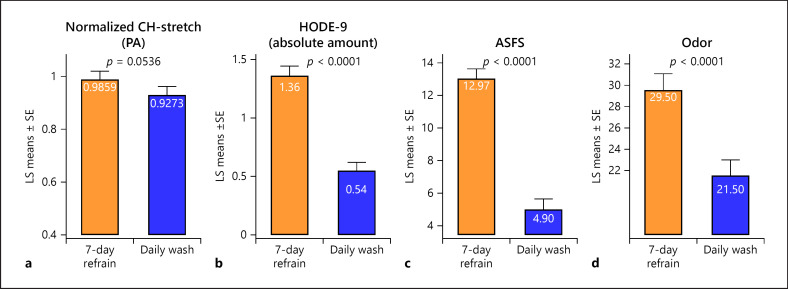
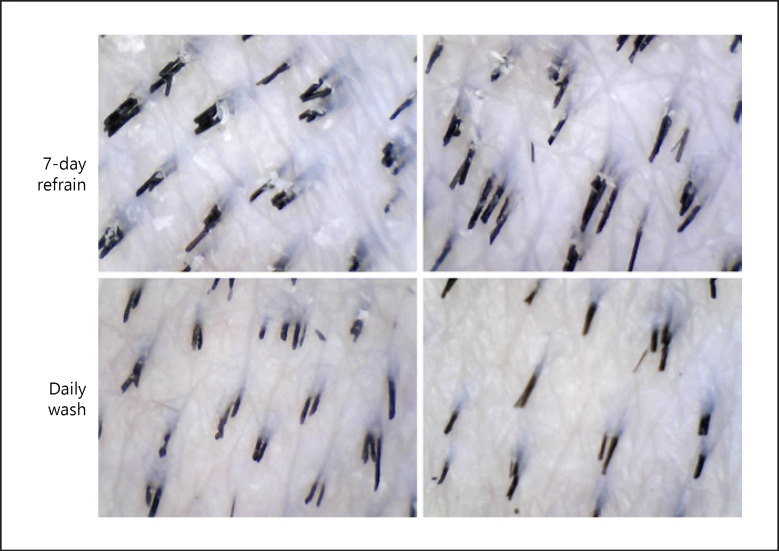
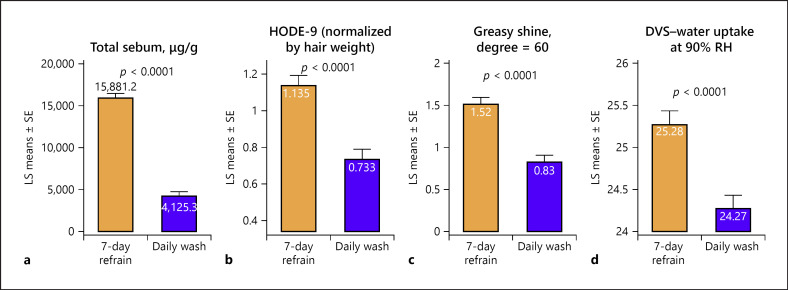
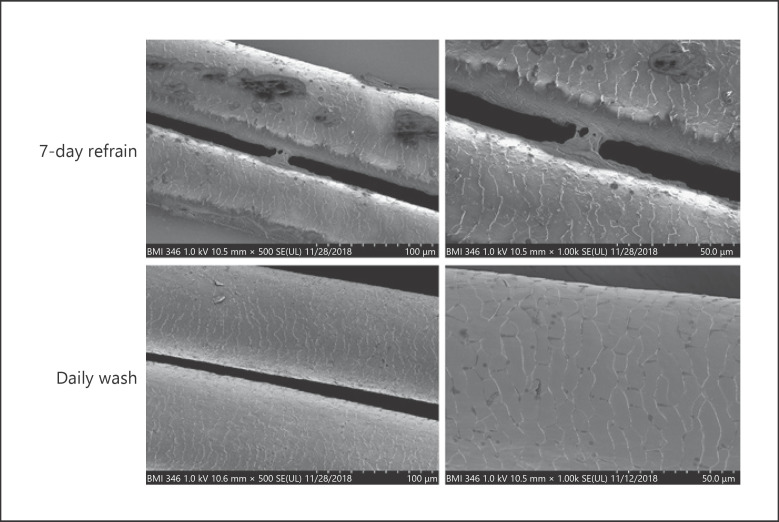
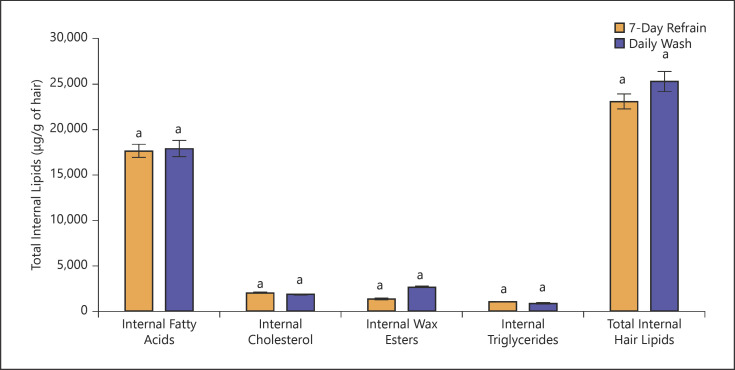
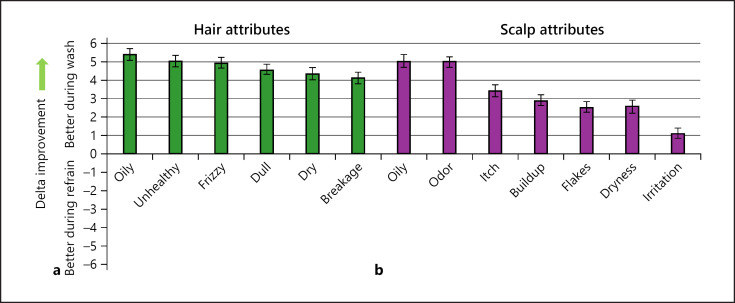
Results: In the epidemiological study, it was observed that overall satisfaction with hair and scalp condition was achieved when washing 5-6 times per week. This was consistent for both objective and subjective end points. Controlled treatment likewise showed that a daily wash regimen was superior to once per week cleansing for all end points. No objective detrimental effects to hair at this level of cleansing were observed.
Conclusions: Two different studies led to the same conclusion: higher wash frequency is both beneficial and more preferred to lower wash frequency among the Asian populations studied. Concerns related to "overcleaning" were unfounded both objectively and subjectively.
Keywords: Epidemiological; Hair; Oxidative stress; Scalp; Shampoo frequency; Treatment.
Copyright © 2021 by S. Karger AG, Basel.
Conflict of interest statement
S.P. and J.S. are employees of the Procter & Gamble Company, which paid 100% of the costs of this work.
Figures
References
-
- Tuminoct R. How often should you really wash your hair? New York Times. 2016 Oct 26
-
- Shapiro B. Are you not washing your hair enough? New York Times. 2017 Jan
-
- Morley K. Women are washing their hair less than three times a week for the first time in a decade. The Telegraph. 2017 Feb 15
-
- Kent E. Shampoo sales fall by £23million over the past year because women who work at home don't bother to wash their hair. Daily Mail. 2016 Dec 19
LinkOut - more resources
Full Text Sources
Other Literature Sources
