Effective Ultrasonic Stimulation in Human Peripheral Nervous System
- PMID: 34057888
- PMCID: PMC9080060
- DOI: 10.1109/TBME.2021.3085170
Effective Ultrasonic Stimulation in Human Peripheral Nervous System
Abstract
Objective: Low-intensity ultrasound can stimulate excitable cells in a noninvasive and targeted manner, but which parameters are effective has remained elusive. This question has been difficult to answer because differences in transducers and parameters-frequency in particular-lead to profound differences in the stimulated tissue volumes. The objective of this study is to control for these differences and evaluate which ultrasound parameters are effective in stimulating excitable cells.
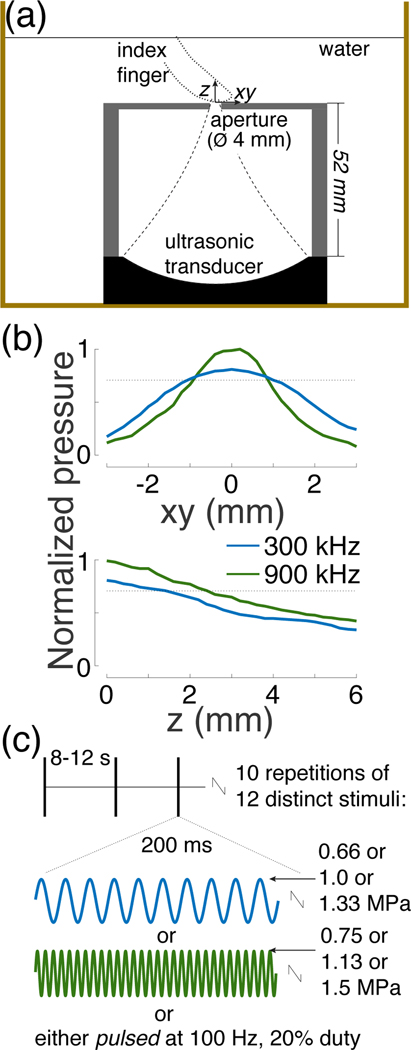
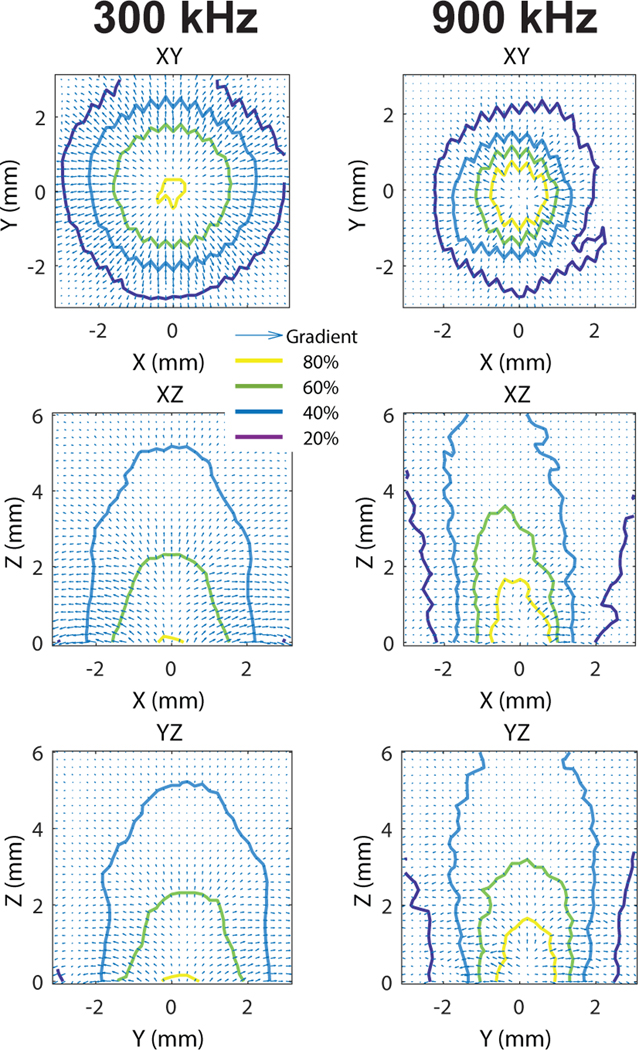
Methods: Here, we stimulated the human peripheral nervous system using a single transducer operating in a range of frequencies, and matched the stimulated volumes with an acoustic aperture.
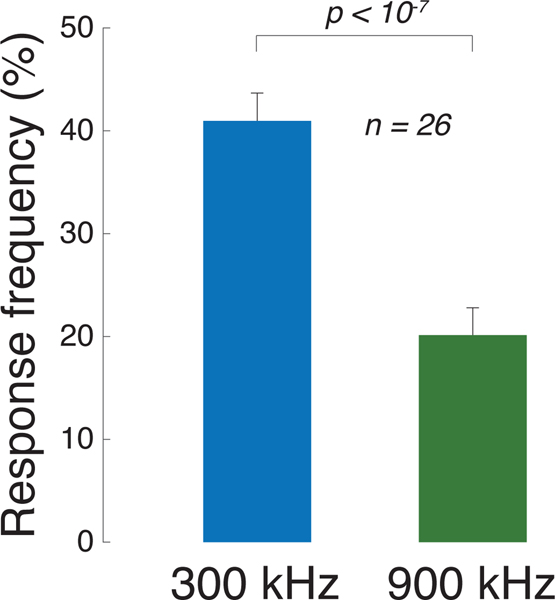
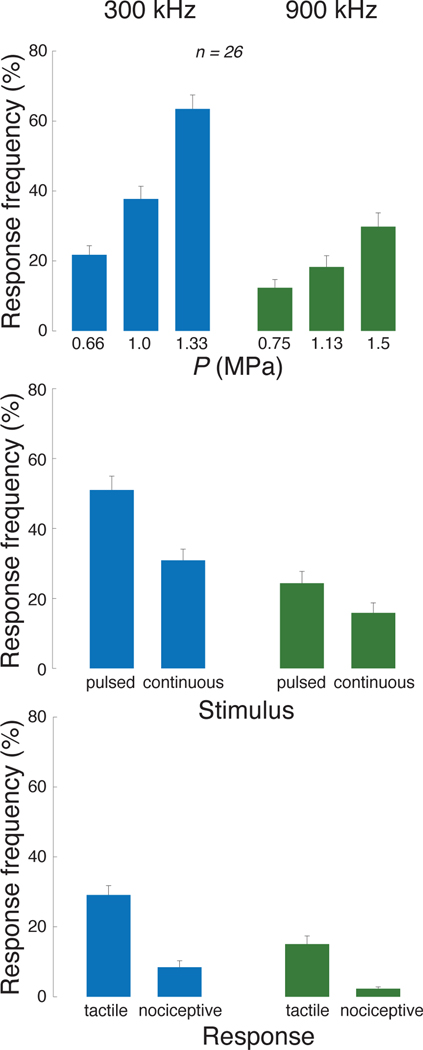
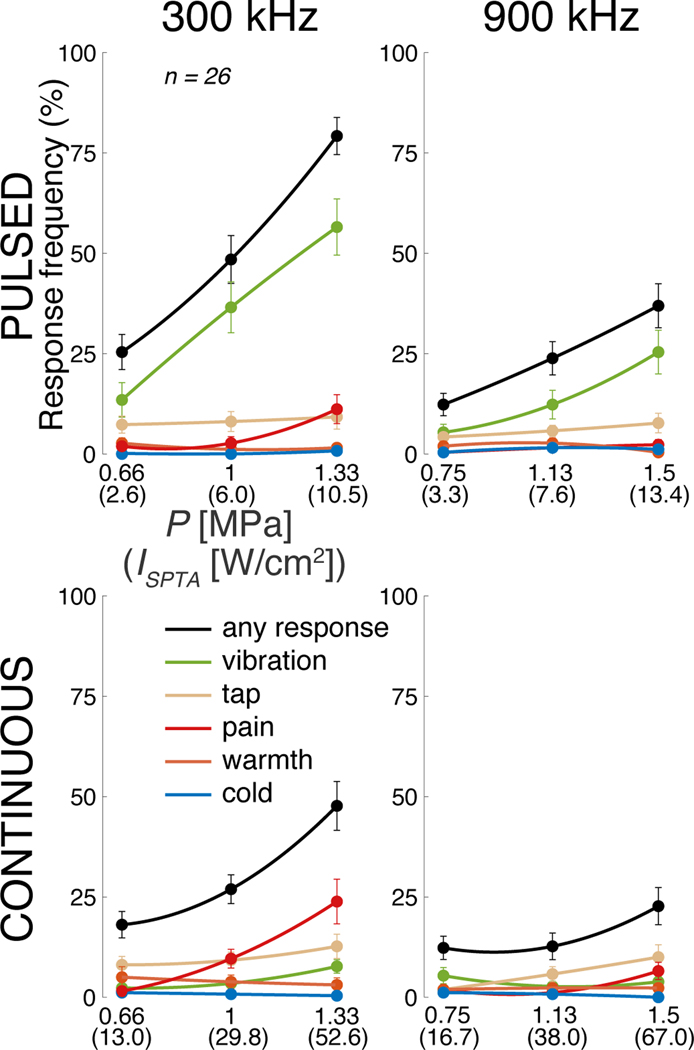
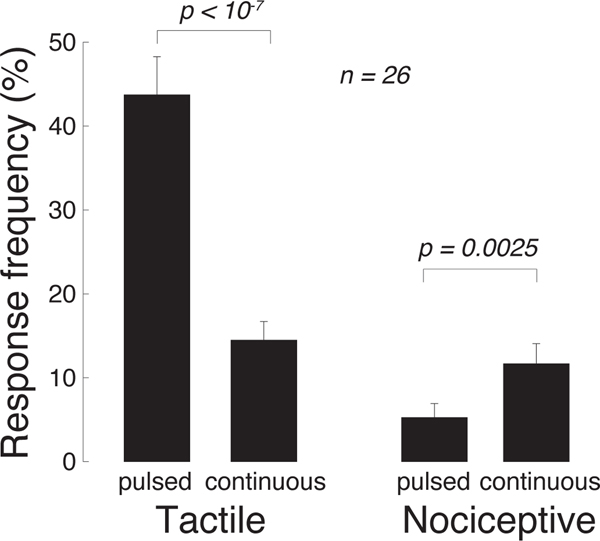
Results: We found that low frequencies (300 kHz) are substantially more effective in generating tactile and nociceptive responses in humans compared to high frequencies (900 kHz). The strong effect of ultrasound frequency was observed for all pressures tested, for continuous and pulsed stimuli, and for tactile and nociceptive responses.
Conclusion: This prominent effect may be explained by a mechanical force associated with ultrasound. The effect is not due to heating, which would be weaker at the low frequency.
Significance: This controlled study reveals that ultrasonic stimulation of excitable cells is stronger at lower frequencies, which guides the choice of transducer hardware for effective ultrasonic stimulation of the peripheral nervous system in humans.
Figures
References
-
- Tyler WJ, Lani SW, and Hwang GM, “Ultrasonic modulation of neural circuit activity,” Current opinion in neurobiology, vol. 50, pp. 222–231, 2018. - PubMed
-
- Velling V. and Shklyaruk S, “Modulation of the functional state of the brain with the aid of focused ultrasonic action,” Neuroscience and behavioral physiology, vol. 18, no. 5, pp. 369–375, 1988. - PubMed
Publication types
MeSH terms
Grants and funding
LinkOut - more resources
Full Text Sources
Other Literature Sources