


Phenotypic and genotypic characterization of biofilm producing clinical coagulase negative staphylococci from Nepal and their antibiotic susceptibility pattern
- PMID: 34059077
- PMCID: PMC8166017
- DOI: 10.1186/s12941-021-00447-6
Phenotypic and genotypic characterization of biofilm producing clinical coagulase negative staphylococci from Nepal and their antibiotic susceptibility pattern
Abstract
Background: Coagulase-negative staphylococci (CNS) survive as commensals of skin, anterior nares and external canals of human and were regarded as non-infectious pathogens. However, they are emerging as a major cause of nosocomial infectious due to their ability to form biofilms and high resistance to several classes of antibiotics. This study examines the biofilm forming abilities of 214 clinical CNS isolates using phenotypic and genotypic methods, and determines their antibiotic susceptibility patterns.
Methods: A total of 214 clinical isolates collected from different clinical samples were identified as CNS and their antibiotic susceptibility determined by CLSI guidelines. The biofilm forming ability of all isolates was determined by three phenotypic methods; Congo red agar (CRA) method, tube adherence method (TM) and tissue culture plate (TCP) method and by genotypic method for the detection of icaAD genes.
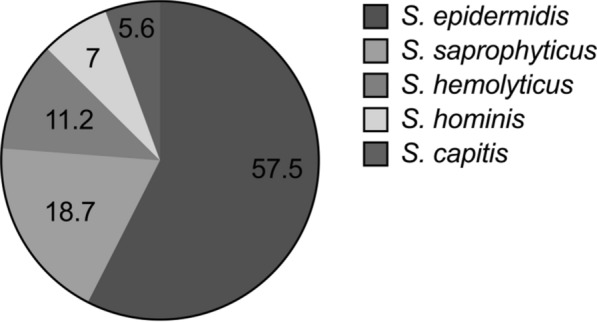
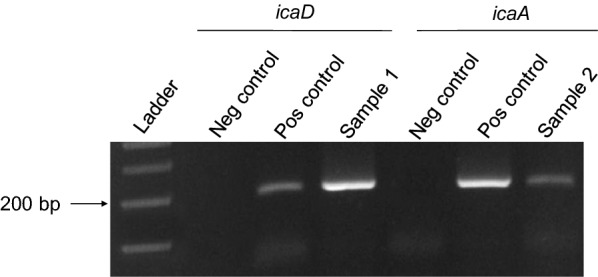
Results: Among all the isolates, S. epidermidis (57.5%) was found the most frequently, followed by S. saprophyticus (18.7%), S. haemolyticus (11.2%), S. hominis (7%), and S. capitis (5.6%). Antibiotic susceptibility pattern demonstrated 91.6% isolates were resistant to penicillin and 66.8% to cefoxitin while 91.1% isolates were susceptible to chloramphenicol. Constitutive and inducible clindamycin resistant phenotype as measured by D-test was seen among 28% and 14.5% of isolates respectively. Tissue culture plate method detected biofilm production in 42.1% isolate followed by 31.8% through tube method while 20.1% isolates were found to produce slime in Congo red agar method. The genotypic assay revealed presence of icaA and icaD genes in 19.2% isolates.
Conclusion: The study shows a high prevalence of biofilm formation and inducible clindamycin resistance in CNS isolates, indicating the importance of in-vitro biofilm production test and D-test in routine laboratory diagnostics. Implementation of efficient diagnostic techniques for detection of biofilm production in clinical samples can help manage staphylococcal infections and minimize risks of treatment failures in hospitals.
Keywords: Antibiotic susceptibility; Biofilm production; Coagulase-negative staphylococci.
Conflict of interest statement
The authors declare that they have no competing interests.
Figures
References
-
- de Araujo GL, Coelho LR, de Carvalho CB, Maciel RM, Coronado AZ, Rozenbaum R, Ferreira-Carvalho BT, Figueiredo AM, Teixeira LA. Commensal isolates of methicillin-resistant Staphylococcus epidermidis are also well equipped to produce biofilm on polystyrene surfaces. J Antimicrob Chemother. 2006;57(5):855–864. doi: 10.1093/jac/dkl071. - DOI - PubMed
-
- de Silva GD, Kantzanou M, Justice A, Massey RC, Wilkinson AR, Day NP, Peacock SJ. The ica operon and biofilm production in coagulase-negative staphylococci associated with carriage and disease in a neonatal intensive care unit. J Clin Microbiol. 2002;40(2):382–388. doi: 10.1128/JCM.40.02.382-388.2002. - DOI - PMC - PubMed
-
- Arciola CR, Gamberini S, Campoccia D, Visai L, Speziale P, Baldassarri L, Montanaro L. A multiplex PCR method for the detection of all five individual genes of ica locus in Staphylococcus epidermidis. A survey on 400 clinical isolates from prosthesis-associated infections. J Biomed Mater Res A. 2005;75(2):408–413. doi: 10.1002/jbm.a.30445. - DOI - PubMed
MeSH terms
Substances
LinkOut - more resources
Full Text Sources
Medical
Molecular Biology Databases
