


Exploratory investigation of the outcomes of wheelchair provision through two service models in Indonesia
- PMID: 34061868
- PMCID: PMC8168880
- DOI: 10.1371/journal.pone.0228428
Exploratory investigation of the outcomes of wheelchair provision through two service models in Indonesia
Abstract
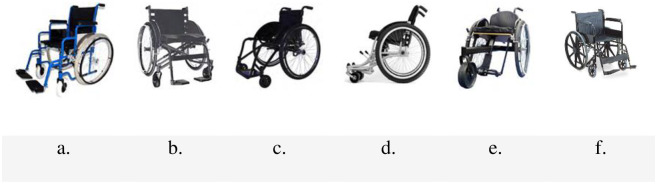
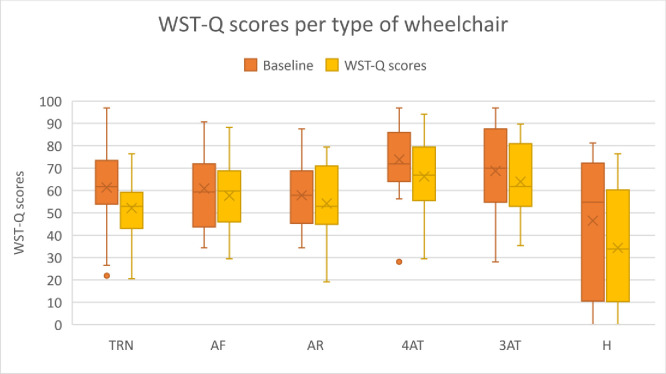
The World Health Organization (WHO) estimates that only 17-37% of the approximately 77 million people who need a wheelchair have access to one. Many organizations are trying to address this need through varying service delivery approaches. For instance, some adhere to WHO's recommended 8-steps service approach while others provide wheelchairs with little to no service. There is limited and sometimes conflicting evidence of the impact of the WHO's recommendations on the outcomes of wheelchair provision. To help build this evidence, we \explored outcomes of two groups of users who received their wheelchairs through two service models over time. The 8-Steps group (n = 118) received a wheelchair selected from a range of models from service providers trained using the WHO process, and the standard of care (SOC) group (n = 24) received hospital-style wheelchairs and without clinical service. Interviews were conducted at baseline and at follow-up 3 to 6 months after provision, to collect data about wheelchair usage, satisfaction, skills, maintenance and repairs, and life satisfaction. Across-group statistical comparisons were not appropriate due to significant differences between groups. In general, participants used their wheelchairs every day but reported very low mobility levels (<500 meters for the 8-steps group, and <100 meters for the SOC group.) The 8-steps group used their wheelchair for either between 1-3 hours per day, or more than 8 hours per day. The SOC used it between 1 and 3 hours per day. Overall, wheelchair usage and wheelchair skills decreased over the 3- to 6-month data collection timeline. Wheelchair breakdowns were common in both groups emphasizing the need for maintenance, occurring more frequently in the 8-Steps (28.8%) compared to the SOC group (8%), and emphasizing the need for maintenance services. No significant differences were found when comparing device satisfaction across wheelchairs types. Our results emphasize the need for routine maintenance to address frequent wheelchair breakdowns. Our results also demonstrate a large disparity in several outcome variables across groups which motivates future studies where across-group comparisons are possible.
Conflict of interest statement
The authors have declared that no competing interests exist.
Figures
References
-
- World Health Organization. Joint position paper on the provision of mobility devices in less-resourced settings: a step towards implementation of the Convention on the Rights of Persons with Disabilities (CRPD) related to personal mobility (2011).
-
- Technical and Clinical Needs for Successful Transfer and Uptake of Lower-Limb Prosthetics and Wheelchairs in Low Income Countries. [Internet]. 2007. IEEE-EMBS Magazine (In Press)
-
- Kim J, Mulholland SJ. Seating/wheelchair technology in the developing world: need for a closer look. Technology and Disability. 1999;11(1–2):21–7.
MeSH terms
LinkOut - more resources
Full Text Sources
