. 2021 May 5;10(5):1113.
doi: 10.3390/cells10051113.

Adipose Tissue-Derived Stem Cell Yield Depends on Isolation Protocol and Cell Counting Method

Affiliations

Adipose Tissue-Derived Stem Cell Yield Depends on Isolation Protocol and Cell Counting Method

Lukas Prantl et al. Cells. .

Abstract

In plastic surgery, lipofilling is a frequent procedure. Unsatisfactory vascularization and impaired cell vitality can lead to unpredictable take rates in the fat graft. The proliferation and neovascularization inducing properties of adipose tissue-derived stem cells may contribute to solve this problem. Therefore, the enrichment of fat grafts with stem cells is studied intensively. However, it is difficult to compare these studies because many factors-often not precisely described-are influencing the results. Our study summarizes some factors which influence the cell yield like harvesting, isolation procedure and quantification. Stem cells were isolated after liposuction. Quantification was done using a cell chamber, colony counting, or flow cytometry with changes to one parameter, only, for each comparison. Quantification of cells isolated after liposuction at the same harvesting site from the same patient can vary greatly depending on the details of the isolation protocol and the method of quantification. Cell yield can be influenced strongly by many factors. Therefore, a comparison of different studies should be handled with care.

Keywords: adipocyte viability; adipose tissue; cell yield; fat grafting; lipoaspirate; plastic surgery; stem cells.


Conflict of interest statement

The authors declare no conflict of interest.

Figures
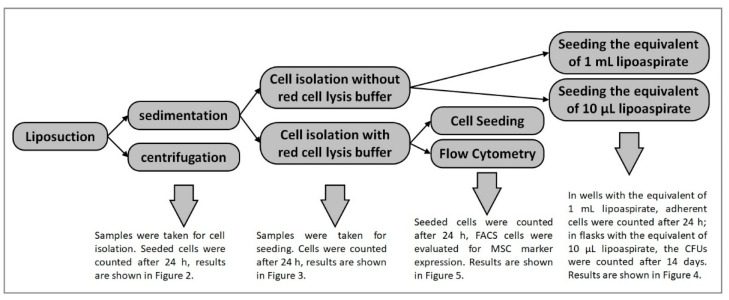
Figure 1
Figure 1
Schematic presentation of the experiment process. After liposuction the lipoaspirate is either allowed to sediment or centrifuged. An aliquot is taken from both samples and used for analysis of the parameter centrifugation. The rest of the sedimented lipoaspirate underwent the Adipose tissue-derived stem cell isolation protocol either with or without erythrocyte lysis buffer. An aliquot is taken from both samples and used for analysis of the parameter erythrocyte lysis. The rest of the cells isolated without lysis buffer are seeded in two different seeding concentrations and were analyzed for this parameter. The rest of the cells isolated with erythrocyte lysis buffer, which is a prerequisite for flow cytometry anyway, underwent either FACS analysis or were seeded as described above.
Figure 2
Figure 2
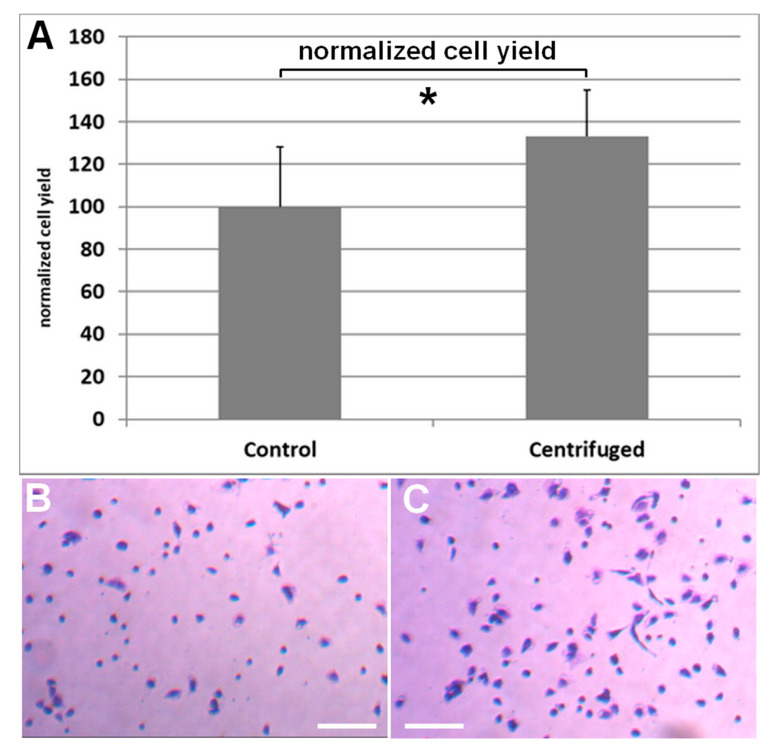
(A) Cell yield is increased 1.3-fold per mL when lipoaspirate is centrifuged directly after liposuction. For this comparison, the counting of adherent cells after 24 h was used. Results are shown as mean ± SD. Student’s t-test was used to assess statistical significance (*: p < 0.05). (B) Representative image of cells isolated from sedimented lipoaspirate. (C) Representative image of cells isolated from centrifuged lipoaspirate. The bar measures 100 µm.
Figure 3
Figure 3
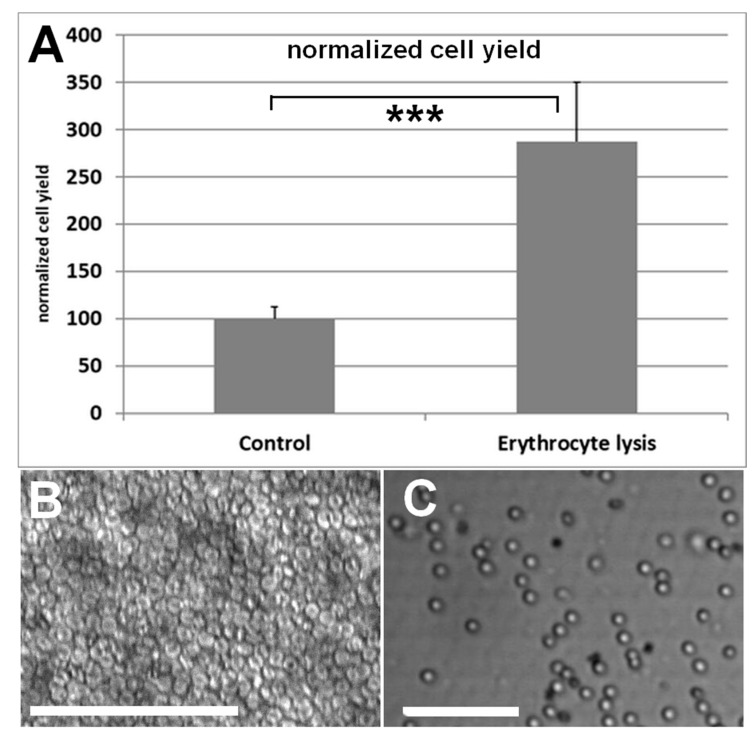
(A) Cell yield is increased more than 2.5-fold per mL when cells are incubated with an erythrocyte lysis buffer after stem cell isolation and prior to seeding. For this comparison, the counting of adherent cells after 24 h was used. Results are shown as mean ± SD. Student’s t-test was used to assess statistical significance (***: p < 0.001). (B) Representative image of seeded cells directly after seeding without red blood cell lysis buffer. The whole surface is covered with erythrocytes. (C) Representative image of seeded cells directly after seeding with red blood cell lysis buffer. Although many erythrocytes remain in the suspension, there is free surface area for the adipose tissue cells to adhere. The bars measure 100 µm.
Figure 4
Figure 4
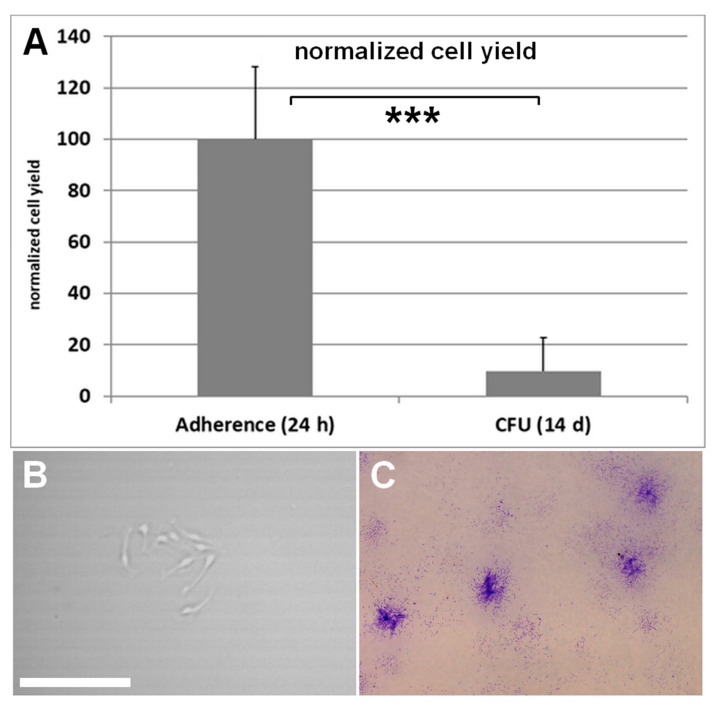
(A) Calculated cell yield is roughly 10 times higher when the adherent cell counting method is used compared to the colony forming unit assay. Results are shown as mean of five wells ± SD. Student’s test was used to assess statistical significance (***: p < 0.001). (B) A single colony after a few days of culture. The bar measures 100 µm. (C) The stained (crystal violet) colonies can be seen macroscopically after two weeks.
Figure 5
Figure 5
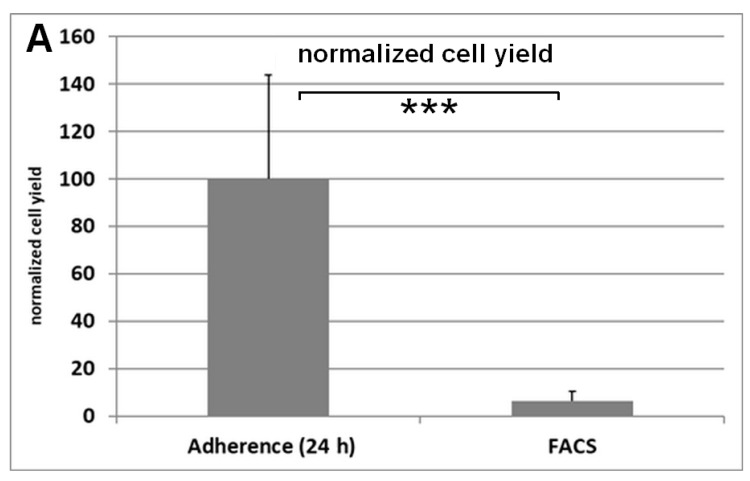
Calculated cell yield from the same lipoaspirate is decreased about 15-fold when detecting the CD44+CD90+-positive ASCs with flow cytometry instead of counting the adherent cells after 24 h. Results are shown as mean ± SD. Student’s test was used to assess statistical significance (***: p < 0.001).
Figure 6
Figure 6
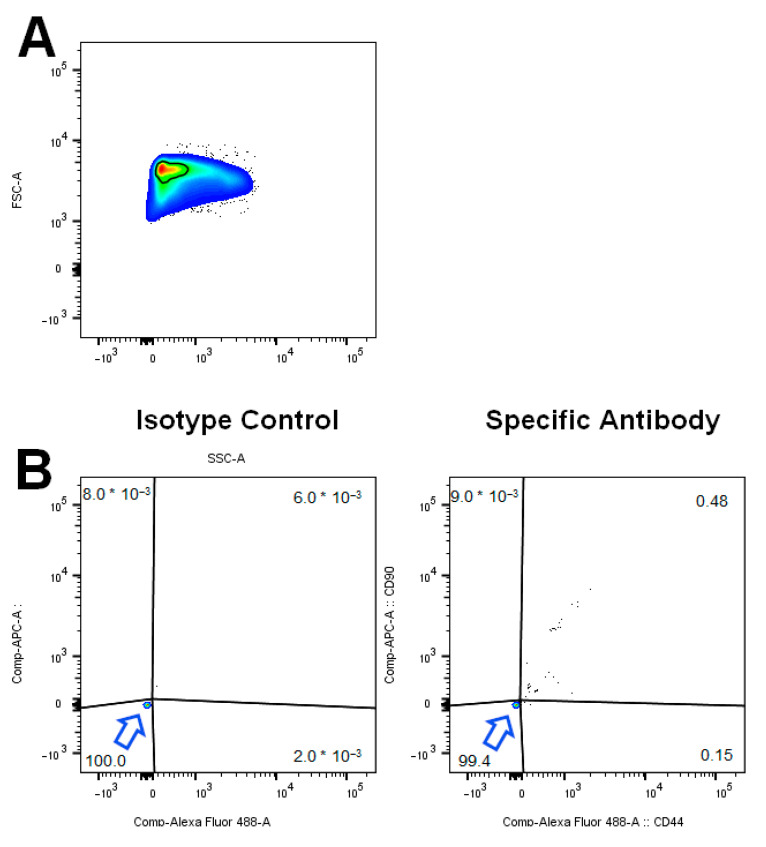
(A) Forward Scatter/Sideward Scatter Plot for cells isolated from adipose tissue. The gated cell population is shown. (B) Cells stained with isotype control antibodies are in the lower left quadrant of an APC/AlexaFluor488 Plot. For isotype control cytometry 50,000 events were counted (left). After staining with specific antibodies for CD44/CD90, nearly 0.5% of cells are positive for CD44/CD90. Arrows point to the main population. For specific antibody cytometry 100,000 events were counted. One of four measurements is shown. (right).
Figure 7
Figure 7
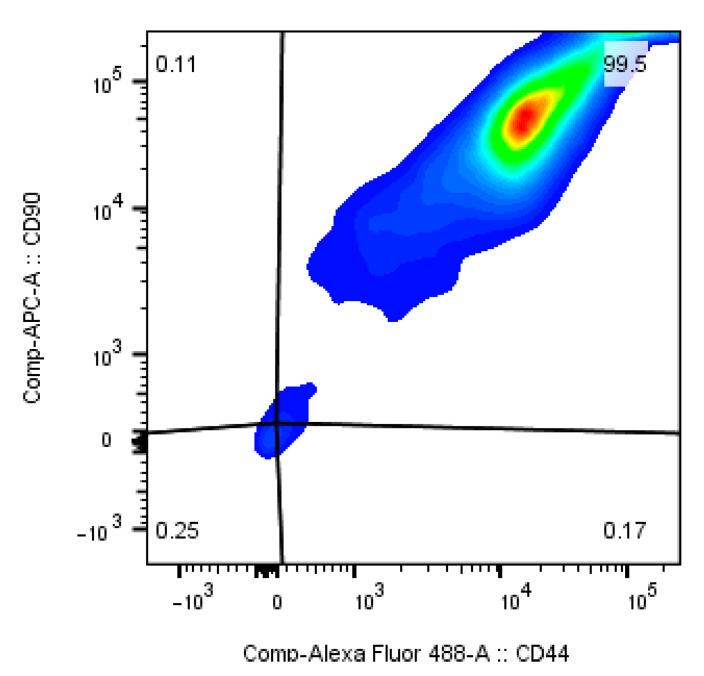
Cultured ASCs are positive for CD44 and CD90.

References

    1. Kern S., Eichler H., Stoeve J., Klüter H., Bieback K. Comparative Analysis of Mesenchymal Stem Cells from Bone Marrow, Umbilical Cord Blood, or Adipose Tissue. Stem Cells Dayt. Ohio. 2006;24:1294–1301. doi: 10.1634/stemcells.2005-0342. - DOI - PubMed
    1. Dominici M., Le Blanc K., Mueller I., Slaper-Cortenbach I., Marini F., Krause D., Deans R., Keating A., Prockop D., Horwitz E. Minimal Criteria for Defining Multipotent Mesenchymal Stromal Cells. The International Society for Cellular Therapy Position Statement. Cytotherapy. 2006;8:315–317. doi: 10.1080/14653240600855905. - DOI - PubMed
    1. Zuk P.A., Zhu M., Ashjian P., De Ugarte D.A., Huang J.I., Mizuno H., Alfonso Z.C., Fraser J.K., Benhaim P., Hedrick M.H. Human Adipose Tissue Is a Source of Multipotent Stem Cells. Mol. Biol. Cell. 2002;13:4279–4295. doi: 10.1091/mbc.e02-02-0105. - DOI - PMC - PubMed
    1. Zou J., Wang W., Kratz K., Xu X., Nie Y., Ma N., Lendlein A. Evaluation of Human Mesenchymal Stem Cell Senescence, Differentiation and Secretion Behavior Cultured on Polycarbonate Cell Culture Inserts. Clin. Hemorheol. Microcirc. 2018;70:573–583. doi: 10.3233/CH-189322. - DOI - PubMed
    1. Mizuno H., Zuk P.A., Zhu M., Lorenz H.P., Benhaim P., Hedrick M.H. Myogenic Differentiation by Human Processed Lipoaspirate Cells. Plast. Reconstr. Surg. 2002;109:199–209. doi: 10.1097/00006534-200201000-00030. - DOI - PubMed

MeSH terms

LinkOut - more resources