


Respiratory Dysfunctions in Parkinson's Disease Patients
- PMID: 34064360
- PMCID: PMC8147845
- DOI: 10.3390/brainsci11050595
Respiratory Dysfunctions in Parkinson's Disease Patients
Abstract
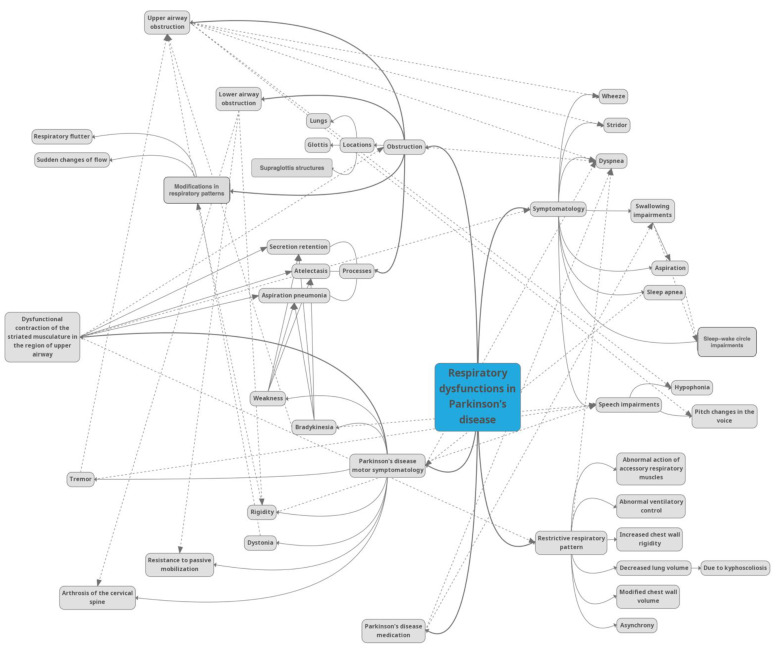
Respiratory dysfunctions have been associated with Parkinson's disease since the first observations of the disease in 1817. Patients with Parkinson's disease frequently present respiratory disorders with obstructive ventilatory patterns and restrictive modifications, as well as limitations in respiratory volumes. In addition, respiratory impairments are observed due to the rigidity and kyphosis that Parkinson's disease patients experience. Subsidiary pulmonary complications can also appear as side effects of medication. Silent aspiration can be the cause of pneumonia in Parkinson's disease. Pulmonary dysfunction is one of the main factors that leads to the morbidity and mortality of patients with Parkinson's disease. Here, we performed a narrative review of the literature and reviewed studies on dyspnea, lung volumes, respiratory muscle function, sleep breathing disorders, and subsidiary speech and swallow impairments related to pulmonary dysfunction in patients with Parkinson's disease.
Keywords: Parkinson’s disease; pulmonary complications; respiratory dysfunction.
Conflict of interest statement
The authors declare no conflict of interest.
Figures
References
-
- Kazemi H., Johnson D.C. In: Encyclopedia of the Human Brain. Ramachandran V.S., editor. Academic Press; San Diego, CA, USA: 2002.
Publication types
LinkOut - more resources
Full Text Sources
