


COVID-19, Livestock Systems and Food Security in Developing Countries: A Systematic Review of an Emerging Literature
- PMID: 34064749
- PMCID: PMC8151861
- DOI: 10.3390/pathogens10050586
COVID-19, Livestock Systems and Food Security in Developing Countries: A Systematic Review of an Emerging Literature
Abstract
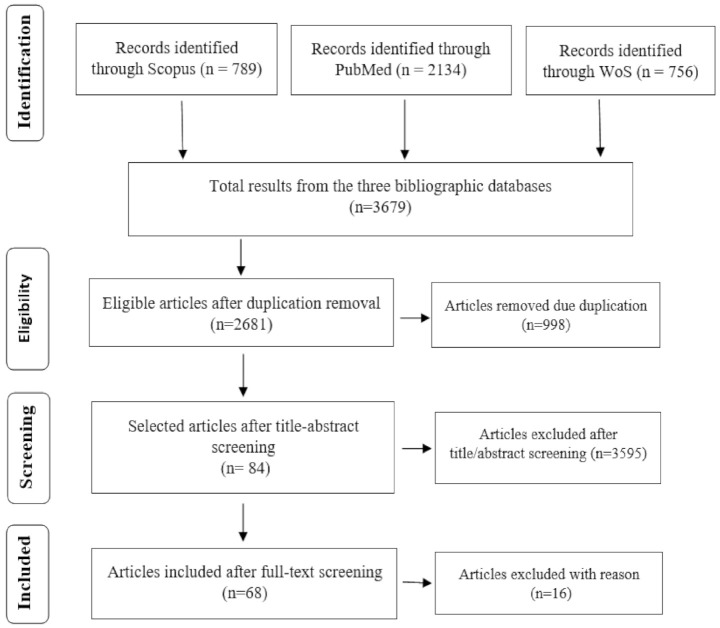
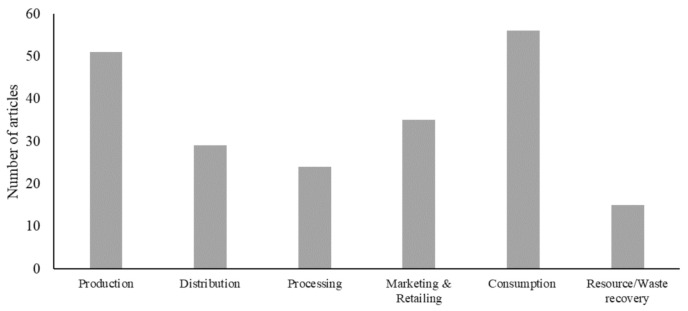
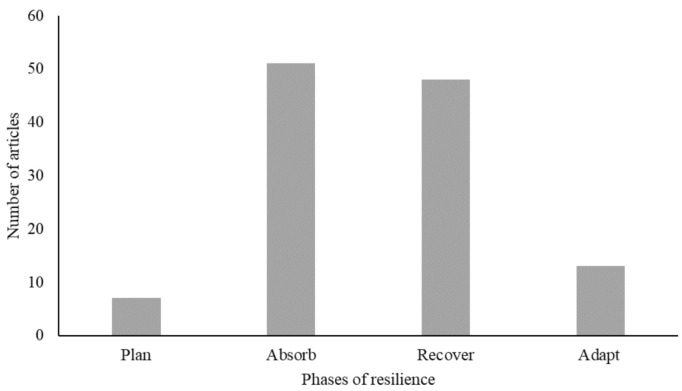
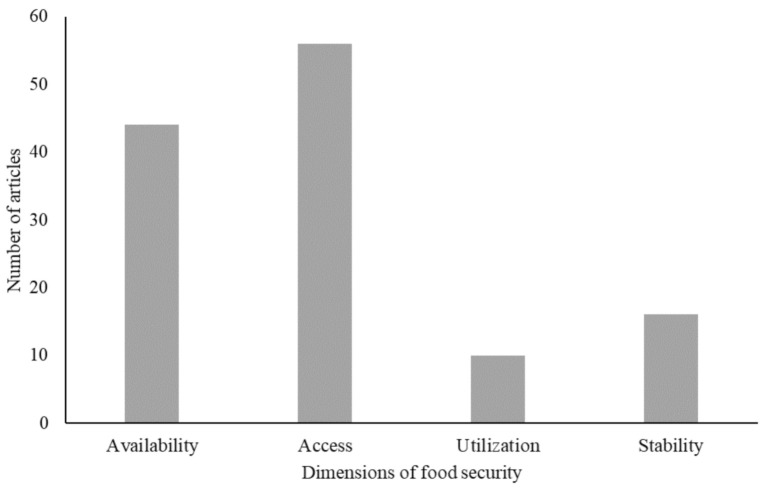
In this paper, we carried out a systematic literature review to document the emerging scientific knowledge about COVID-19 impact on livestock systems and food security in developing countries to identify gaps and possible avenues for future research undertakings. Specifically, we systematically reviewed 68 peer-reviewed articles extracted based on rigorous selection criteria from Scopus, PubMed and ISI Web of Science databases and published between December 2019 and February 2021. Our results reveal that livestock supply chains presented an important 'intermediary' pathway through which the pandemic affected various dimensions of food security in developing countries. Although the research response has been rapid in terms of both quantity and temporal succession, we find a highly suggestive disjunction in studies analyzing the interconnections between COVID-19 pandemic, livestock systems and food security in developing countries. With respect to the livestock supply chain, the bulk of the reviewed evidence focuses on production and consumption, whereas considerably less focus is given to the pandemic's impact on intermediaries within livestock chains, including traders, intermediaries and processors. The analysis of livestock supply chain resilience revolves predominantly around the 'absorbance' and 'recovery' phases of resilience, whereas only a small subset of the literature investigates actions taken by supply chain actors to 'plan' or to 'adapt' livestock systems in order to reduce their vulnerability and enhance their overall resilience. Furthermore, food security has often been narrowly defined, with the majority of articles focusing on 'availability' and 'accessibility' to food due to the pandemic, and other dimensions of food security, including utilization, stability and sustainability, have been widely neglected. Based on our findings, we recommend future research to examine the dynamics of propagation of COVID-19 impact through livestock supply chains in order to develop more targeted interventions that enhance the capacity of developing countries to cope with this and future disruptions and mitigate their food insecurity outcomes. To this end, more holistic, integrated and resilience-based approaches are much recommended to recognize the complex nature of livestock systems in developing countries and to address the multifaceted and widespread effects of COVID-19 on food security channeled through livestock chains.
Keywords: COVID-19; developing countries; food security; livestock systems; systematic literature review.
Conflict of interest statement
The authors declare no conflict of interest. The funders had no role in the design of the study; in the collection, analyses, or interpretation of data; in the writing of the manuscript; or in the decision to publish the results.
Figures
References
-
- FAO . Impact of COVID-19 on Agriculture, Food Systems and Rural Livelihoods in Eastern Africa: Policy and Programmatic Options. FAO; Rome, Italy: 2020.
-
- OECD . COVID-19 and the Food and Agriculture Sector: Issues and Policy Responses. OECD; Paris, France: 2020. p. 12. - DOI
-
- Abu Hatab A., Cavinato M.E.R., Lagerkvist C.J. Urbanization, livestock systems and food security in developing countries: A systematic review of the literature. Food Secur. 2019;11:279–299. doi: 10.1007/s12571-019-00906-1. - DOI
Publication types
Grants and funding
LinkOut - more resources
Full Text Sources
