


Air Pollution, Neonatal Immune Responses, and Potential Joint Effects of Maternal Depression
- PMID: 34064967
- PMCID: PMC8150899
- DOI: 10.3390/ijerph18105062
Air Pollution, Neonatal Immune Responses, and Potential Joint Effects of Maternal Depression
Abstract
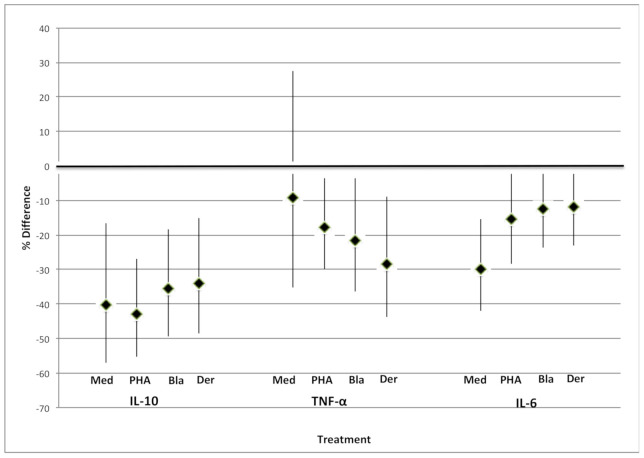
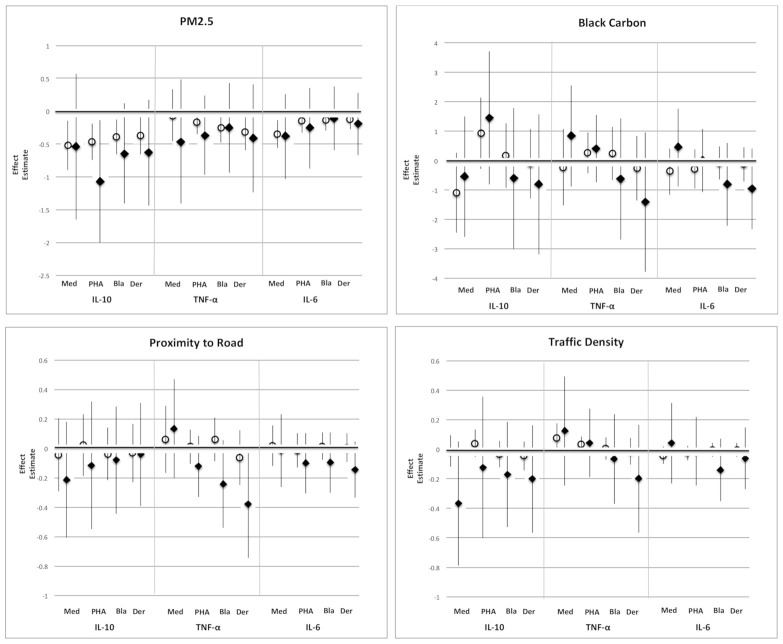
Prenatal maternal exposure to air pollution may cause adverse health effects in offspring, potentially through altered immune responses. Maternal psychosocial distress can also alter immune function and may increase gestational vulnerability to air pollution exposure. We investigated whether prenatal exposure to air pollution is associated with altered immune responses in cord blood mononuclear cells (CBMCs) and potential modification by maternal depression in 463 women recruited in early pregnancy (1999-2001) into the Project Viva longitudinal cohort. We estimated black carbon (BC), fine particulate matter (PM2.5), residential proximity to major roadways, and near-residence traffic density, averaged over pregnancy. Women reported depressive symptoms in mid-pregnancy (Edinburgh Postnatal Depression Scale) and depression history by questionnaire. Immune responses were assayed by concentrations of three cytokines (IL-6, IL-10, and TNF-α), in unstimulated or stimulated (phytohemagglutinin (PHA), cockroach extract (Bla g 2), house dust mite extract (Der f 1)) CBMCs. Using multivariable linear or Tobit regression analyses, we found that CBMCs production of IL-6, TNF-a, and IL-10 were all lower in mothers exposed to higher levels of PM2.5 during pregnancy. A suggestive but not statistically significant pattern of lower cord blood cytokine concentrations from ever (versus never) depressed women exposed to PM2.5, BC, or traffic was also observed and warrants further study.
Keywords: air pollution; chemical stressors; cord blood mononuclear cells; cytokines; immune system; intergenerational effects; maternal prenatal depression; non-chemical stressors; social determinants of health.
Conflict of interest statement
The authors declare no conflict of interest.
Figures
References
-
- Urch B., Speck M., Corey P., Wasserstein D., Manno M., Lukic K.Z., Brook J.R., Liu L., Coull B., Schwartz J., et al. Concentrated ambient fine particles and not ozone induce a systemic interleukin-6 response in humans. Inhal. Toxicol. 2010;22:210–218. doi: 10.3109/08958370903173666. - DOI - PMC - PubMed
-
- van Eeden S.F., Tan W.C., Suwa T., Mukae H., Terashima T., Fujii T., Qui D., Vincent R., Hogg J.C. Cytokines involved in the systemic inflammatory response induced by exposure to particulate matter air pollutants (PM10) Am. J. Respir. Crit. Care Med. 2001;164:826–830. doi: 10.1164/ajrccm.164.5.2010160. - DOI - PubMed
Publication types
MeSH terms
Substances
Grants and funding
LinkOut - more resources
Full Text Sources
Medical
