


Successful Postnatal Cardiopulmonary Resuscitation Due to Defibrillation
- PMID: 34065239
- PMCID: PMC8161234
- DOI: 10.3390/children8050421
Successful Postnatal Cardiopulmonary Resuscitation Due to Defibrillation
Abstract
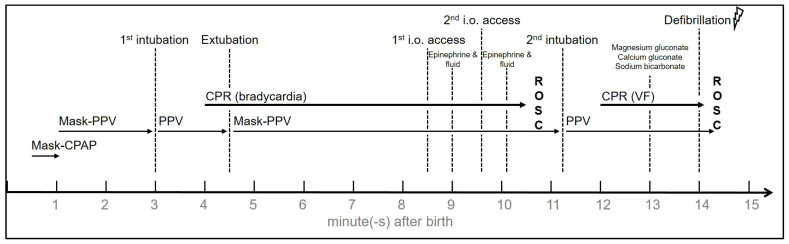
An asphyxiated term neonate required postnatal resuscitation. After six minutes of cardio-pulmonary resuscitation (CPR) and two doses of epinephrine, spontaneous circulation returned, but was shortly followed by ventricular fibrillation. CPR and administration of magnesium, calcium gluconate, and sodium bicarbonate did not improve the neonate's condition. A counter shock of five Joule was delivered and the cardiac rhythm immediately converted to sinus rhythm. The neonate was transferred to the neonatal intensive care unit and received post-resuscitation care. Due to prolonged QTc and subsequently suspected long-QT syndrome propranolol treatment was initiated. The neonate was discharged home on day 14 without neurological sequelae.
Keywords: defibrillation; neonate; resuscitation; ventricular fibrillation.
Conflict of interest statement
The authors declare no conflict of interest.
Figures
References
-
- Wyllie J., Bruinenberg J., Roehr C.C., Rüdiger M., Trevisanuto D., Urlesberger B. European Resuscitation Council Guidelines for Resuscitation 2015: Section 7. Resuscitation and support of transition of babies at birth. Resuscitation. 2015;95:249–263. doi: 10.1016/j.resuscitation.2015.07.029. - DOI - PubMed
-
- Wyckoff M.H., Wyllie J., Aziz K., de Almeida M.F., Fabres J., Fawke J., Guinsburg R., Hosono S., Isayama T., Kapadia V.S., et al. Neonatal Life Support: 2020 International Consensus on Cardiopulmonary Resuscitation and Emergency Cardiovascular Care Science with Treatment Recommendations. Circulation. 2020;142:185–221. doi: 10.1161/CIR.0000000000000895. - DOI - PubMed
Publication types
LinkOut - more resources
Full Text Sources
