


Antioxidant and Inflammatory Gene Expression Profiles of Bovine Peripheral Blood Mononuclear Cells in Response to Arthrospira platensis before and after LPS Challenge
- PMID: 34065248
- PMCID: PMC8161185
- DOI: 10.3390/antiox10050814
Antioxidant and Inflammatory Gene Expression Profiles of Bovine Peripheral Blood Mononuclear Cells in Response to Arthrospira platensis before and after LPS Challenge
Abstract
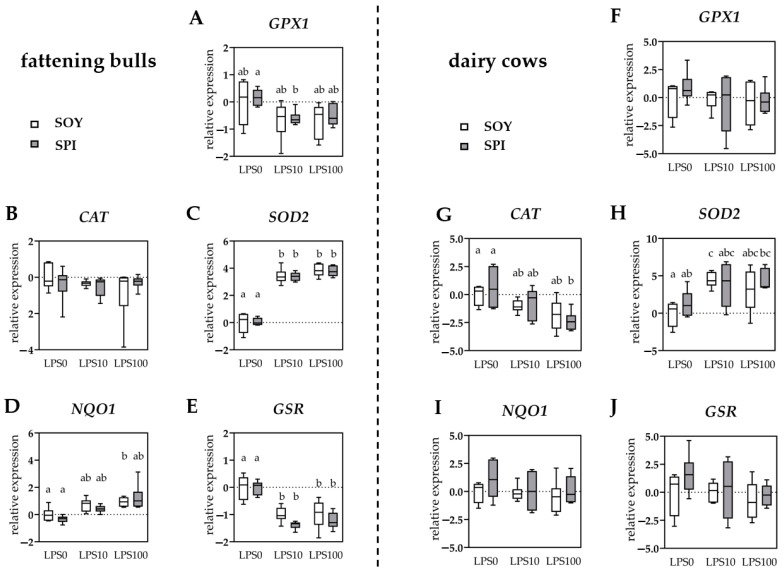
Oxidative stress and inflammatory diseases are closely related processes that need to be controlled to ensure the desirable high performance of livestock. The microalga spirulina has shown antioxidant and anti-inflammatory properties in monogastric species. To investigate potential beneficial effects in ruminants, we replaced soybean meal (SOY) in the diets of dairy cows and fattening bulls by spirulina (SPI) and analyzed plasma concentrations of antioxidants (β-carotene, α-tocopherol, polyphenols) and serum total antioxidant capacity. Following in vitro stimulation with lipopolysaccharide (LPS), peripheral blood mononuclear cells (PBMCs) were isolated for expression analysis of inflammation- and antioxidant-defense-related genes. Plasma β-carotene concentration was higher in SPI, compared to SOY cows, but did not differ in bulls. Plasma total phenol concentration was significantly higher in SPI, compared to SOY bulls, but not in cows. Stimulation of bovine PBMCs with LPS increased the expression of most cytokines and some antioxidant enzymes. Gene expression of PBMCs derived from SPI animals, compared to SOY animals, hardly differed. Our results indicate that in ruminants, spirulina might not have potent antioxidant and anti-inflammatory properties. Future studies should evaluate the microbial degradation of spirulina and its bioactive compounds in the rumen to provide further data on potential beneficial health effects in ruminants.
Keywords: dairy cows; fattening bulls; inflammation; leukocytes; lipopolysaccharide; microalgae; spirulina.
Conflict of interest statement
The authors declare no conflict of interest.
Figures


References
-
- United States Department of Agriculture . Part III: Health Management and Biosecurity in U.S. Feedlots, 1999. USDA, APHIS, VS, CEAH, National Animal Health Monitoring System; Fort Collins, CO, USA: 2000. #N336.1200.
-
- Sies H. Biochemistry of Oxidative Stress. Angew. Chem. Int. Ed. Engl. 1986;25:1058–1071. doi: 10.1002/anie.198610581. - DOI
Grants and funding
LinkOut - more resources
Full Text Sources
