


Early-Pregnancy Dydrogesterone Supplementation Mimicking Luteal-Phase Support in ART Patients Did Not Provoke Major Reproductive Disorders in Pregnant Mice and Their Progeny
- PMID: 34065597
- PMCID: PMC8161261
- DOI: 10.3390/ijms22105403
Early-Pregnancy Dydrogesterone Supplementation Mimicking Luteal-Phase Support in ART Patients Did Not Provoke Major Reproductive Disorders in Pregnant Mice and Their Progeny
Abstract
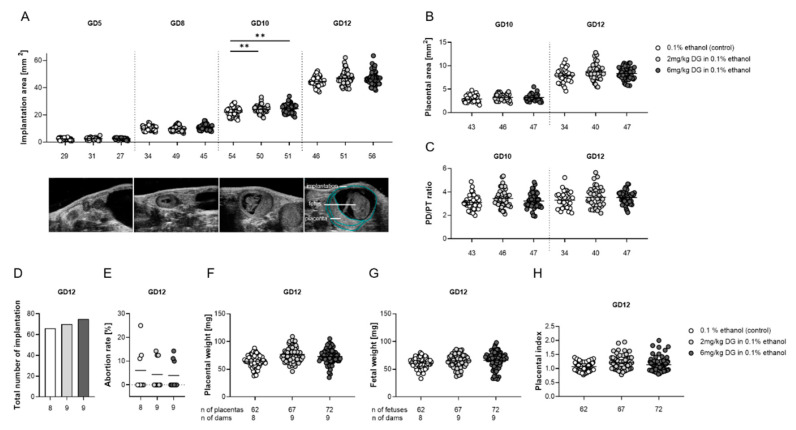
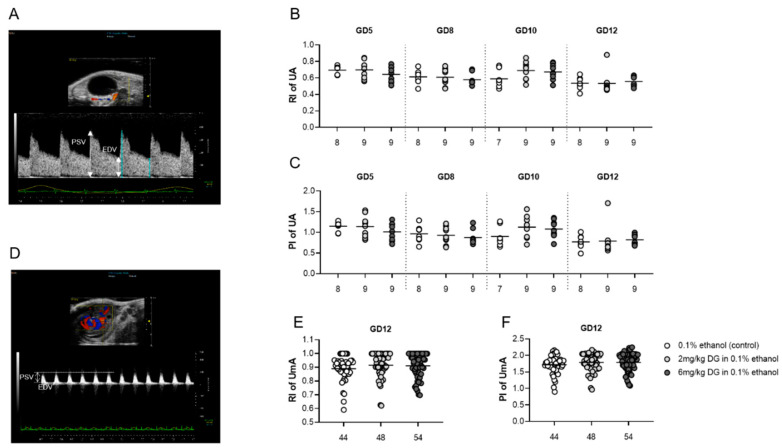
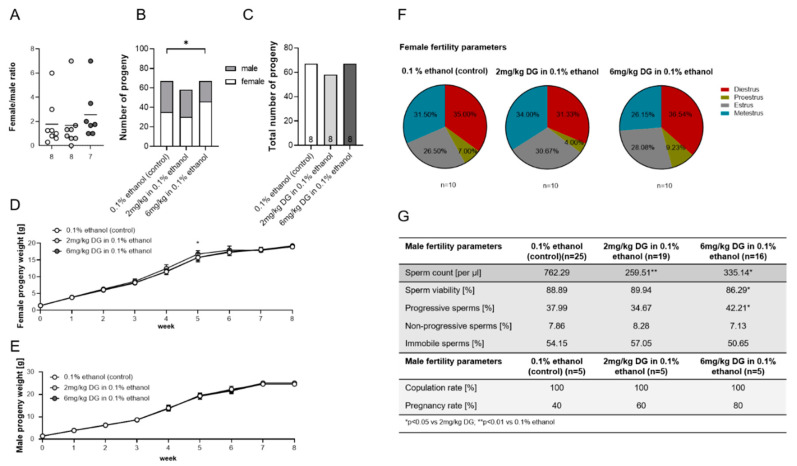
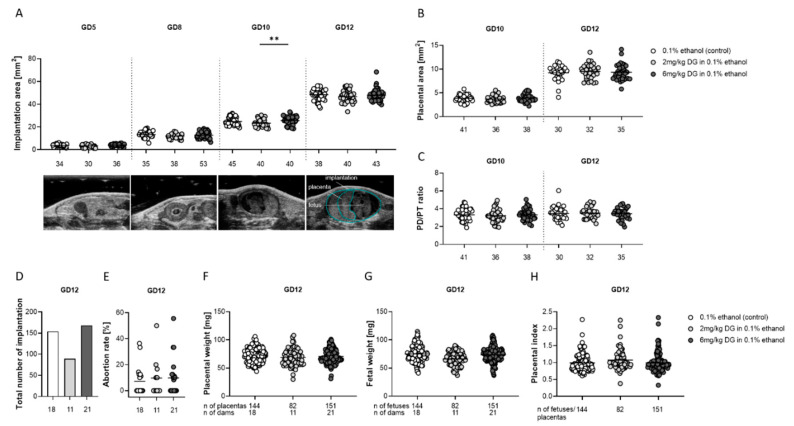
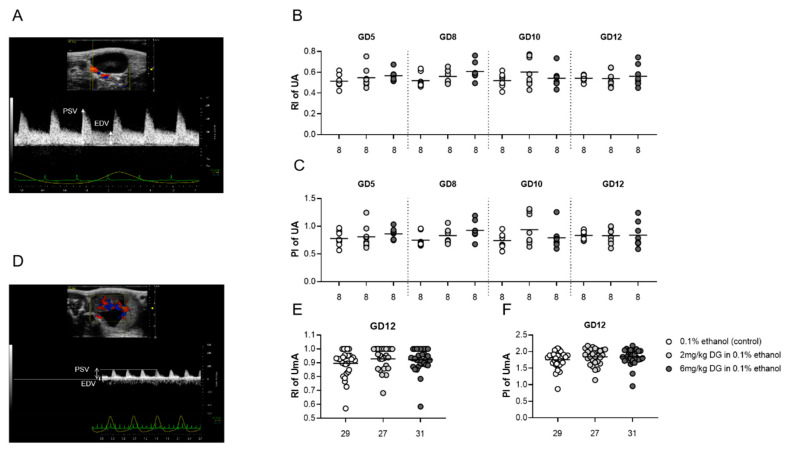
Progestogens are frequently administered during early pregnancy to patients undergoing assisted reproductive techniques (ART) to overcome progesterone deficits following ART procedures. Orally administered dydrogesterone (DG) shows equal efficacy to other progestogens with a higher level of patient compliance. However, potential harmful effects of DG on critical pregnancy processes and on the health of the progeny are not yet completely ruled out. We treated pregnant mice with DG in the mode, duration, and doses comparable to ART patients. Subsequently, we studied DG effects on embryo implantation, placental and fetal growth, fetal-maternal circulation, fetal survival, and the uterine immune status. After birth of in utero DG-exposed progeny, we assessed their sex ratios, weight gain, and reproductive performance. Early-pregnancy DG administration did not interfere with placental and fetal development, fetal-maternal circulation, or fetal survival, and provoked only minor changes in the uterine immune compartment. DG-exposed offspring grew normally, were fertile, and showed no reproductive abnormalities with the exception of an altered spermiogram in male progeny. Notably, DG shifted the sex ratio in favor of female progeny. Even though our data may be reassuring for the use of DG in ART patients, the detrimental effects on spermatogenesis in mice warrants further investigations and may be a reason for caution for routine DG supplementation in early pregnancy.
Keywords: artificial reproductive techniques; dydrogesterone; early pregnancy; luteal-phase support; progeny; reproductive disorders; safety; tolerability.
Conflict of interest statement
The authors declare no conflict of interest. The funders had no role in the design of the study; in the collection, analyses, or interpretation of data; in the writing of the manuscript; or in the decision to publish the results.
Figures
References
-
- Barbosa M.W.P., Valadares N.P.B., Barbosa A.C.P., Amaral A.S., Iglesias J.R., Nastri C.O., Martins W.P., Nakagawa H.M. Oral dydrogesterone vs. vaginal progesterone capsules for luteal-phase support in women undergoing embryo transfer: A systematic review and meta-analysis. JBRA Assist. Reprod. 2018;22:148–156. doi: 10.5935/1518-0557.20180018. - DOI - PMC - PubMed
-
- Griesinger G., Blockeel C., Kahler E., Pexman-Fieth C., Olofsson J.I., Driessen S., Tournaye H. Dydrogesterone as an oral alternative to vaginal progesterone for IVF luteal phase support: A systematic review and individual participant data meta-analysis. PLoS ONE. 2020;15:e0241044. doi: 10.1371/journal.pone.0241044. - DOI - PMC - PubMed
MeSH terms
Substances
Grants and funding
LinkOut - more resources
Full Text Sources
