


Boosting the Photoaged Skin: The Potential Role of Dietary Components
- PMID: 34065733
- PMCID: PMC8156873
- DOI: 10.3390/nu13051691
Boosting the Photoaged Skin: The Potential Role of Dietary Components
Abstract
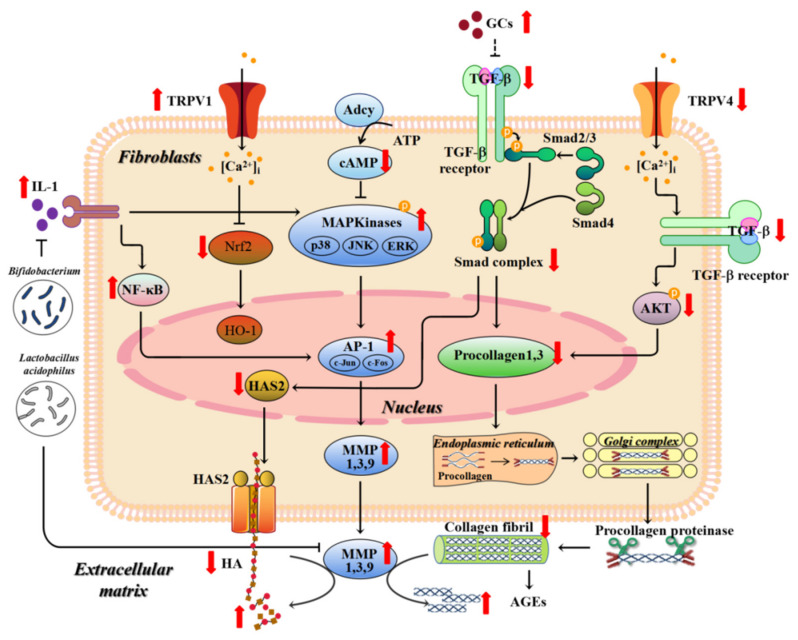
Skin photoaging is mainly induced by ultraviolet (UV) irradiation and its manifestations include dry skin, coarse wrinkle, irregular pigmentation, and loss of skin elasticity. Dietary supplementation of nutraceuticals with therapeutic and preventive effects against skin photoaging has recently received increasing attention. This article aims to review the research progress in the cellular and molecular mechanisms of UV-induced skin photoaging. Subsequently, the beneficial effects of dietary components on skin photoaging are discussed. The photoaging process and the underlying mechanisms are complex. Matrix metalloproteinases, transforming growth factors, skin adipose tissue, inflammation, oxidative stress, nuclear and mitochondrial DNA, telomeres, microRNA, advanced glycation end products, the hypothalamic-pituitary-adrenal axis, and transient receptor potential cation channel V are key regulators that drive the photoaging-associated changes in skin. Meanwhile, mounting evidence from animal models and clinical trials suggests that various food-derived components attenuate the development and symptoms of skin photoaging. The major mechanisms of these dietary components to alleviate skin photoaging include the maintenance of skin moisture and extracellular matrix content, regulation of specific signaling pathways involved in the synthesis and degradation of the extracellular matrix, and antioxidant capacity. Taken together, the ingestion of food-derived functional components could be an attractive strategy to prevent skin photoaging damage.
Keywords: extracellular matrix; fibroblast; nutraceuticals; photoaging; skin.
Conflict of interest statement
The authors have no conflict of interest to declare.
Figures
References
-
- Huang A.H., Chien A.L. Photoaging: A review of current literature. Curr. Dermatol. Rep. 2020;9:22–29. doi: 10.1007/s13671-020-00288-0. - DOI
Publication types
MeSH terms
Grants and funding
LinkOut - more resources
Full Text Sources
Medical
