


Energy Requirements for Growth in the Norfolk Terrier
- PMID: 34066292
- PMCID: PMC8152034
- DOI: 10.3390/ani11051380
Energy Requirements for Growth in the Norfolk Terrier
Abstract
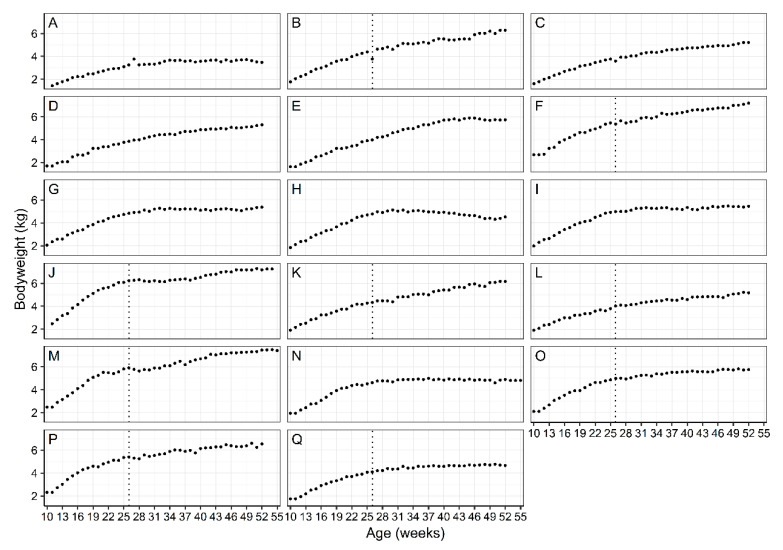
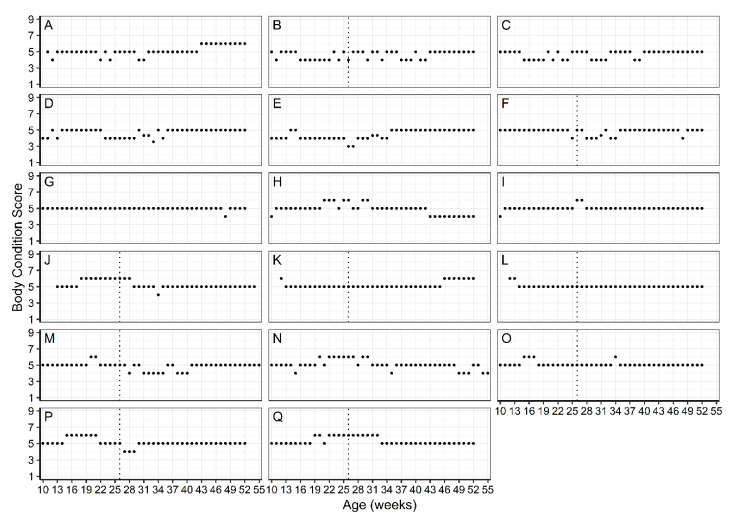
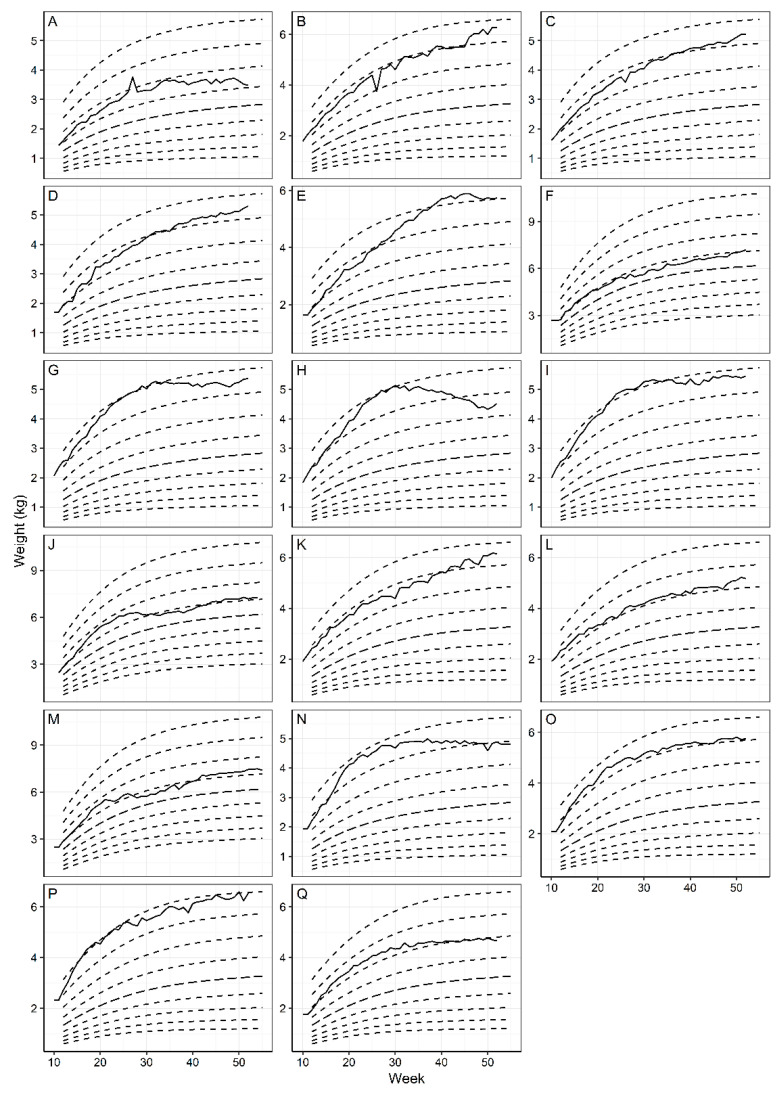
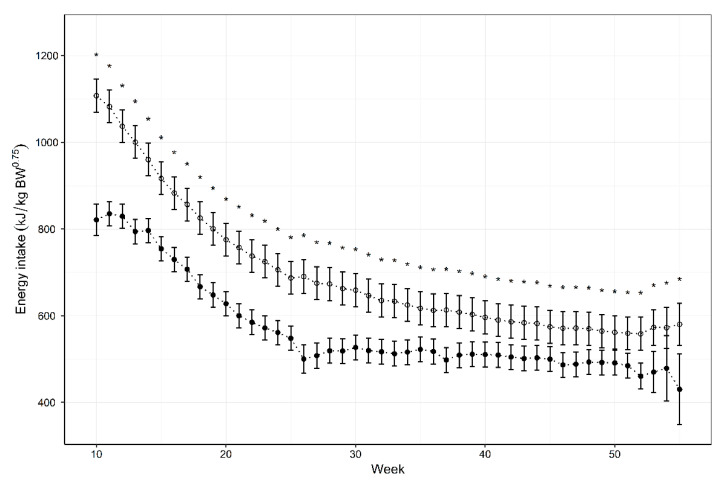
An appropriate energy intake for healthy growth can reduce the risk of obesity and co-morbidities, such as orthopaedic diseases. The 2006 National Research Council (NRC) universal equation calculates the energy requirement of growing dogs based on predicted adult body weight, but evidence suggests a revision may be required. This study investigates the energy requirements of seventeen Norfolk terrier puppies over their first year (10 to 52 weeks). Puppies were individually fed complete and balanced diets in amounts to maintain an optimal body condition score (BCS), recording intake daily and body weight and BCS weekly. To monitor health a veterinary examination, haematology and plasma biochemistry and serum measures of bone turnover were undertaken every 12 weeks. Skeletal development was assessed using dual-energy X-ray absorptiometry (26 and 52 weeks). Puppies were clinically healthy with normal skeletal development and healthy growth throughout. The energy intake to achieve this was significantly lower than that predicted by the NRC (2006) equation at all time points, with largest mean difference of 285 kJ/kg0.75 per day at 10 weeks. If fed according to the NRC 2006 equation, dogs would have been in positive energy balance, possibly leading to obesity. These data support a revision to the NRC (2006) equation.
Keywords: BCS; National Research Council; growth; puppies; small dog.
Conflict of interest statement
S.B., J.A., R.H., A.M.B. and P.W. were employees of Mars Petcare during the study.
Figures
References
-
- Lund E.M., Armstrong P.J., Kirk C.A., Klausner J.S. Prevalence and risk factors for obesity in adult dogs from private US veterinary practices. Intern. J. Appl. Res. Vet. Med. 2006;4:177.
-
- Montoya-Alonso J.A., Bautista-Castaño I., Peña C., Suárez L., Juste M.C., Tvarijonaviciute A. Prevalence of Canine Obesity, Obesity-Related Metabolic Dysfunction, and Relationship with Owner Obesity in an Obesogenic Region of Spain. Front. Vet. Sci. 2017;4:59. doi: 10.3389/fvets.2017.00059. - DOI - PMC - PubMed
-
- Biagi G., Cipollini I., Grandi M., Sarti D., Zaghini G. Trends in Veterinary Sciences. Springer Science and Business Media LLC; New York, NY, USA: 2013. Preliminary Investigation of the Incidence of Obesity in a Canine Population in the USA; pp. 171–175.
LinkOut - more resources
Full Text Sources
