


Immunothrombosis in COVID-19: Implications of Neutrophil Extracellular Traps
- PMID: 34066385
- PMCID: PMC8148218
- DOI: 10.3390/biom11050694
Immunothrombosis in COVID-19: Implications of Neutrophil Extracellular Traps
Abstract
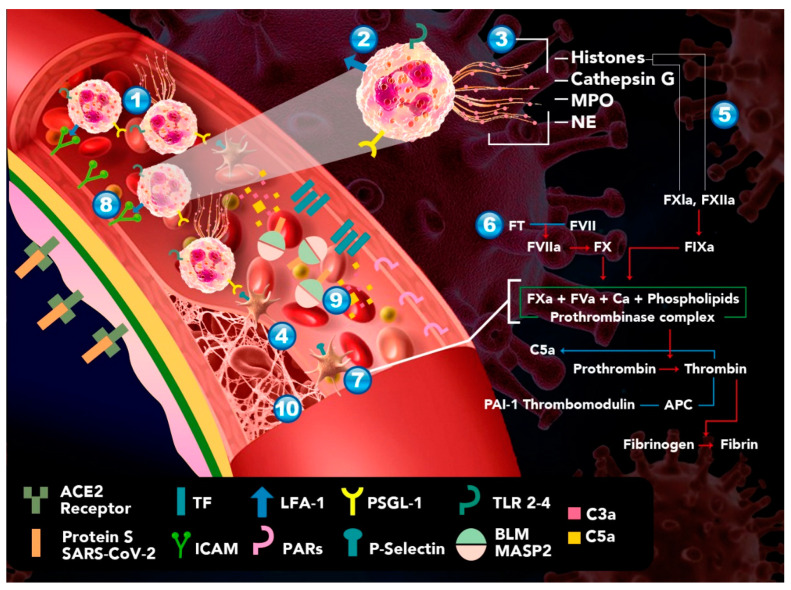
SARS-CoV-2 is a member of the family of coronaviruses associated with severe outbreaks of respiratory diseases in recent decades and is the causative agent of the COVID-19 pandemic. The recognition by and activation of the innate immune response recruits neutrophils, which, through their different mechanisms of action, form extracellular neutrophil traps, playing a role in infection control and trapping viral, bacterial, and fungal etiological agents. However, in patients with COVID-19, activation at the vascular level, combined with other cells and inflammatory mediators, leads to thrombotic events and disseminated intravascular coagulation, thus leading to a series of clinical manifestations in cerebrovascular, cardiac, pulmonary, and kidney disease while promoting severe disease and mortality. Previous studies of hospitalized patients with COVID-19 have shown that elevated levels of markers specific for NETs, such as free DNA, MPO, and H3Cit, are strongly associated with the total neutrophil count; with acute phase reactants that include CRP, D-dimer, lactate dehydrogenase, and interleukin secretion; and with an increased risk of severe COVID-19. This study analyzed the interactions between NETs and the activation pathways involved in immunothrombotic processes in patients with COVID-19.
Keywords: CID; COVID-19; SARS-CoV-2; immunothrombosis; neutrophil extracellular traps.
Conflict of interest statement
The authors declare no conflict of interest.
Figures
References
-
- Makatsariya A.D., Grigoreva K.N., Mingalimov M.A., Bitsadze V.O., Khizroeva J.K., Tretyakova M.V., Elalamy I., Shkoda A.S., Nemirovskiy V.B., Blinov D.V., et al. Coronavirus disease (COVID-19) and disseminated intravascular coagulation syndrome. Obstet. Gynecol. Reprod. 2020;14:3–10. doi: 10.17749/2313-7347.132. - DOI
Publication types
MeSH terms
Substances
LinkOut - more resources
Full Text Sources
Medical
Research Materials
Miscellaneous
