


Metronomic Chemotherapy
- PMID: 34066606
- PMCID: PMC8125766
- DOI: 10.3390/cancers13092236
Metronomic Chemotherapy
Abstract
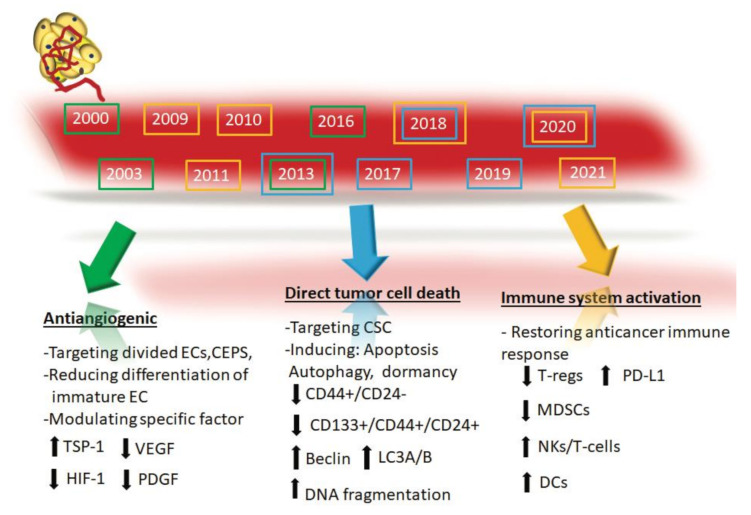
Metronomic chemotherapy treatment (mCHT) refers to the chronic administration of low doses chemotherapy that can sustain prolonged, and active plasma levels of drugs, producing favorable tolerability and it is a new promising therapeutic approach in solid and in hematologic tumors. mCHT has not only a direct effect on tumor cells, but also an action on cell microenvironment, by inhibiting tumor angiogenesis, or promoting immune response and for these reasons can be considered a multi-target therapy itself. Here we review the state of the art of mCHT use in some classical tumour types, such as breast and no small cell lung cancer (NSCLC), see what is new regarding most recent data in different cancer types, such as glioblastoma (GBL) and acute myeloid leukemia (AML), and new drugs with potential metronomic administration. Finally, a look at the strategic use of mCHT in the context of health emergencies, or in low -and middle-income countries (LMICs), where access to adequate healthcare is often not easy, is mandatory, as we always need to bear in in mind that equity in care must be a compulsory part of our medical work and research.
Keywords: clinical trials; mechanism of action; metronomic chemotherapy.
Conflict of interest statement
The authors declare no conflict of interest.
Figures
References
Publication types
LinkOut - more resources
Full Text Sources
Medical
