


Effect of Moisture Content on the Processing and Mechanical Properties of a Biodegradable Polyester
- PMID: 34067633
- PMCID: PMC8156231
- DOI: 10.3390/polym13101616
Effect of Moisture Content on the Processing and Mechanical Properties of a Biodegradable Polyester
Abstract
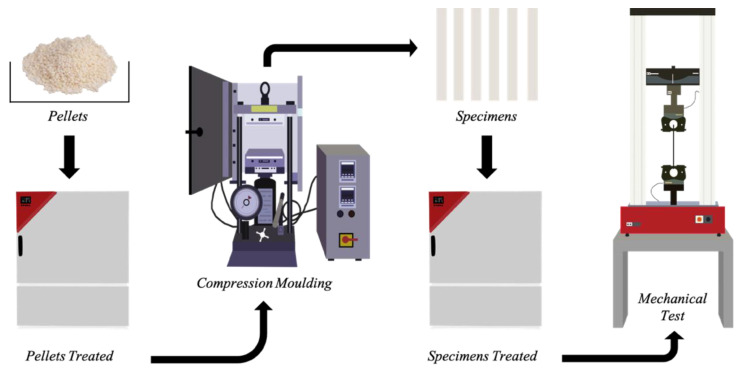
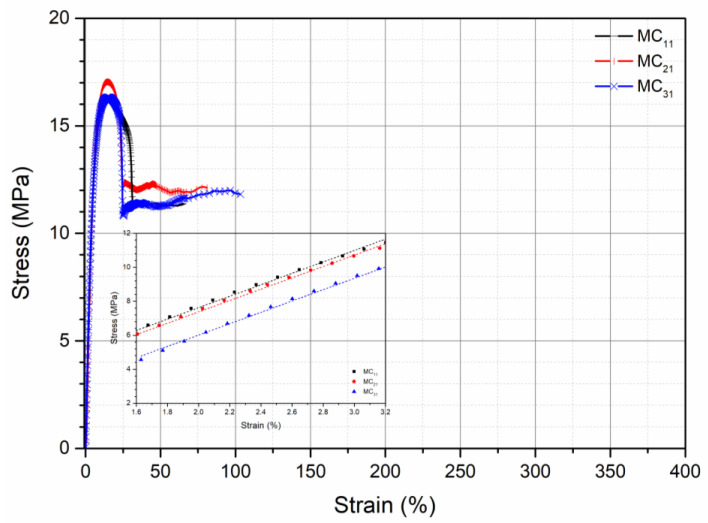
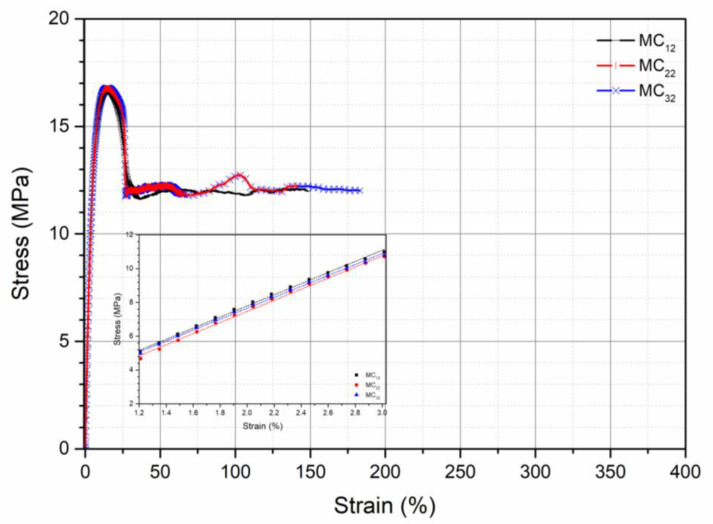
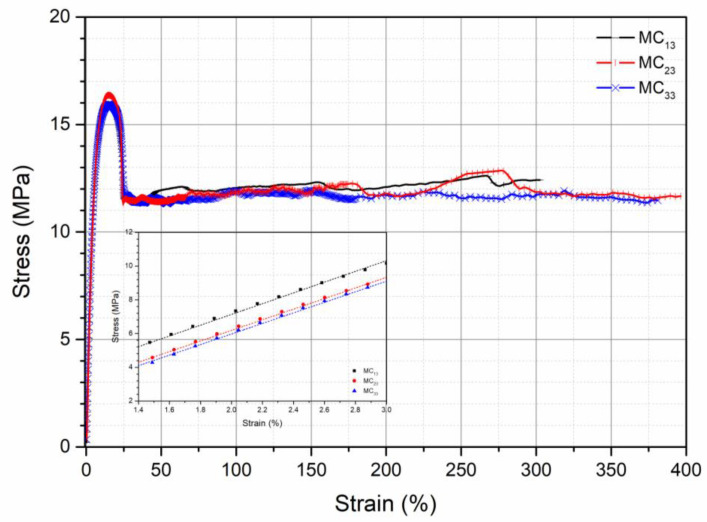
This work is focused on the influence of moisture content on the processing and mechanical properties of a biodegradable polyester used for applications in injection molding. The pellets of the biodegradable polyester were exposed under different relative humidity conditions at a constant temperature before being compression molded. The compression-molded specimens were again placed under the above conditions before the mechanical testing. With all these samples, it is possible to determine the effect of moisture content on the processing and mechanical properties separately, as well as the combined effect of moisture content on the mechanical properties. The results obtained showed that the amount of absorbed water-both before processing and before mechanical testing-causes an increase in elongation at break and a slight reduction of the elastic modulus and tensile strength. These changes have been associated with possible hydrolytic degradation during the compression molding process and, in particular, with the plasticizing action of the moisture absorbed by the specimens.
Keywords: biodegradable polymers; mechanical properties; moisture content; processing; rheology.
Conflict of interest statement
The authors declare no conflict of interest.
Figures
References
-
- Agarwal S. Biodegradable Polymers: Present Opportunities and Challenges in Providing a Microplastic-Free Environment. Macromol. Chem. Phys. 2020;221 doi: 10.1002/macp.202000017. - DOI
-
- Zhao L., Rong L., Zhao L., Yang J., Wang L., Sun H. Plastics of the Future? The Impact of Biodegradable Polymers on the Environment. Microplast. Terrestr. Environ. 2020;95:423–445.
-
- Mangaraj S., Yadav A., Bal L.M., Dash S.K., Mahanti N.K. Application of Biodegradable Polymers in Food Packaging Industry: A Comprehensive Review. J. Packag. Technol. 2019;3:77–96. doi: 10.1007/s41783-018-0049-y. - DOI
Grants and funding
LinkOut - more resources
Full Text Sources
