


Role of Biomolecules in Osteoclasts and Their Therapeutic Potential for Osteoporosis
- PMID: 34067783
- PMCID: PMC8156890
- DOI: 10.3390/biom11050747
Role of Biomolecules in Osteoclasts and Their Therapeutic Potential for Osteoporosis
Abstract
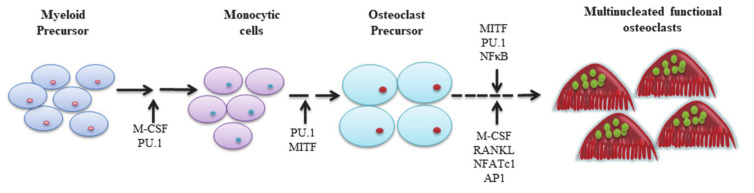
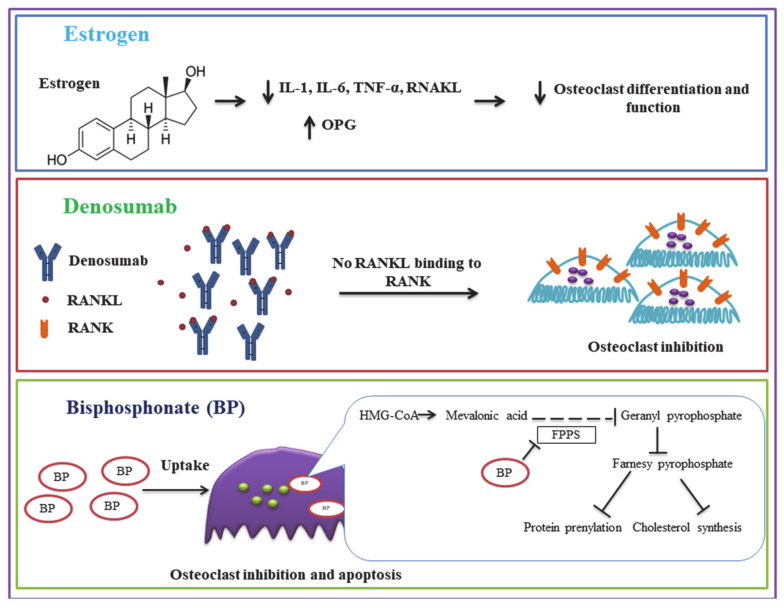
Osteoclasts (OCs) are important cells that are involved in the regulation of bone metabolism and are mainly responsible for coordinating bone resorption with bone formation to regulate bone remodeling. The imbalance between bone resorption and formation significantly affects bone metabolism. When the activity of osteoclasts exceeds the osteoblasts, it results in a condition called osteoporosis, which is characterized by reduced bone microarchitecture, decreased bone mass, and increased occurrences of fracture. Molecules, including transcription factors, proteins, hormones, nucleic acids, such as non-coding RNAs, play an important role in osteoclast proliferation, differentiation, and function. In this review, we have highlighted the role of these molecules in osteoclasts regulation and osteoporosis. The developed therapeutics targeting these molecules for the treatment of osteoporosis in recent years have also been discussed with challenges faced in clinical application.
Keywords: bone resorption; gene therapy; osteoclasts (OCs); osteoporosis; therapeutics.
Conflict of interest statement
The authors declare no conflict of interest.
Figures
References
Publication types
MeSH terms
Substances
Grants and funding
LinkOut - more resources
Full Text Sources
Medical
