Review
. 2021 May 13;19(5):272.
doi: 10.3390/md19050272.

Marine Anthraquinones: Pharmacological and Toxicological Issues

Affiliations
Review

Marine Anthraquinones: Pharmacological and Toxicological Issues

Giulia Greco et al. Mar Drugs. .

Abstract

The marine ecosystem, populated by a myriad of animals, plants, and microorganisms, is an inexhaustible reservoir of pharmacologically active molecules. Among the multiple secondary metabolites produced by marine sources, there are anthraquinones and their derivatives. Besides being mainly known to be produced by terrestrial species, even marine organisms and the uncountable kingdom of marine microorganisms biosynthesize anthraquinones. Anthraquinones possess many different biological activities, including a remarkable antitumor activity. However, due to their peculiar chemical structures, anthraquinones are often associated with toxicological issues, even relevant, such as genotoxicity and mutagenicity. The aim of this review is to critically describe the anticancer potential of anthraquinones derived from marine sources and their genotoxic and mutagenic potential. Marine-derived anthraquinones show a promising anticancer potential, although clinical studies are missing. Additionally, an in-depth investigation of their toxicological profile is needed before advocating anthraquinones as a therapeutic armamentarium in the oncological area.

Keywords: anthraquinones; anticancer mechanisms; cytotoxicity; fungi; genotoxicity; in vitro studies; in vivo studies; marine organisms.


Conflict of interest statement

The authors declare no conflict of interest.

Figures
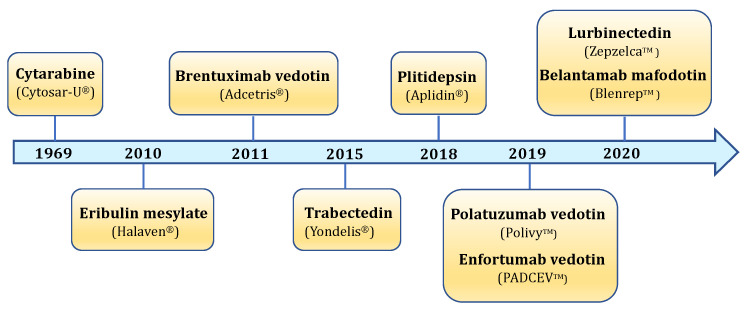
Figure 1
Figure 1
Timeline describing all the marine-derived agents approved as anticancer drugs.
Figure 2
Figure 2
Chemical structure of anthraquinones’ (a) and anthracyclines’ core (b).
Figure 3
Figure 3
Chemical structure of emodin.
Figure 4
Figure 4
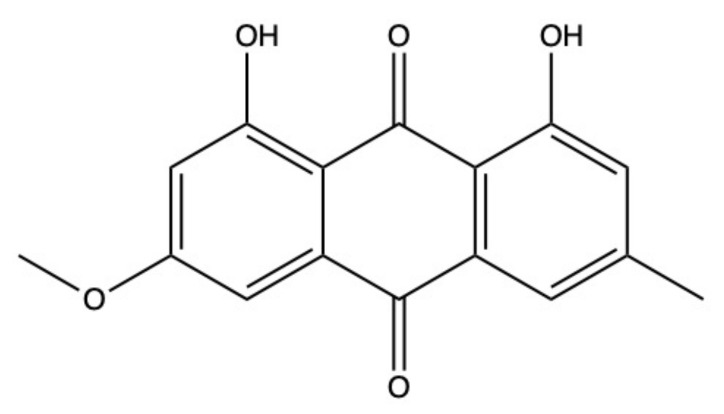
Chemical structure of physcion.
Figure 5
Figure 5
Chemical structure of aspergiolide A.
Figure 6
Figure 6
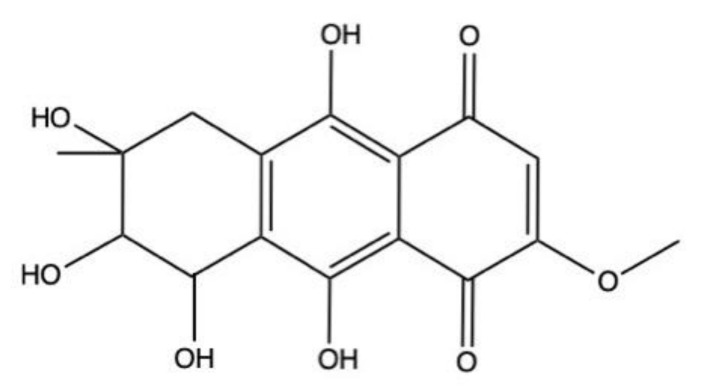
Chemical structure of alterporriol A–Y.
Figure 7
Figure 7
Chemical structure of bostrycin.
Figure 8
Figure 8
Chemical structure of nidurufin.
Figure 9
Figure 9
Chemical structure of G503.
Figure 10
Figure 10
Chemical structure of SZ-685C.
Figure 11
Figure 11
Chemical structure of 1403P-3.
Figure 12
Figure 12
Chemical structure of 1’-deoxyrhodoptilometrin and (S)-(−)-rhodoptilometrin.
Figure 13
Figure 13
Chemical structure of tetracenomycin D, heliomycin and tetracenomycin X.
Figure 14
Figure 14
Chemical structure of galvaquinone A–C.
Figure 15
Figure 15
Chemical structure of marmycin A and marmycin B.
Figure 16
Figure 16
Chemical structure of saquayamycin B.
Figure 17
Figure 17
Cellular and molecular mechanisms modulated by AQs. ⊥: inhibition; ↓: decrease; ↑: increase; Akt: protein kinase B; Bax: Bcl-2-associated X protein: Bcl-2: B-cell lymphoma 2; Bcl-xL: B-cell lymphoma-extra large; ER: endoplasmic reticulum; FoxO1: forkhead box O1; FoxO3A: F forkhead box O3A; HDAC: histone deacetylase; ROS: reactive oxygen species; STAT3: signal transducer and activator of transcription 3; p27: cyclin-dependent kinase inhibitor 1B; PARP: poly-(ADP-ribose)-polymerase; PI3K: phosphoinositide 3-kinase; mTOR: mammalian target of rapamycin; ΔΨ: mitochondrial membrane potential.

References

    1. IARC–International Agency for Research on Cancer. [(accessed on 23 March 2021)]; Available online: https://www.iarc.who.int/
    1. Appeltans W., Ahyong S.T., Anderson G., Angel M.V., Artois T., Bailly N., Bamber R., Barber A., Bartsch I., Berta A., et al. The Magnitude of Global Marine Species Diversity. Curr. Biol. 2012;22:2189–2202. doi: 10.1016/j.cub.2012.09.036. - DOI - PubMed
    1. Khalifa S.A.M., Elias N., Farag M.A., Chen L., Saeed A., Hegazy M.-E.F., Moustafa M.S., Abd El-Wahed A., Al-Mousawi S.M., Musharraf S.G., et al. Marine Natural Products: A Source of Novel Anticancer Drugs. Mar. Drugs. 2019;17:491. doi: 10.3390/md17090491. - DOI - PMC - PubMed
    1. Dyshlovoy S.A., Honecker F. Marine Compounds and Cancer: Updates 2020. Mar. Drugs. 2020;18:643. doi: 10.3390/md18120643. - DOI - PMC - PubMed
    1. Fouillaud M., Venkatachalam M., Girard-Valenciennes E., Caro Y., Dufossé L. Anthraquinones and Derivatives from Marine-Derived Fungi: Structural Diversity and Selected Biological Activities. Mar. Drugs. 2016;14:64. doi: 10.3390/md14040064. - DOI - PMC - PubMed

LinkOut - more resources